Key takeaways
- Five insulated water bottles for winter hiking compared by heat retention, capacity, lid style and weight, so drinks stay hot and water stays liquid.
- Top Pick: Hydro Flask Trail Series 32 oz
- Runner-up: Stanley Classic Legendary Vacuum Bottle 1.5 qt
- Also consider: Thermos Stainless King 40 oz
The best insulated water bottle for winter hiking is a double-wall vacuum-insulated stainless steel bottle with a sealed screw stopper, because that design slows heat loss in both directions: hot drinks stay hot for hours, and plain water resists freezing far longer than it would in a single-wall bottle. For most winter day hikers, the Stanley Classic Legendary 1.5 qt is the strongest all-around pick thanks to its 40-hour manufacturer heat-retention rating and cup-style lid. If pack weight matters more than maximum capacity, the Hydro Flask Trail Series 32 oz delivers the same style of insulation in a lighter build. The five bottles below cover group outings, solo day hikes, and compact hot-drink carry, all with published specifications from the manufacturers.
As an Amazon Associate, we earn from qualifying purchases.
Table of Contents
- Hydro Flask Trail Series 32 oz
- Stanley Classic Legendary Vacuum Bottle 1.5 qt
- Thermos Stainless King 40 oz
- YETI Rambler 26 oz Bottle with Chug Cap
- Zojirushi Stainless Steel Mug 20 oz
- How to Choose an Insulated Bottle for Winter Hiking
- FAQ
- Conclusion
- Product and ASIN Reference
Hydro Flask Trail Series 32 oz

The Trail Series is Hydro Flask’s lightweight line, built with thinner 18/8 pro-grade stainless steel walls so the bottle carries less empty weight than the standard wide mouth range while keeping the same TempShield double-wall vacuum insulation. For winter hikers who count ounces but still want a hot drink at the summit, that trade-off is the whole point of this bottle. Hydro Flask rates the insulation to keep drinks cold for up to 24 hours or hot for up to 12 hours, which comfortably covers a full winter day between a morning fill and an evening return.
The wide mouth opening is practical in cold conditions. It accepts ice cubes, fits most backcountry water filters for refills, and is easier to fill while wearing gloves than a narrow neck. The leakproof Flex Cap seals the bottle inside a pack, and its handle makes it simple to grab or clip. Because the cap is a sealed screw design rather than a straw lid, there is no narrow straw tube to freeze shut in sub-freezing weather.
This is the premium lightweight option here. Hikers who want longer heat retention or a serving cup should look at the Stanley below.
Specs
- Capacity: 32 fl oz
- Material: 18/8 pro-grade stainless steel
- Insulation: TempShield double-wall vacuum insulation
- Manufacturer retention rating: cold up to 24 hours, hot up to 12 hours
- Cap: leakproof Flex Cap with carry handle
- Mouth: wide mouth, accepts ice cubes and most backcountry filters
- Tier: premium
Stanley Classic Legendary Vacuum Bottle 1.5 qt

The Stanley Classic Legendary is the bottle winter hikers have carried for decades, and its published numbers still lead this roundup. Stanley rates the 1.5 qt model to keep drinks hot for up to 40 hours, cold for up to 35 hours, or iced for up to 6 days, using double-wall vacuum insulation in an 18/8 stainless steel body. On a winter trip, that margin means coffee poured before dawn is still properly hot at a mid-afternoon rest stop, and water stored in a cold car overnight stays liquid.
The lid doubles as a serving cup, which matters more in winter than in summer: pouring a hot drink into a cup keeps the bottle sealed longer and gives cold hands something warm to hold. The vacuum-insulated stopper is designed to pour without being fully removed, which limits heat loss each time you drink. A collapsible handle makes the tall bottle easier to carry with gloves on.
At 48 oz, this is the largest bottle here and the natural choice for groups sharing hot drinks and for anyone carrying water for more than one person. Solo hikers on short loops may find it more than they need, but for long, cold days it is the benchmark pick in this list.
Specs
- Capacity: 1.5 qt (48 fl oz)
- Material: 18/8 stainless steel, BPA-free
- Insulation: double-wall vacuum insulation
- Manufacturer retention rating: hot up to 40 hours, cold up to 35 hours, iced up to 6 days
- Lid: leakproof, doubles as a serving cup
- Handle: collapsible carry handle
- Warranty: Stanley Built for Life lifetime warranty
- Tier: premium
Thermos Stainless King 40 oz
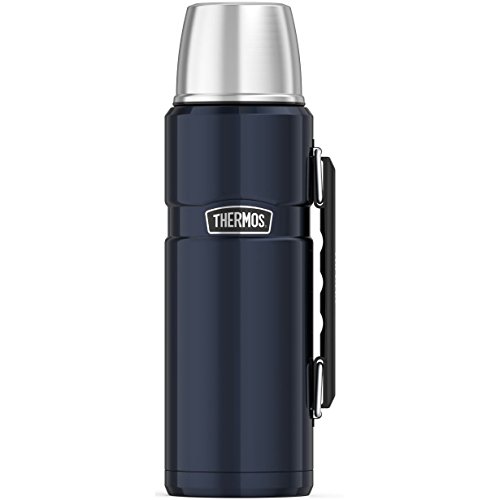
The Thermos Stainless King 40 oz is the mid-range workhorse of this roundup. Its Thermos vacuum insulation technology is rated by the manufacturer to keep drinks hot for up to 12 hours or cold for up to 24 hours, and the 18/8 stainless steel construction inside and out stands up to being knocked around in a pack or a car boot. For a winter day hike, 12 hours of heat retention is enough to fill with tea or coffee at breakfast and still have a warm drink on the descent.
Like the Stanley, the Stainless King uses a twist-and-pour stopper: a partial turn lets you pour without fully opening the bottle, so less heat escapes and the stopper never has to be set down in the snow. The lid doubles as a serving cup, and the exterior is sweat-proof and stays cool to the touch even with hot liquids inside, so it will not soak the inside of a pack.
The 40 oz capacity sits between the compact bottles and the big Stanley, suiting hikers who want more than a personal mug but do not need to supply a whole group. For full winter days built around one hot drink, this is the balanced mid-range pick.
Specs
- Capacity: 40 fl oz
- Material: 18/8 stainless steel interior and exterior
- Insulation: Thermos vacuum insulation technology
- Manufacturer retention rating: hot up to 12 hours, cold up to 24 hours
- Stopper: twist-and-pour stopper for pouring without full removal
- Lid: doubles as a serving cup
- Exterior: sweat-proof, cool to the touch with hot liquids
- Tier: mid-range
YETI Rambler 26 oz Bottle with Chug Cap
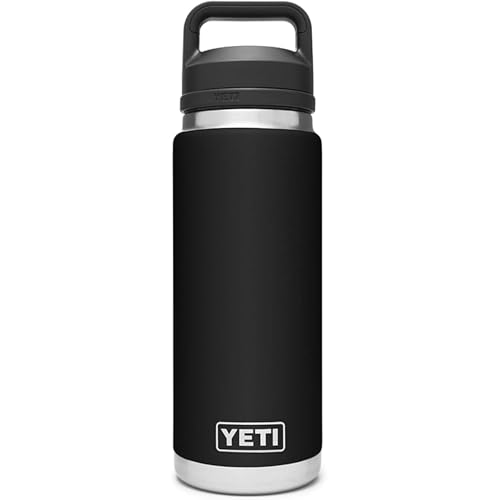
The YETI Rambler 26 oz is the durability pick. It is built from 18/8 kitchen-grade stainless steel with double-wall vacuum insulation, and YETI finishes it with a DuraCoat coating that the company states will not peel, fade, or crack. For winter use, that toughness suits bottles that get dropped on frozen ground, tossed into a sled, or strapped to the outside of a pack where they take every knock on the trail.
The included Chug Cap is a two-part design: a TripleHaul handle twists off to reveal a narrow chug spout for controlled drinking, and the whole cap removes for filling through the wide mouth. One honest limitation matters for winter hikers: YETI states the Chug Cap is not intended for use with hot beverages. This bottle is therefore the pick for keeping water liquid on winter trails; for hot drinks, YETI sells a separate Rambler HotShot Cap that fits the same bottle.
At 26 oz it is a personal bottle rather than a group one, sized to fit standard cup holders and pack pockets at 3.5 inches in diameter. Hikers who prioritize a bottle that shrugs off abuse will find it well matched to winter use.
Specs
- Capacity: 26 fl oz
- Material: 18/8 kitchen-grade stainless steel
- Insulation: double-wall vacuum insulation
- Finish: DuraCoat coating, stated by YETI not to peel, fade, or crack
- Cap: Chug Cap with TripleHaul handle; not intended for hot beverages per YETI
- Dimensions: 10.5 in tall, 3.5 in diameter
- Care: bottle and cap are dishwasher safe per the manufacturer
- Tier: premium
Zojirushi Stainless Steel Mug 20 oz

The Zojirushi Stainless Steel Mug is the compact hot-drink specialist in this roundup. Its stainless vacuum insulation is built into a slim 20 oz body that fits a pack’s side pocket far more easily than the big vacuum bottles, and Zojirushi designs the line around keeping coffee and tea hot for hours on the move. For winter hikers whose priority is a reliable hot drink rather than maximum water volume, this is the bottle that earns its place.
The tight-fitted lid flips open for drinking and includes a safety lock that keeps it from opening accidentally inside a pack, which is exactly the failure that soaks spare gloves and layers in winter. The interior uses Zojirushi’s SlickSteel polished finish, which resists corrosion and repels stains and odors, so switching between coffee, tea, and water does not leave yesterday’s flavor behind. The wide mouth opening accommodates full-size ice cubes in warmer months and makes the mug easy to clean after a trip.
Because it is a mug format, the Zojirushi works best as a personal hot-drink bottle carried alongside a separate water supply on longer outings. For short winter hikes and cold morning outings where a hot drink is the point, it is the most packable mid-range option here.
Specs
- Capacity: 20 fl oz
- Model: Sm-She60
- Insulation: stainless steel vacuum insulation
- Interior: SlickSteel polished finish, corrosion and stain resistant
- Lid: tight-fitted flip-open lid with safety lock
- Mouth: wide mouth, accommodates full-size ice cubes
- Body: slim, compact profile for pack pockets
- Tier: mid-range
How to Choose an Insulated Bottle for Winter Hiking
Start with the lid, because lids are where winter bottles fail. Straw lids, bite valves, and narrow spouts trap small amounts of water in tubes and seals, and those are the first parts to freeze. A sealed screw stopper or an insulated screw cap has no exposed tube, which is why four of the five bottles here use that style. If you prefer a chug or straw cap for cold water, check whether the maker rates it for hot drinks before relying on it for coffee or tea.
Next, match retention ratings to your longest day. Manufacturer hot-retention figures range from about 12 hours on mid-range bottles to 40 hours on the Stanley Classic Legendary. A 12-hour rating is plenty for a day hike; multi-day trips and group outings benefit from the longer ratings. The same insulation also delays freezing, keeping plain water liquid for hours in conditions that would ice over a single-wall bottle quickly.
Capacity is the third decision. Winter hikers often drink less than they should because cold suppresses thirst: 20 to 26 oz suits short outings with a hot drink focus, 32 to 40 oz covers most full day hikes, and 48 oz makes sense for groups or dry winter routes with no refill points. Finally, favor wide mouths for gloved hands and easy filling, and store your bottle inside your pack or upside down on the coldest days so any ice that does form gathers at the end away from the opening.
FAQ
Will an insulated bottle keep water from freezing on a winter hike?
It delays freezing rather than preventing it forever. Double-wall vacuum insulation slows heat transfer, so water stays liquid for many hours in sub-freezing air, especially if the bottle starts full and rides inside your pack. In extreme cold or on very long days, any bottle can eventually freeze, which is why starting with warm water and storing the bottle upside down are common winter habits.
Are straw lids a good idea for winter hiking?
Generally no. Water sitting in a straw or bite valve is exposed and small in volume, so it freezes first and can block the bottle completely. Sealed screw stoppers and insulated caps are the reliable winter choice. If you use a chug-style cap like the YETI Rambler’s, note that YETI does not intend that cap for hot beverages, so it suits cold water rather than coffee.
How much water should I carry on a winter day hike?
A common planning range is about half a liter per hour of moderate activity, adjusted for temperature, altitude, and exertion. Cold air and dry winter conditions still dehydrate you, even when you do not feel thirsty. For most winter day hikes, a 32 to 40 oz insulated bottle covers the day; groups and dry routes justify the 48 oz Stanley in this roundup.
Can I put hot drinks in any insulated bottle?
No. The bottle body usually handles hot liquids fine, but the cap decides the limit. Screw stoppers on the Stanley, Thermos, and Zojirushi here are designed for hot drinks, while some sport caps, including the YETI Chug Cap, are rated for cold drinks only. Check the cap rating before filling, and choose a hot-drink-rated cap if your winter routine depends on coffee or tea.
Conclusion
Winter hiking asks more of a bottle than any other season: it has to keep hot drinks hot, keep water from freezing, and seal reliably with gloves on. The Stanley Classic Legendary 1.5 qt leads this roundup on published heat retention and group capacity, the Hydro Flask Trail Series 32 oz is the lightweight pick, the Thermos Stainless King 40 oz balances size and retention at a mid-range tier, the YETI Rambler 26 oz is the durability choice for cold water, and the Zojirushi 20 oz mug is the compact hot-drink specialist. Match the lid and capacity to your longest cold day, and any of these five will serve all season.
More from Amazon
Programs that pair well with the guide above. Offers and eligibility are set by Amazon and may change.
Free shipping on eligible items, Prime Video and more. Eligible new members can start with a free trial.
Start a Prime free trialAudiobooks and podcasts to listen to on the go. Eligible new members can start with a free trial.
Try Audible freeAd-free music streaming. Eligible new subscribers can start with a free trial.
Try Music Unlimited freeA free business account with business pricing and bulk-buying tools for work, shop or home office.
Create a business accountAs an Amazon Associate we earn from qualifying purchases.