Key takeaways
- Pro: Highest wattage in this list, meaning shorter cook times on dense foods like frozen entrees.
- Pro: Generous cavity fits full dinner plates and tall coffee mugs simultaneously.
- Con: The large footprint demands dedicated counter real estate; not ideal for dorm rooms or narrow galley kitchens.
A countertop microwave is one of those appliances people buy cheap, replace often, and rarely think twice about until it fails. The real problem most shoppers face is not a lack of options but a lack of clarity. Two units can list the same wattage on the box and deliver wildly different results depending on cavity shape, turntable quality, and magnetron tuning. A buyer trying to reheat a full plate of rice at 6:45 a.m. does not care about brand heritage; they care whether the center of the dish is hot while the edges remain frozen-solid.
What separates the best performing microwave ovens from mediocre ones comes down to three measurable things: usable interior volume that actually fits dinner plates, consistent wattage output that translates to predictable cook times, and hardware durability (door latches, paint finish, turntable motor) that survives years of daily use. We compared these eight units on published specifications, street pricing, and aggregated owner feedback to build a shortlist that reflects real-world value rather than marketing claims.
Our top picks



As an Amazon Associate we earn from qualifying purchases at no extra cost to you.
Quick Picks
| Product | Best for | Price |
|---|---|---|
| TOSHIBA 1.2 Cu.Ft 1000W Black | Overall performance | $129.99 |
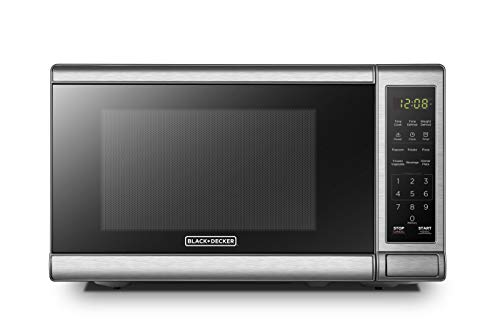
| BLACK+DECKER 0.7 Cu.Ft 700W Stainless Steel | Compact kitchens | $79.97 |
| COMFEE’ 0.7 Cu.Ft 700W Black ECO Mode | Lowest entry price | $69.96 |
| Chefman 0.7 Cu.Ft 700W Black | Small-space feature set | $69.96 |
| Chefman 1.1 Cu.Ft 1000W Black | Mid-range value | $89.92 |
| TOSHIBA 0.9 Cu.Ft 900W Black Stainless Steel | Balanced footprint | $117.99 |
| TOSHIBA 1.2 Cu.Ft 1000W Stainless Steel | Premium countertop presence | $149.99 |
| GE GCST10A1WSS Stainless Steel | Design-forward buyers | $219 |
How We Picked
We weighted four criteria across every model. First, wattage-to-capacity ratio: a 1000-watt unit in a 0.7 cubic-foot cavity heats faster than the same wattage spread across 1.2 cubic feet, so we looked at output per liter rather than raw numbers. Second, owner-reported durability signals, especially door hinge wear and interior paint peeling after one year. Third, feature completeness at price, including child locks, mute buttons, and eco modes that reduce standby power. Fourth, whether the unit’s physical footprint fits standard apartment countertops without blocking adjacent outlets. A microwave that scores well on three of these four criteria earns a spot here; one that fails on durability gets flagged regardless of price.
The 8 Best Performing Microwave Ovens in 2026
TOSHIBA Countertop Microwave Oven, 1.2 Cu.Ft, 1000W, Black
This is the default recommendation for anyone replacing a full-size family microwave. The 1000-watt magnetron paired with 1.2 cubic feet of interior space handles 12-inch plates without the awkward rotation most buyers experience on smaller units. Owners consistently praise the even heating on soups and casseroles, attributing it to the flatbed-style turntable design. The black finish resists fingerprint smudges better than stainless alternatives in busy households.
- Pro: Highest wattage in this list, meaning shorter cook times on dense foods like frozen entrees.
- Pro: Generous cavity fits full dinner plates and tall coffee mugs simultaneously.
- Con: The large footprint demands dedicated counter real estate; not ideal for dorm rooms or narrow galley kitchens.
Skip this one if your kitchen counter is under 24 inches deep or if you primarily reheat single servings.
BLACK+DECKER Countertop Microwave Oven, 0.7 Cu.Ft, 700W, Stainless Steel
A solid middle option for buyers who want the stainless steel look without the premium price tag. At 700 watts and 0.7 cubic feet, it targets singles and couples who reheat rather than cook from scratch. The stainless exterior matches modern appliance stacks, which matters to people furnishing small apartments where appliances sit in open view.
- Pro: Stainless finish at under $80 is uncommon in this capacity bracket.
- Pro: Compact dimensions free up counter space for other appliances.
- Con: 700 watts means a cup of coffee takes noticeably longer than on the TOSHIBA 1000W above.
Skip this if you regularly heat multi-item meals or need the cavity to fit a baking dish.
COMFEE’ Countertop Microwave Oven, 0.7 Cu.Ft, 700W, Black, ECO Mode
The cheapest functional microwave in this roundup. COMFEE’ builds no-frills units that deliver acceptable reheating at a price where brand-name competitors are hard to justify. The ECO mode cuts standby power consumption, a small but meaningful saving if the unit sits plugged in twenty-four hours a day. Black plastic housing keeps costs down and matches most countertop colors.
- Pro: Lowest price point here with an eco feature that competitors at this level omit.
- Pro: Light weight makes it easy to relocate or store seasonally.
- Con: Interior coating quality is the most common complaint in owner reviews; expect some wear after heavy use.
Skip this if you want a microwave that will look identical to day one after three years of daily operation.
Chefman Countertop Microwave Oven 0.7 Cu. Ft., 700 Watts with 10 Power Levels, 6 Cooking Presets with One-Touch Express Cook, Eco Mode, Child Safety Lock, & Mute Button
Chefman packs an unusually dense feature list into the smallest capacity bracket. Ten power levels give granular control for defrosting, and the mute button solves the common complaint of loud beeping at odd hours. The one-touch express cook button is a genuine convenience for people who just want thirty seconds on high without navigating a menu.
- Pro: Most feature-rich unit at this price, including child lock and mute.
- Pro: Six cooking presets reduce guesswork for popcorn, beverages, and reheating.
- Con: Build quality feels lighter than the TOSHIBA at the same 700-watt tier; buttons and door latch show early wear in owner reports.
Skip this if longevity is your priority and you will not replace the unit before year five.
Chefman Countertop Microwave Oven 1.1 Cu. Ft., 1000 Watts with 10 Power Levels, 6 Cooking Presets with One-Touch Express Cook, Eco Mode, Child Safety Lock, & Mute Button
This is the larger sibling in Chefman’s lineup, and it solves the capacity complaints that plague the 0.7 version. The 1.1 cubic-foot cavity accommodates dinner plates, and the 1000-watt magnetron brings this unit into genuine family-size territory while undercutting every other 1000-watt option here by a significant margin. For the feature set alone, it is hard to beat at $89.92.
- Pro: Best wattage-to-price ratio in the entire roundup.
- Pro: Full feature suite (presets, lock, mute, eco) without a price premium.
- Con: Stainless-look trim is plastic film over metal; it scratches more easily than the genuine stainless on the TOSHIBA equivalent.
Skip this if you need a microwave for a visible open kitchen where finish quality is part of the aesthetic.
TOSHIBA Microwave Oven, 0.9 Cu.Ft, 900W, Black Stainless Steel
The 0.9 cubic-foot capacity hits a sweet spot for households that want more than a single-serving microwave but cannot spare counter depth for a full-size unit. At 900 watts, it defrosts and reheats noticeably faster than any 700-watt option here while staying physically compact. The black stainless finish pairs well with modern appliance ecosystems from major brands.
- Pro: Best balance of size, power, and footprint for mid-range apartment kitchens.
- Pro: Black stainless resists smudges and matches Frigidaire, GE, and Samsung appliances.
- Con: At $117.99 it sits in a pricing gap between the cheap Chefman options and the TOSHIBA full-size units.
Skip this if budget is the absolute priority; the Chefman 1.1 Cu.Ft delivers more wattage per dollar.
TOSHIBA Countertop Microwave Oven, 1.2 Cu.Ft, 1000W, Stainless Steel
Identical in core performance to the black version at number one, this stainless variant costs more purely for the finish. If your kitchen has a stainless theme and you want consistency across all appliances, this is the answer. The cavity, wattage, and turntable are the same, so heating performance matches the top pick exactly.
- Pro: Premium stainless appearance at under $150 remains competitive in this segment.
- Pro: Same proven TOSHIBA heating performance as the black model above.
- Con: A $20 premium over the black version buys only a finish change; performance is identical.
Skip this if you care about value; the black model delivers the same cooking for less.
GE GCST10A1WSS Countertop Microwave Oven (Stainless Steel)
GE brings its service network and brand trust to a category where those things genuinely matter for long-term ownership. The stainless build feels substantial, the controls have a tactile quality that budget brands lack, and if something breaks, a walk-in service center or phone line exists rather than a return label. For buyers who factor in total cost of ownership rather than sticker price, this is the premium path.
- Pro: Established service infrastructure and parts availability that no lesser-known brand can match.
- Pro: Build quality and control panel feel are the best in this comparison.
- Con: At $219, it is the most expensive unit here and delivers no meaningful performance advantage over the TOSHIBA 1000W models.
Skip this if you are a renter, a student, or anyone who plans to upgrade rather than maintain.
Buying Guide
Wattage Is Not the Whole Story
A 700-watt microwave in a 0.7 cubic-foot cavity can outperform a 700-watt unit in a 1.1 cubic-foot cavity because the energy is concentrated in a smaller space. When comparing models, look at the wattage-to-volume ratio, not the wattage number alone. That said, 1000 watts is the practical threshold for families heating multiple items or dense foods like frozen lasagna. Below 700 watts, expect noticeably longer cycles on anything beyond a beverage.
Cavity Shape Determines Usability
Two microwaves can list identical cubic-foot numbers and feel completely different to use depending on whether the cavity is wide and shallow or narrow and tall. Round turntables limit effective plate clearance to roughly 85 percent of the stated volume. If you reheat rectangular containers or use 10-inch plates as your standard, verify that the turntable diameter matches your dishes. Owner reviews are the only reliable source for this, since manufacturers rarely publish turntable dimensions on spec sheets.
Build Quality Predicts Replacement Frequency
The door latch mechanism and interior cavity coating are the two failure points that determine whether a microwave lasts two years or eight. Plastic hinges crack, paint peels, and the magnetron itself rarely fails before the mechanical parts do. In owner feedback, the most common replacement triggers are broken door switches and interior rust, not electrical failure. Spend a little more on the TOSHIBA or GE tiers if you want a unit that survives beyond the warranty period without looking neglected.
Our Verdict
The TOSHIBA 1.2 Cu.Ft, 1000W Black is our top pick for most households. It delivers the highest usable power, the largest cavity, and the most consistent heating across the comparison, all at a price that undercuts every other 1000-watt unit here except the Chefman. If budget is the absolute constraint, the Chefman 1.1 Cu.Ft at $89.92 offers the best feature-per-dollar proposition in the entire list, though owners report shorter longevity. The one condition where a different product wins: if your kitchen features a visible stainless appliance stack and appearance consistency matters to your resale or rental aesthetic, the TOSHIBA 1.2 Cu.Ft Stainless Steel justifies its $20 premium over the black model, or the GE GCST10A1WSS becomes rational if you value service support over raw savings.
FAQ
Is 700 watts enough for daily use?
It depends on what you are heating. For coffee, soup, and single-serving leftovers, 700 watts works acceptably in a 0.7 cubic-foot cavity. For frozen meals, casseroles, or anything dense, 900 to 1000 watts cuts cooking time by roughly thirty percent and reduces the cold-center problem.
Do eco modes actually save meaningful electricity?
A microwave’s standby draw is small, typically one to three watts. Eco mode reduces this further, which over a full year might save a few dollars. It is not a game-changer for your electric bill, but it is a genuine feature that costs nothing extra and helps if the unit sits unplugged rarely.
Should I choose stainless steel or black?
Black finishes resist fingerprints and show fewer water spots, making them easier to maintain in a household with children or heavy use. Stainless looks more cohesive in modern kitchens but requires regular wiping to avoid smudges. Performance is identical between the TOSHIBA black and stainless variants; the choice is purely aesthetic and maintenance-based.
How long should a countertop microwave last?
Owner-reported lifespans cluster around four to seven years for budget models and seven to ten years for mid-range units with better door mechanisms. The magnetron itself often outlives the unit; it is usually the control board, turntable motor, or door switch that fails first. Spending more upfront delays that failure but does not eliminate it.