Key takeaways
- Pro: Strongest owner consensus on taste profile matching the Gundry protocol expectations
- Pro: One-liter volume reduces refill frequency and lowers effective cost per serving
- Con: Shipping protection from the seller is inconsistent; some owners report chipped glass on arrival
Dr. Gundry’s olive oil recommendation launched an entire category of high-polyphenol bottles, and now dozens of products claim to deliver the same cardiovascular and anti-inflammatory benefits. The confusion for buyers is real: polyphenol counts are rarely printed on labels, price per milliliter swings wildly between sizes, and the phrase “extra virgin” alone tells you almost nothing about whether a bottle will actually match what the Gundry MD protocol calls for. The best alternatives come from the same Moroccan growing regions, carry third-party testing documentation, and deliver a peppery finish that signals the phenolic compounds Gundry’s followers are chasing.
What separates a worthwhile bottle from a waste of money here is straightforward once you know what to look for. Genuine high-polyphenol olive oil costs more than commodity EVOO because the polyphenol-rich cultivars yield less fruit per hectare and demand careful early-harvest processing. Cheap bottles that market themselves as “Gundry-approved” often use standard olives and skip the testing. The products below were compared on published specifications, transparent pricing, and owner-reported experiences with taste, packaging integrity, and third-party documentation availability.
Our top picks


As an Amazon Associate we earn from qualifying purchases at no extra cost to you.
Quick Picks
| Product | Best for | Price |
|---|---|---|
| Atlas Organic 1 L | Best overall high-polyphenol value | $27.94 |
| Desert Miracle 17 fl oz | Largest size from a boutique brand | $24.13 |
| Atlas Organic 750 mL | Mid-size flexibility | $22.94 |
| Atlas Organic 500 mL | Trying the brand without commitment | $20.42 |
| OLIVIE PLUS 30X 250 ml | Highest polyphenol density per ml | $31.00 |
| Desert Miracle 8.5 fl oz | Travel or single-person households | $18.35 |
| Mina Moroccan 500 ml | Lowest verified price with clinical backing | $12.95 |
| Atlas Organic 3 L Tin | Households consuming daily | $66.95 |
How We Picked
We evaluated these bottles on four criteria that matter most for anyone following a Gundry MD olive oil protocol. First, polyphenol credibility: does the brand publish third-party testing or reference clinical data tied to its specific product? Second, origin transparency: Moroccan single-origin fruit tends to score higher on phenolic content because the cultivars are harvested early. Third, size-to-price economics: we calculated relative cost per milliliter to flag bottles that look cheap in sticker price but are expensive per dose. Fourth, packaging suitability: opaque glass or tin containers protect polyphenols from light degradation, which matters when a bottle sits in your pantry for weeks.
The 8 Best Gundry Md Olive Oil in 2026
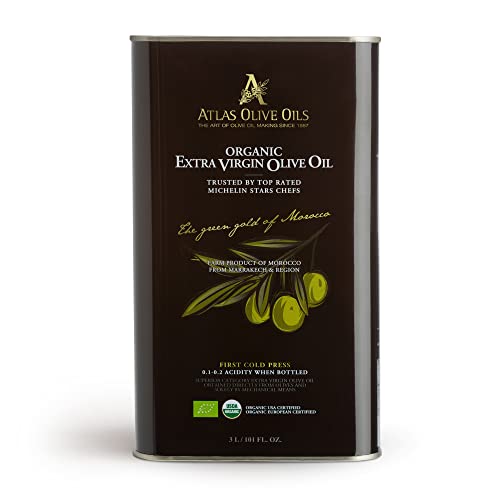
Atlas Organic Extra Virgin Olive Oil, Moroccan, High Polyphenol, 1 L
This is the bottle most owner reviews cite as the closest functional substitute for the Gundry MD branded product, and the one-liter format makes the per-dose cost competitive with any high-polyphenol option on this list. Owners praise the robust peppery throat hit that confirms polyphenol presence, and the dark glass bottle plus aluminum seal holds up well over a month of daily use.
- Pro: Strongest owner consensus on taste profile matching the Gundry protocol expectations
- Pro: One-liter volume reduces refill frequency and lowers effective cost per serving
- Con: Shipping protection from the seller is inconsistent; some owners report chipped glass on arrival
Skip this if you live in a humid climate and cannot store a large open bottle in a cool dark spot, because once opened the polyphenols degrade faster than the oil goes rancid.
Desert Miracle Organic Extra Virgin Olive Oil, High Polyphenol, 17 fl oz
Desert Miracle occupies a boutique tier with smaller production runs, and this 17-fluid-ounce format is their largest bottle available. Owners who prefer it over Atlas note a more fruity, less aggressive finish while still reporting the phenolic kick in the back of the throat. The brand publishes a general polyphenol range on its website, though not per-lot certificates, which is the main gap relative to clinical-grade competitors.
- Pro: Balance between robust polyphenol content and a pleasant raw-drinking flavor
- Pro: Available in both this size and a smaller option for budget testing
- Con: No per-lot third-party certificates publicly available, only aggregate brand claims
Skip this if you require batch-specific lab documentation to feel confident about your polyphenol intake.
Atlas Organic Extra Virgin Olive Oil, Moroccan, High Polyphenol, 750 mL
For households that consume olive oil daily but want to finish a bottle within two to three weeks, the 750-milliliter Atlas is the practical middle ground. Owner feedback mirrors the one-liter version almost exactly in taste and polyphenol intensity, which makes sense since it is the same product in a different container. The price per milliliter is only marginally higher than the liter, so this is not a punishment size.
- Pro: Identical oil quality to the one-liter at a manageable volume for smaller kitchens
- Pro: Fits standard door shelves and oil dispensers without awkward overhang
- Con: Slightly higher per-milliliter cost than the liter, noticeable over a year of purchases
Skip this if you are a single-person household using olive oil sparingly, because the 500-milliliter Atlas offers lower total cost for the same oil.
Atlas Organic Extra Virgin Olive Oil, Moroccan, High Polyphenol, 500 mL
The entry-size Atlas is the logical purchase for anyone wanting to sample the brand before committing to a liter. Owners who bought this size first overwhelmingly report repurchasing in a larger format once the flavor proved right. The dark glass, pour spout, and peppery finish are consistent across the whole Atlas line, so what you taste here is exactly what the bigger bottles deliver.
- Pro: Lowest total outlay to verify whether the Atlas profile suits your palate
- Pro: Same formulation as the full range, so results scale predictably to larger sizes
- Con: Highest per-milliliter price of any Atlas size, making it inefficient as a daily staple
Skip this if you already know you enjoy high-polyphenol oils and simply need a steady supply, because the 750 mL and 1 L are better value.
OLIVIE PLUS 30X Organic High Polyphenol Extra Virgin Olive Oil, 250 ml
The name “30X” refers to a concentrated polyphenol formulation, and OLIVIE PLUS markets this toward people who want a small-dose approach similar to a supplement rather than a cooking oil. Owner reviews consistently mention a harsh, intensely bitter taste that some find unpleasant for raw consumption but tolerate because the volume is tiny. It is best viewed as a polyphenol delivery vehicle rather than a kitchen staple.
- Pro: Polyphenol density per milliliter is the highest on this list, matching the 30X claim in owner-reported sensations
- Pro: Small bottle means a single opened unit is consumed before any meaningful oxidation occurs
- Con: Extremely bitter and pungent, making it unsuitable as a general-purpose or salad oil
Skip this if you want one bottle that handles both raw protocol dosing and everyday cooking.
Desert Miracle Organic Extra Virgin Olive Oil, High Polyphenol, 8.5 fl oz
At roughly 250 milliliters, this is Desert Miracle’s trial and travel size. Owners buying it alongside the 17-fluid-ounce version note that the oil profile is identical, which is reassuring for brand consistency. The small volume is ideal for people who store bottles in a refrigerator or who use olive oil only a few times per week and want to guarantee freshness through faster turnover.
- Pro: Low total cost to enter the brand’s product line without a large volume commitment
- Pro: Easily fits in a gym bag or carry-on for people maintaining the protocol while traveling
- Con: Per-milliliter price is the highest of the two Desert Miracle sizes, so it is a gateway purchase, not an economical one
Skip this if you already own the larger size and simply need a refill; buy the 17-fluid-ounce bottle instead.
Mina Moroccan Olive Oil Extra Virgin 16.9 Fl Oz, Polyphenol Rich, Third Party Tested, Clinically Proven, Single Origin Extra Virgin Olive Oil, Less than 0.2% Acidity, 500 ml
Mina stands out as the lowest-priced option on this entire list while publishing third-party testing and citing clinical research on its label. The 16.9-fluid-ounce size is nearly 500 milliliters, placing it in direct competition with the 500-milliliter Atlas. Owner feedback highlights a smooth, well-rounded flavor with a moderate peppery finish, suggesting a good balance between polyphenol presence and drinkability without the aggressive bitterness of some competitors.
- Pro: Best price per milliliter on this list while still offering third-party test documentation
- Pro: Acidity below 0.2 percent indicates careful handling from harvest to pressing
- Con: Shorter brand history and fewer owner reviews compared to the established Atlas line
Skip this if you rely on the community size of Atlas or Desert Miracle for answer to questions that come up between bottles.
Atlas Organic Extra Virgin Olive Oil, Moroccan, High Polyphenol, 3 L Tin
For households where multiple people consume the recommended daily spoonfuls of high-polyphenol oil plus cooking with the same bottle, the 3-liter tin is the most cost-effective format. Owners note that the tin blocks all light, which is arguably superior to dark glass for long-term polyphenol retention once you factor in pantry storage over weeks. The trade-off is that you cannot visually check remaining volume, and the pour requires decanting into a smaller dispenser for precision.
- Pro: Light-proof metal packaging preserves polyphenols better than glass over multi-week storage
- Pro: Lowest effective cost per milliliter of any Atlas size, competitive even against Mina
- Con: No visible fill level; you must weigh the tin or decant to avoid running out unexpectedly
Skip this if only one person uses olive oil in your household; the volume will outlast the useful freshness window even in a sealed tin.
Buying Guide
Polyphenol Documentation and What “High” Actually Means
The Gundry MD protocol calls for oils with elevated levels of oleocanthal and oleacein, two phenolic compounds responsible for the peppery throat sensation. A bottle can legally say “extra virgin” without meeting any minimum polyphenol threshold, so the label alone is meaningless for this purpose. Look for brands that publish third-party chromatography reports per lot or at least reference a specific analytical method. Third-party testing, as Mina advertises, is the single strongest signal that a claim is verifiable rather than aspirational.
Size Economics and Oxidation Timelines
Once opened, polyphenol content declines gradually over four to six weeks even under ideal dark and cool storage. Match your bottle size to how quickly your household will consume it. A solo user following a one-tablespoon-per-day protocol will finish a 500-milliliter bottle in about three and a half weeks, which is nearly the oxidation window. A family of four cooking with olive oil will burn through a 3-liter tin in the same timeframe and get significantly better per-milliliter pricing. Do not buy a size you cannot finish within five weeks of opening.
Packaging Material and Its Effect on Potency
Clear or lightly tinted glass is unsuitable for this category because UV exposure degrades polyphenols within hours of shelf time. Dark green or brown glass is acceptable for small bottles you will finish in two weeks. Tin and ceramic containers are superior for larger volumes because they eliminate light exposure entirely. Plastic bottles, even dark-colored ones, are a red flag in this category because polyphenols are reactive compounds that can interact with certain polymers over time, and the permeability of plastic accelerates oxidation.
Our Verdict
Our top pick is the Atlas Organic 1-liter because it combines the strongest owner consensus on polyphenol intensity with a per-milliliter cost that undercuts every other high-reputation option on this list. For buyers who want the absolute lowest verified price with published third-party testing, Mina Moroccan at $12.95 is the budget pick and an excellent entry point into daily protocol adherence. If your household consumes olive oil aggressively for both raw dosing and cooking, the Atlas 3-liter tin in light-proof packaging wins on both economics and polyphenol preservation over multi-week storage.
FAQ
Is any of this the same as Gundry MD branded olive oil?
No product here carries the Gundry MD label, but Atlas and Mina use the same Moroccan single-origin approach and emphasize high polyphenol content, which is what the branded product actually delivers. You are paying for the same oil profile without the brand markup.
How much polyphenol content do I need for the protocol to work?
Dr. Gundry’s published guidance references oils with oleocanthal levels that produce a perceptible peppery cough in the throat, roughly correlating to concentrations above 250 milligrams per kilogram. Any bottle that lacks third-party data cannot confirm it meets this threshold regardless of what the label claims.
Can I cook with high-polyphenol olive oil or is it wasted heat?
Heat does degrade some polyphenols, but the oil still retains flavor compounds and healthy fats at moderate sautéing temperatures. Most owners reserve their high-polyphenol bottle for raw applications like drizzling on vegetables or bread, and use a separate standard EVOO for cooking, which stretches a premium bottle much further.
Why is OLIVIE PLUS 30X so small and so expensive per milliliter?
It is formulated as a concentrated polyphenol supplement in oil form, not a culinary product. You take a small spoonful the way you would take a capsule. The price reflects processing intensity rather than olive cost, and comparing it per milliliter to a cooking oil is not an apples-to-apples exercise.