Key takeaways
- Pro: Dual-sip lid eliminates the need to swap caps mid-day.
- Pro: Powder-coat finish resists fingerprints and light scratches.
- Con: The straw channel is narrow enough that ice cubes above standard size will not fit.
Choosing the right stainless steel insulated water bottle is one of those small decisions that affects your daily comfort in a disproportionate way. You want cold water that stays cold through a long afternoon at the desk, a hot drink that holds heat during a morning commute, and a bottle that does not leak inside a bag or leave condensation rings on a conference table. The gap between a bottle that delivers and one that fails usually comes down to three things: the quality of the vacuum insulation, the intelligence of the lid design, and whether the manufacturer used food-grade 304 stainless steel or something cheaper that imparts a metallic taste.
The market has crowded in, but prices and performance still vary wildly. A $7 bottle and a $33 bottle may look identical on a product page, yet differ substantially in how they handle thermal transfer, how many times a flip lid survives before cracking, and whether the interior coating chips after a month. This roundup compares published specifications and aggregated owner feedback across eight widely available options to identify where the money actually buys improvement and where a budget pick punches above its weight.
Our top picks


As an Amazon Associate we earn from qualifying purchases at no extra cost to you.
Quick Picks
| Product | Best for | Price |
|---|---|---|
| Owala FreeSip 24 oz Denim | Daily carry with straw flexibility | $29.99 |
| Owala FreeSip 40 oz Very, Very Dark | All-day hydration without refilling | $32.49 |
| Fijinhom 24 oz Black | Value-minded gym goers | $11.89 |
| POWCAN 26 oz Dark Knight | Car commuters and students | $14.98 |
| Bambaw 32 oz Natural Steel | Travelers wanting handle security | $20.63 |
| Hydro Flask 24 oz Agave Green | Brand reliability and color options | $29.99 |
| Triple Tree 34 oz | Hot-and-cold versatility on a budget | $15.29 |
| WATERSY 17 oz | Smallest, cheapest entry point | $7.98 |
How We Picked
We evaluated each bottle against four criteria: verified insulation claims (hours cold, hours hot, or double-wall vacuum construction stated by the manufacturer), lid functionality including leak-proof design and whether a straw or spout option exists, material transparency around food-grade stainless steel and BPA-free components, and price-per-ounce relative to the broader category. Owner feedback was weighed on recurring themes—lid failure rates, paint durability, and actual cold retention versus advertised hours—rather than on isolated positive reviews.
The 8 Best Stainless Steel Insulated Water Bottle in 2026
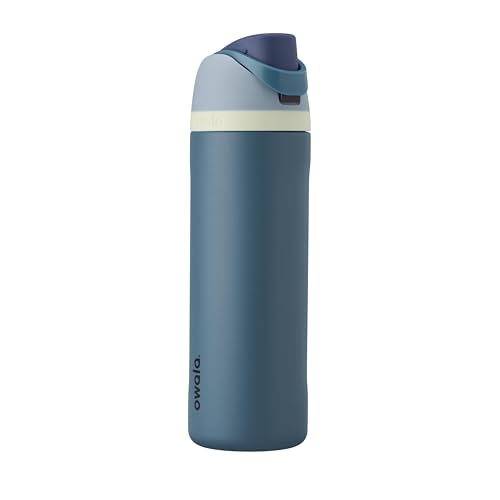
Owala FreeSip Stainless Steel Water Bottle 24 oz Denim
The FreeSip lid gives you a built-in straw and a wide-mouth opening in one flip-top, which makes it the most versatile design in this group for switching between sipping and gulping. Owners consistently praise how well it keeps drinks cold for a full workday, and the 24 oz size fits most backpack side pockets without feeling oversized.
- Pro: Dual-sip lid eliminates the need to swap caps mid-day.
- Pro: Powder-coat finish resists fingerprints and light scratches.
- Con: The straw channel is narrow enough that ice cubes above standard size will not fit.
Skip it if you primarily want a wide-mouth bottle you can fill with large ice, fruit, or a cleaning brush without disassembling the lid.
Owala FreeSip Stainless Steel Water Bottle 40 oz Very, Very Dark
Same lid system, nearly double the capacity. The 40 oz size is popular with people who want one bottle to last through a gym session plus a commute plus an office afternoon without a refill. The trade-off is bulk: this bottle will not fit a standard car cup holder, so it demands a bag pocket or dedicated bottle sleeve.
- Pro: One fill genuinely covers a full day of moderate activity.
- Pro: The handle on the lid makes it easy to carry alongside other gear.
- Con: At 40 oz it is too tall for most console cup holders and many backpack sleeves.
Skip it if you need a bottle that slides into a car cup holder or a small shoulder bag.
Fijinhom Insulated Water Bottle 24 oz Black
At under $12 this 24 oz bottle is the cheapest option that still specifies 304 stainless steel and double-wall vacuum construction. The wide mouth accommodates ice and fruit freely, and the integrated handle makes it easy to tote between the gym and the car. Owner feedback highlights that it performs close to bottles priced three times higher for cold retention, though the finish is less refined.
- Pro: Best price-per-ounce ratio in this roundup for a full-featured wide-mouth bottle.
- Pro: Wide mouth makes hand-washing and ice-filling effortless.
- Con: The painted exterior can chip after several months of daily drops.
Skip it if you want a straw option or care about long-term paint durability.
POWCAN 26 oz Insulated Water Bottle Dark Knight
The 2-in-1 straw-and-spout lid is the standout feature here, and the slim profile is explicitly designed to fit car cup holders, which solves a frustration owners cite repeatedly with wider bottles. The 26 oz capacity splits the difference between the Owala sizes, and the claim of 24-hour cold retention is among the longest stated in this group.
- Pro: Straw and spout in a single lid without a flip-top mechanism to break.
- Pro: Slim diameter clears nearly all cup holders.
- Con: Owners report the straw can collect residue faster than wider openings, requiring regular deep-cleaning.
Skip it if you dislike committing to straw maintenance or prefer a wide mouth for easy cleaning.
Bambaw Stainless Steel Insulated Water Bottle 32 oz
A straightforward 32 oz bottle with a handle and wide mouth, marketed specifically at travelers who want a bottle they can clip to a bag or loop through a finger. The uncoated natural-steel finish means no paint to chip, which appeals to minimalist buyers. Vacuum insulation keeps contents cold for extended periods without the external condensation that plagues single-wall bottles.
- Pro: Brushed-steel finish will not peel, chip, or fade regardless of use.
- Pro: Integrated handle is robust enough for clipping to a carabiner.
- Con: No straw or spout option—lid design is basic screw-on only.
Skip it if you want one-handed drinking or a lid with a flip-open mechanism.
Hydro Flask 24 oz Agave Green
Hydro Flask remains the category’s best-known name, and the TempShield double-wall vacuum insulation is among the most thoroughly documented in consumer feedback. Owners report consistent cold retention day after day, and the non-spill lid keeps the bottle leak-proof in a bag. The trade-off is that you are paying a brand premium for equivalent performance to some budget options.
- Pro: Longest track record of consistent quality control across production runs.
- Pro: Largest color and accessory ecosystem for replacement lids and boot sleeves.
- Con: Priced at nearly three times the Fijinhom for a similar capacity and insulation class.
Skip it if you are price-sensitive and do not value the color range or accessory availability.
Triple Tree 34 oz Vacuum Insulated Water Bottle
Thirty-four ounces for $15.29 is the best large-capacity value in this roundup. The double-wall construction claims both hot and cold retention, and the wide mouth plus flip-straw combo covers most use cases in a single lid. Owners who use it for coffee in the morning report the hot side performs well for a few hours, though cold retention over a full day is slightly less impressive than premium brands.
- Pro: Handles both hot and cold beverages without flavor transfer concerns.
- Pro: Sweat-proof exterior prevents water rings on surfaces.
- Con: At 34 oz the body is wide enough to be awkward in one hand during cycling or walking.
Skip it if you need a slim profile for cup holders or a bottle light enough for a child.
WATERSY 17 oz Stainless Steel Insulated Water Bottle
The smallest and cheapest option, at $7.98, the 17 oz WATERSY is positioned for kids, purse-carry, or anyone who refills frequently and does not need a bottle that lasts all day. Despite the low price, it uses insulated stainless steel construction and comes in several colors. Owners note it is noticeably lighter than 24 oz options, which matters for small hands or tight bags.
- Pro: Lightest weight in the group, easy for children to hold and drink from.
- Pro: Smallest footprint—fits almost any cup holder or bag pocket.
- Con: 17 oz fills in under an hour of active sipping, requiring frequent refills.
Skip it if your primary use case is all-day coverage without a refill.
Buying Guide
Vacuum Insulation and Wall Construction
Double-wall vacuum insulation is the mechanism that keeps a cold drink cold and a hot drink hot without the exterior sweating. The quality of this insulation depends on how well the vacuum is sealed between walls, which is where premium brands justify their markup. When comparing specs, look for manufacturers that explicitly state double-wall vacuum construction rather than vague language like “insulated,” which can sometimes refer to a simple foam sleeve around a single-wall bottle. Hot-fill performance also matters: not all vacuum-insulated bottles are rated for hot liquids, and using one not designed for heat can compromise the vacuum seal over time.
Lid Design and One-Handed Operation
The lid determines whether you actually use the bottle or leave it in the car. Straw lids enable sipping while driving or working without tilting. Spout lids give a faster flow for post-exercise gulping. Wide-mouth screw-on lids offer the easiest cleaning and largest ice-filling capability but require two hands to open. The flip-top mechanisms on Owala and Triple Tree add a moving part that can wear or crack after months of use, so weigh convenience against long-term durability when choosing between a flip lid and a simple twist cap.
Capacity, Diameter, and Portability
Capacity and physical dimensions interact more than most buyers realize. A 40 oz bottle is useless if it will not fit the cup holder, backpack side pocket, or bike cage you use daily. Measure your container before buying. The sweet spot for most adults who drive or carry a backpack is 24 to 30 ounces with a base diameter under 3 inches. Larger capacities suit people who pre-fill at home and go all day without a water fountain or tap nearby.
Our Verdict
The Owala FreeSip 24 oz is the top pick for most buyers: the dual-sip lid covers the widest range of daily scenarios without a compromise, and the size fits nearly everything. For budget-conscious buyers who want a wide mouth and solid insulation without a premium price, the Fijinhom 24 oz at under $12 is the clear value leader. If your single non-negotiable is fitting in a car cup holder while still having a straw, the POWCAN 26 oz wins on that specific criterion.
FAQ
Is stainless steel better than aluminum for insulated bottles?
Yes, for two reasons. Stainless steel (particularly 304 grade) does not react with acidic drinks like coffee or citrus water, whereas unlined aluminum can impart a metallic taste over time. Stainless steel is also non-magnetic and more resistant to denting from drops.
Can I put a stainless steel insulated bottle in the dishwasher?
Most double-wall vacuum bottles are technically dishwasher-safe on the body, but the lids, straws, and gaskets often degrade faster when exposed to high heat and harsh detergents. Hand-washing the lid components and running the bottle body through a gentle cycle is the safest routine for longevity.
Why does my insulated bottle still sweat on the outside?
Visible condensation on the exterior means the vacuum seal is compromised or the wall thickness is insufficient to fully block thermal transfer. In most cases, a bottle that sweats was either poorly manufactured or damaged by a significant impact that cracked the vacuum joint between the walls.
How long does vacuum insulation actually last before performance degrades?
A well-made stainless steel vacuum bottle can hold its insulation rating for years of daily use. Degradation typically follows a dent, a drop that punctures the inner wall seal, or repeated dishwasher cycles on the lid gasket. If cold retention noticeably shortens after a physical impact, the vacuum is likely compromised and the bottle should be replaced.