
Key takeaways
- 6–6.5 inches, about 0.75–1 quart: best for a small serving, children, or a compact kitchen. It leaves little room for mixing.
- 7–8 inches, about 1.25–2 quarts: the most versatile size for one adult serving with rice, vegetables, egg, and sauce.
- 8.5–10 inches, about 2–3 quarts: suitable for a large serving or generous toppings, but substantially heavier and slower to heat.
- Over 10 inches: better suited to sharing or restaurant-style presentation than ordinary single-serving use.
Best Korean Dolsot Stone Bowls for Bibimbap
The best Korean dolsot stone bowl for bibimbap is a 7–8 inch, 1.5–2.0 quart natural-stone bowl with a flat, stable base, a compatible heat source, and enough wall thickness to retain heat without becoming unmanageably heavy.
For most home cooks, a medium granite or Korean earthenware dolsot is the best balance: it is large enough for one generous serving, hot enough to crisp the rice, and easier to handle than an oversized restaurant-style bowl. Choose ceramic or earthenware when low weight and a smoother finish matter more than maximum heat retention; choose natural stone when the crunchy rice crust is your priority.
Our top picks


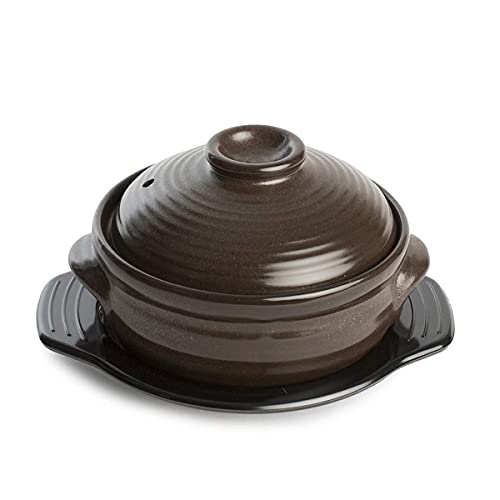

As an Amazon Associate we earn from qualifying purchases at no extra cost to you. Ratings are shown as listed on Amazon.
Natural Stone vs. Ceramic Dolsot Bowls
“Dolsot” literally refers to a stone bowl, but the market includes several materials sold for the same style of cooking. Their differences affect preheating, browning, weight, cleaning, and the risk of thermal shock.
| Material | Typical diameter | Typical usable capacity | Approximate empty weight | Best feature | Main drawback |
|---|---|---|---|---|---|
| Natural granite or soapstone | 6.5–8.5 inches | 1.0–2.5 quarts | 4–8 pounds | Strong heat retention and crisp rice | Heavy, slower to heat, can crack from thermal shock |
| Glazed ceramic or earthenware | 6.5–8 inches | 1.0–2.0 quarts | 2.5–5 pounds | Lower weight and easier cleanup | Usually loses heat sooner than thick stone |
| Unglazed earthenware | 6–8 inches | 0.75–1.75 quarts | 3–6 pounds | Traditional porous cooking surface | Absorbs moisture and flavors; requires careful drying |
| Metal-coated or stone-look cookware | 7–9 inches | 1.25–2.5 quarts | 2–4 pounds | Fast heating and easier stovetop use | Does not behave like a true heat-retaining stone bowl |
Natural stone generally takes longer to preheat but continues radiating heat at the table. That sustained heat helps form nurungji, the browned rice layer at the bottom. Ceramic heats more evenly at moderate settings and is often less intimidating for beginners, but thin ceramic may cool rapidly once removed from the burner.
Do not assume that a heavier bowl is automatically better. Weight is useful only if your cooktop, sink, storage space, and wrists can accommodate it. A thick 7-inch bowl can weigh more than a full cast-iron skillet.
Choose the Right Size for Bibimbap
The advertised diameter is not the same as the cooking area. Thick walls and a rounded interior reduce usable space, so compare the internal diameter and capacity when available.
- 6–6.5 inches, about 0.75–1 quart: best for a small serving, children, or a compact kitchen. It leaves little room for mixing.
- 7–8 inches, about 1.25–2 quarts: the most versatile size for one adult serving with rice, vegetables, egg, and sauce.
- 8.5–10 inches, about 2–3 quarts: suitable for a large serving or generous toppings, but substantially heavier and slower to heat.
- Over 10 inches: better suited to sharing or restaurant-style presentation than ordinary single-serving use.
A useful sizing calculation is to allow roughly 1.5 quarts of interior capacity for a substantial single serving. If the bowl is filled to only 70 percent, that leaves room to mix without spilling: 1.5 quarts × 0.70 equals about 1.05 quarts of food. For a rice-heavy serving with several toppings, move closer to 2 quarts.
Best Choice by Cooking Situation
| Your situation | Recommended bowl | Why |
|---|---|---|
| First dolsot, occasional use | 7-inch glazed ceramic, 1.25–1.75 quarts | More forgiving, lighter, and simpler to clean |
| Frequent bibimbap and crisp rice | 7.5–8-inch thick natural stone | Retains heat during mixing and serving |
| Limited storage or a small sink | 6.5–7-inch ceramic or thin stone | Reduces lifting and cabinet space |
| Large portions or shared meals | 8.5–10-inch stone, at least 2 quarts | Provides room for toppings without overflow |
| Electric, induction, or glass cooktop | Flat-bottom bowl explicitly rated for that surface | Prevents instability, scratching, and incompatible heating |
Stovetop Compatibility Matters More Than Appearance
Before buying, check the manufacturer’s instructions for gas, electric coil, smooth-top electric, induction, oven, and broiler use. A bowl that looks flat may have a slightly rounded base and make poor contact with a glass cooktop. Natural stone is usually not induction-compatible unless it has a separate magnetic metal base. Ceramic is also nonmagnetic; an induction burner requires a purpose-built induction adapter or a bowl with an integrated ferromagnetic base.
Gas burners are commonly the most forgiving, provided the flame does not extend far beyond the base. On electric and glass cooktops, use gradual heating and keep the bowl centered. Never place a cold bowl on a fully heated burner unless its instructions specifically allow that procedure.
Check the base diameter as well as the bowl diameter. A very small burner under a wide bowl may heat the center while leaving the sides cool; an oversized flame can heat the rim and create uneven expansion.
How to Season and Prepare a New Stone Bowl
Seasoning is not the same as coating a skillet with oil. It mainly means cleaning manufacturing dust, gradually driving out moisture, and conditioning the cooking surface according to the bowl’s instructions. Some glazed ceramic bowls need no seasoning at all.
- Inspect the bowl. Look for hairline cracks, loose chips, an uneven base, or a wobble. Do not heat a damaged bowl.
- Wash gently. Use warm water and a soft sponge. Avoid sudden temperature changes and harsh abrasive pads.
- Dry completely. Leave it upside down until no visible moisture remains, especially around an unglazed base.
- Warm gradually. If permitted, place the empty bowl over low heat for several minutes, then increase to medium-low. The first heating cycle should be conservative.
- Add a small amount of oil only if instructed. A thin film can reduce sticking, but excess oil may smoke and create residue in porous stone.
- Cook with a moderate burner. Preheat the bowl, add rice and toppings, then allow the bottom to brown rather than immediately turning the heat to maximum.
Exact seasoning methods vary by stone and glaze. If the instructions prohibit oil, soaking, or stovetop use, follow those restrictions instead of applying a generic method.
Safe Handling and Everyday Care
The most common failure is thermal shock: a rapid temperature change causes a crack even when the bowl was previously undamaged. Do not pour cold water into a hot bowl, place a hot bowl on a wet or cold stone counter, or transfer it directly from the refrigerator to a burner. Set it on a dry wooden board, cork trivet, or heat-resistant pad.
- Use thick, dry oven mitts or dedicated bowl grips; the handles, rim, and base can all become hot.
- Warn diners that the bowl remains hot after serving.
- Keep the bowl away from children and crowded table edges.
- Do not lift a heavy bowl with wet hands.
- Confirm dishwasher safety before using a dishwasher. Porous stone and unglazed earthenware are generally better washed by hand.
- Do not soak porous bowls for long periods; trapped water can contribute to cracking during the next heating cycle.
- Use a wooden, silicone, or nylon utensil if the interior glaze is prone to scratching.
For stuck rice, let the bowl cool, add warm water, and loosen the residue with a soft brush or scraper. Avoid thermal shock as a shortcut. A darkened or slightly discolored unglazed surface can be normal, but a new crack, flaking glaze, or persistent powdery residue is a reason to stop using the bowl for heated cooking.
What Wears Out First?
With regular use, the finish usually shows wear before the stone itself does. Glaze can develop fine scratches, an unglazed surface can darken, and the bottom can accumulate cooked-on oil. The removable trivet or wooden base, if included, may also warp or split before the bowl. These are ownership considerations that product listings often omit.
For frequent use, buy a bowl with clear care instructions, a stable base, and a replacement trivet that is easy to source by size. Avoid choosing solely by the deepest interior or most dramatic appearance. A bowl that is too heavy to move safely will spend more time in storage than on the stove.
Bottom Line
For most households in 2026, a 7–8-inch, 1.5–2-quart bowl is the best starting point. Select thick natural stone for maximum heat retention and a pronounced crispy rice crust; select glazed ceramic for easier handling, quicker warm-up, and simpler maintenance. Whichever material you choose, verify stovetop compatibility, heat it gradually, protect your cooktop and table, and treat thermal shock as the main hazard. Those details matter more to long-term satisfaction than decorative shape or maximum size.


