Key takeaways
- Powder coating: Chips at corners and around bolts are the first warning signs. Clean the area, let it dry, and use an exterior touch-up product suited to the finish.
- Fasteners: Rusty screws can stain surrounding surfaces and become difficult to remove. Replace visibly corroded hardware with compatible stainless or galvanized fasteners.
- Glides and feet: These wear faster on rough concrete. Replace them when the frame begins scraping or rocking.
- Wood joints: Teak can develop surface checking as it dries. Small superficial checks are common; loose joints or soft wood require more attention.
- Cushions: Fabric fades and seams fail before a good frame does. Removable, quick-drying covers are easier to clean and replace.
Best Outdoor Bar Furniture: Durable Patio Picks
The best outdoor bar furniture is a powder-coated aluminum or high-density polyethylene bar set for most patios, while teak is the better premium choice and folding steel or compact resin furniture is best when storage space matters more than maximum longevity.
Quick comparison: which material suits your patio?
| Furniture type | Typical counter height | Expected weight | Weather resistance | Maintenance | Best for |
|---|---|---|---|---|---|
| Powder-coated aluminum | 35–37 inches | 35–90 lb per table | Excellent against rust; finish can fade or chip | Wash with mild soap 2–4 times yearly | Wet climates, balconies, frequent use |
| High-density polyethylene (HDPE) | 35–37 inches | 60–140 lb per table | Very good; will not rust or splinter | Easy cleaning; inspect hardware annually | Families, sunny patios, low-maintenance ownership |
| Teak | 35–37 inches | 70–180 lb per table | Excellent when properly built and drained | Clean periodically; oil is optional, not required | Premium patios and long-term ownership |
| Powder-coated steel | 35–37 inches | 50–130 lb per table | Good until coating damage exposes bare metal | Touch up chips and keep joints dry | Windy locations and lower initial budgets |
| Resin or molded plastic | 34–37 inches | 15–60 lb per table | Good against water; quality varies in strong sun | Simple washing; may need weighting | Temporary setups, renters, small spaces |
These are useful planning ranges rather than specifications for every individual product. Construction quality matters: thick tubing, stainless or galvanized fasteners, drainage holes, replaceable feet, and a stable base can make a larger difference than the material name alone.
Our top picks

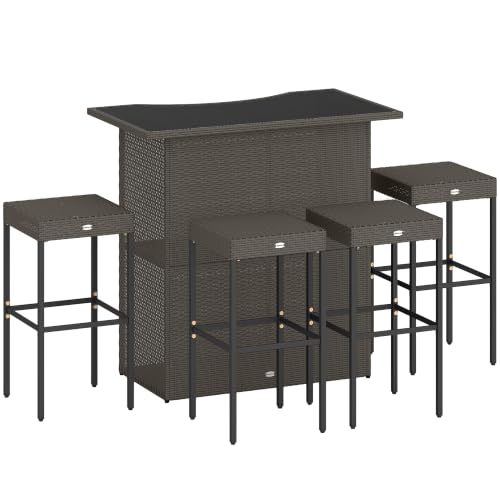

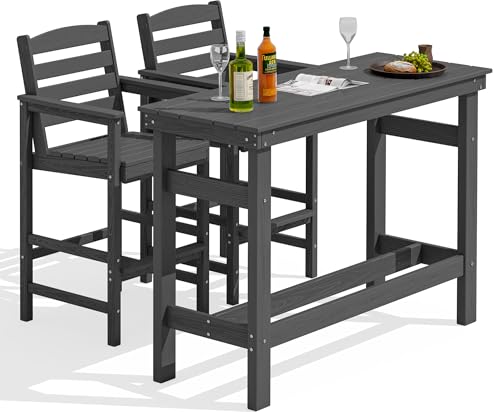
As an Amazon Associate we earn from qualifying purchases at no extra cost to you. Ratings are shown as listed on Amazon.
Choose the right height and seating clearance
Outdoor “bar” furniture is not always one height. Counter-height tables are usually 34–36 inches tall and pair with counter stools that have a 24–27-inch seat height. True bar-height tables are commonly 40–42 inches tall and require 28–31-inch bar stools. Mixing the two creates an uncomfortable eating position, so measure the table surface and stool seat rather than relying only on labels.
Aim for 9–12 inches between the top of the seat and the underside of the tabletop. For stools with arms, measure the arm height as well: the arms must slide beneath the table or the effective clearance becomes much smaller.
Allow at least 24 inches of table edge per seated adult. Thirty inches is more comfortable if people will eat full meals. A four-person bar table therefore needs approximately 96–120 inches of usable table edge in total, or a shape that provides equivalent elbow room.
Best choices by patio situation
For a small balcony: compact aluminum or folding resin
Prioritize footprint over built-in storage. A 36-inch round table typically occupies about 10 square feet, while a 48-inch round table uses roughly 12.6 square feet before adding chairs. Two counter stools and a 36-inch table can work in a balcony around 6 feet wide, but leave a clear walking route rather than filling the entire floor.
Folding furniture is useful when the balcony has no sheltered storage. Choose locking hinges, non-marking feet, and a table under 50 pounds if you expect to move it often. Lightweight resin may need a weighted base or wall-side placement in windy conditions.
For a rainy or coastal patio: aluminum or HDPE
Powder-coated aluminum is usually the easiest choice near frequent rain because it does not rust through. However, stainless steel hardware is still preferable: ordinary steel screws can rust even when the frame cannot. HDPE resists moisture, salt air, and splintering, but its heavier construction can make seasonal relocation difficult.
Look for slatted or perforated surfaces that drain quickly. Avoid cushions that cannot be removed, because trapped moisture encourages mildew around seams and beneath the seat. A breathable cover is better than an airtight tarp that holds condensation against the furniture.
For a sunny, high-use family patio: HDPE or quality teak
HDPE is a practical choice when the furniture will stay outdoors and be used several times each week. It does not require refinishing, and small scratches are generally less conspicuous than damage to a glossy painted surface. Choose a light or medium color if the table will sit in direct sun; darker surfaces can become noticeably hot.
Teak offers excellent natural weather resistance and a substantial feel. New teak typically starts golden brown and gradually turns silver-gray outdoors. That color change is normal. Use a teak cleaner when needed, but do not assume oil is mandatory. Oil can darken the surface and may encourage a more frequent maintenance cycle.
For a windy patio: heavy steel, teak, or weighted aluminum
Wind resistance depends on more than total weight. A broad base, low center of gravity, adjustable feet, and a slatted tabletop can reduce tipping and wind load. Tall, narrow bar tables are more vulnerable than counter-height tables. Avoid leaving a large fitted cover on lightweight furniture during storms; the cover can act like a sail.
Powder-coated steel can be a good value in exposed locations, but inspect welds, leg joints, and drainage points. When the coating chips, clean and touch up the exposed metal promptly to slow corrosion.
Storage is often more important than the tabletop
Built-in shelves and cabinets are convenient for glasses, bottle openers, and napkins, but outdoor storage has trade-offs. An open shelf drains better and is less likely to trap dampness. A cabinet protects supplies from rain but needs ventilation, adjustable feet, and doors that do not swell or bind.
Do not store anything temperature-sensitive, perishable, or valuable in an unsealed outdoor bar cabinet. Even weather-resistant furniture can admit dust, insects, and wind-driven rain. For a small patio, a removable lower shelf may be more useful than a full cabinet because it preserves legroom and reduces visual bulk.
Footprint and seating calculation
Use this simple clearance calculation before ordering. Measure the table width, then add approximately 30 inches on each occupied side for a chair or stool and 36 inches for a primary walking route.
For example, a 48-inch-wide rectangular bar table with stools on both long sides needs about 48 + 30 + 30 = 108 inches, or 9 feet, across the seating direction. If people must walk behind the stools, add another 36 inches, bringing the required depth to about 12 feet. A compact patio may technically fit the table but still feel unusable if this circulation space is ignored.
For a narrow layout, place stools only on one side and keep the opposite side against a wall or railing. Confirm that the railing does not interfere with elbow room or the stool backs.
Assembly: what to check before tightening everything
- Lay out the frame, legs, shelf, fasteners, and leveling feet before starting. Similar-looking bolts may have different lengths.
- Build on a flat surface and leave every connection slightly loose until the frame is square.
- Measure diagonals on a rectangular table. If the two diagonal measurements differ, adjust the frame before final tightening.
- Install feet or glides before setting the table upright. They protect the patio and help compensate for minor unevenness.
- Tighten gradually in alternating corners instead of fully tightening one leg at a time.
- After two or three uses, recheck fasteners. Outdoor furniture expands, contracts, and settles, especially on slatted or assembled frames.
Assembly complexity is usually driven by the number of frame connections, not the tabletop material. A welded aluminum frame may arrive nearly ready to use, while a flat-packed HDPE or teak table can require more alignment work because of its heavier components.
Maintenance realities: what wears first?
- Powder coating: Chips at corners and around bolts are the first warning signs. Clean the area, let it dry, and use an exterior touch-up product suited to the finish.
- Fasteners: Rusty screws can stain surrounding surfaces and become difficult to remove. Replace visibly corroded hardware with compatible stainless or galvanized fasteners.
- Glides and feet: These wear faster on rough concrete. Replace them when the frame begins scraping or rocking.
- Wood joints: Teak can develop surface checking as it dries. Small superficial checks are common; loose joints or soft wood require more attention.
- Cushions: Fabric fades and seams fail before a good frame does. Removable, quick-drying covers are easier to clean and replace.
For routine care, brush away grit, wash with mild soap and water, rinse thoroughly, and allow every surface to dry. Avoid chlorine bleach, abrasive pads, and pressure-washing close to joints unless the manufacturer specifically permits them. Keep drainage paths clear and do not place hot cookware directly on a plastic or painted tabletop.
Final buying decision
Choose powder-coated aluminum when you want low weight and strong rain resistance; HDPE when durability and minimal upkeep matter most; teak when appearance, weight, and long ownership justify a higher budget; steel when stability and value are priorities; and folding resin when the furniture must disappear between uses.
Before buying, verify the actual table height, stool seat height, table-edge space per person, assembled footprint, total weight, drainage design, hardware material, and storage requirements. Those details determine whether an outdoor bar set remains comfortable and serviceable long after the initial purchase.