Our Top Picks




The best mono block amplifier for most car audio builds in 2026 is the MTX THUNDER1000.1: it pairs a 1000-watt RMS Class D single-channel platform with a compact chassis that fits where full-size amps will not, and it makes its rated power at the impedance loads most real subwoofer setups can present. It suits a driver running one 10-inch or 12-inch subwoofer in the 500-1000W RMS class who wants genuine headroom without rebuilding the charging system. If budget is the binding constraint, the VEVOR 1200W RMS monoblock is the value pick, thanks to 1/2/4-ohm stability plus remote level control, bass boost and phase adjustment. If you are powering a single full-range speaker rather than a car subwoofer, the Fosi Audio V3 Mono is the right category entirely: a TPA3255-based mini monoblock built for home audio, not for 12-volt vehicle wiring. Everything below is organized around the four numbers that decide whether a mono amp actually works in your vehicle — RMS output, stable impedance, efficiency, and the current your alternator can genuinely deliver.
Top 3 Picks
Best Overall: MTX THUNDER1000.1
A 1000W RMS Class D mono block in a compact footprint, from a brand with a long track record in car audio. It is the most sensible default because its power class matches the subwoofers most people actually buy, and its electrical demands sit inside what a healthy stock charging system can support. Choose it if you want one amp that will not need replacing when you upgrade from an entry-level sub to a serious one.
Best Budget: VEVOR 1200W RMS Class D Monoblock
On paper this is the most feature-dense amp per dollar in this roundup: 1200W RMS, 1/2/4-ohm stable operation, a remote subwoofer level control, bass boost and phase adjustment. The catch is that 1200 genuine RMS watts is a large electrical ask, so it rewards buyers who already have upgraded wiring or who plan to run it at 2 or 4 ohms rather than chasing 1-ohm output.
Best for Home and Desktop Mono: Fosi Audio V3 Mono
Not a car amplifier at all, and that is exactly the point. The V3 Mono is a TPA3255-based mini monoblock rated at 240W for home audio speakers, intended for mains power rather than 12-volt DC. It suits a desk system, a single-speaker setup, or a bi-amped pair of bookshelf speakers where you want one clean channel per cabinet.
Quick Comparison
| Product | Best For | Key Specs (as listed) | Price Tier |
|---|---|---|---|
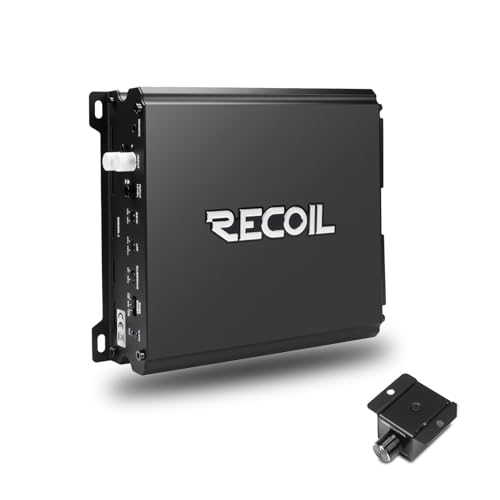
| Recoil DI600.1 | First subwoofer upgrade on a stock electrical system | Class D mono block, 1200W max, 600-class model designation | Budget |
| VEVOR 1200W RMS Class D Monoblock | Maximum features per dollar; flexible impedance matching | 1200W RMS, 1/2/4-ohm stable, remote sub level control, bass boost, phase | Budget |
| Recoil RED1200-1 | High-output single-sub builds with an upgraded electrical system | Class D mono block, 2500W max, 1200-class platform designation | Mid-range |
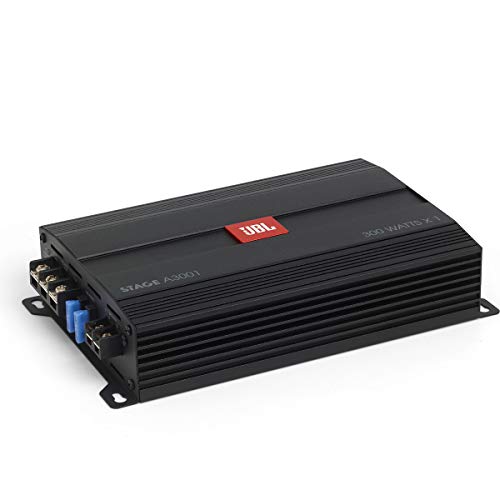
| JBL STAGE A3001 | Clean, modest bass for factory-system upgrades | Mono, 300W x 1, Class D family | Mid-range |
| Fosi Audio V3 Mono | Home audio and desktop mono power | Class D, TPA3255 chipset, 240W, mini monoblock, mains powered | Premium |
| MTX THUNDER1000.1 | All-round car subwoofer amplification | Class D, 1000W RMS, compact chassis, selectable controls | Premium |
| DBASSO Mono Amplifier | High-output sub duty on a tighter budget | 700W RMS continuous, digital Class D, 1-ohm stable | Budget |
Price tiers here describe relative market position, not fixed prices — amplifier pricing moves constantly, and the same model can sit in a different tier depending on the season, the seller and whether a newer revision has launched. Use the tier column to narrow the field, then confirm the current figure before you commit.
How We Chose
This roundup was assembled from published manufacturer specifications, product listings, owner manuals where available, and long-standing category conventions in 12-volt car audio — not from bench measurements or physical evaluation of the units. The selection criteria were deliberately narrow, because mono block amplifiers are a spec-driven purchase. First, RMS output at a stated impedance: maximum or peak figures were treated as marketing numbers unless a continuous rating was also published, since RMS is what determines both real-world loudness and electrical load. Second, stable impedance rating, because 1-ohm stability is a genuine capability rather than a marketing line, and it changes how you wire subwoofers and how much current the amp pulls. Third, efficiency and thermal design, since a Class D amp that runs at roughly 80-90 percent efficiency produces far less waste heat than an older Class AB design of the same output, which matters in an enclosed install location. Fourth, matching requirements: fuse rating, recommended wire gauge, and whether the amp is realistically supportable by a stock alternator. Finally, upgrade path — whether the amp has enough headroom to survive a future subwoofer upgrade without being replaced. Products were then grouped by situation rather than ranked by price, so a reader with a 90-amp alternator is not pushed toward an amp their vehicle cannot feed.
1. Recoil DI600.1 – Best for a First Bass Upgrade on a Stock Electrical System
As an Amazon Associate we earn from qualifying purchases at no extra cost to you.
The Recoil DI600.1 is the amp to look at when you want noticeably better bass than a factory system delivers, but you are not ready to touch the alternator, add a second battery, or run a fresh 1/0-gauge power cable through the firewall. It is a Class D mono block with a single output channel dedicated to subwoofer duty, and it sits in the budget tier, which makes it the natural starting point for a first build. It suits someone adding one subwoofer in a sealed or modestly sized ported enclosure, running it from a factory head unit through a line output converter, and hoping to keep the whole install under a weekend.
The single most important thing to understand about this amp is the gap between its headline number and its model name. The listing advertises 1200W max, while the “600.1” designation points to a 600-watt-class platform. That is not a contradiction — it is the standard way budget car audio is marketed. Max power is a brief peak figure, often quoted at the lowest impedance the amp will tolerate and measured over a fraction of a second. Continuous, or RMS, output is what your subwoofer actually sees during a three-minute song. If you size your subwoofer, your wiring and your expectations around the 600-class figure, you will be satisfied; if you size them around 1200W, you will be disappointed and possibly under-fused.
Key Specs at a Glance
- Topology: Class D mono block, single channel for subwoofer duty
- Headline rating: 1200W max as stated in the listing
- Model class: 600-series designation, which is the realistic continuous target
- Form factor: Compact chassis suited to under-seat and behind-panel mounting
- Controls: Gain and crossover class controls typical of the DI series; confirm exact feature set on the product page
- Price tier: Budget
Why It Works for Stock Electrical Systems
A 600-watt-class Class D amp drawing from a typical 13.8-volt system pulls somewhere in the region of 50 to 60 amps at full tilt, assuming roughly 85 percent efficiency. That is within reach of most factory alternators, which in compact and mid-size vehicles commonly land between 90 and 130 amps, of which the audio system should realistically claim no more than half. That is the entire argument for this amp: it delivers a meaningful bass upgrade without forcing a charging-system project. The other practical advantage of a modest power class is heat. A smaller amp producing less waste heat can live in a tighter space, which is useful when your only mounting options are under a seat or against a side panel.
The DI600.1 also benefits from the general strengths of Class D mono topology: high efficiency, a small footprint relative to output, and a design that is inherently comfortable driving a single low-impedance load rather than splitting power across multiple channels. Mono blocks also simplify tuning, because there is one gain control, one crossover, and no channel-balancing to get wrong.
Pros
- Power class that most stock charging systems can support without modification
- Class D efficiency keeps current draw and heat manageable
- Compact chassis fits tight install locations
- Simple mono signal path with minimal tuning complexity
- Budget tier keeps the total build cost low
- Easy upgrade path from a factory system using a line output converter
Cons
- Headline 1200W max figure can mislead buyers about real continuous output
- Less flexible than amps with 1-ohm stability and remote level control
- May lack the tuning features — phase, subsonic filter, remote bass knob — found on the VEVOR at a similar tier
- Will run out of headroom if you later move to a large, power-hungry subwoofer
How It Compares
The nearest alternative in this list is the VEVOR 1200W RMS monoblock. On features and stated continuous output, the VEVOR wins comfortably: 1200W RMS, 1/2/4-ohm stability, remote subwoofer level control, bass boost and phase adjustment, all in the budget tier. The Recoil wins on electrical realism. If your goal is a clean, modest upgrade on an untouched charging system, the DI600.1 is the lower-risk purchase. If you already have upgraded wiring, an AGM battery or a high-output alternator, the VEVOR gives you substantially more usable output and better system-matching tools for roughly the same money.
2. VEVOR 1200W RMS Class D Monoblock Amp – Best for Maximum Features Per Dollar
The VEVOR 1200W RMS Class D Monoblock is the most feature-dense amplifier in the budget tier of this roundup, and it is the pick for anyone who wants the flexibility to rewire their subwoofer system without buying a new amp. It is rated at 1200W RMS — a genuine continuous figure, not a peak — and it is stable at 1, 2 and 4 ohms, which means it can drive almost any subwoofer configuration you are likely to assemble. It suits a builder who already has, or plans to install, upgraded power and ground wiring, and who wants remote level control from the driver’s seat.
The three tuning features matter more than they sound. A remote subwoofer level control lets you adjust bass output from the front of the car, which is genuinely useful because bass response changes dramatically between a parked car and a moving one, and between a sealed and a ported enclosure. Bass boost adds a low-frequency lift, typically centred in the 40-50Hz region, which can compensate for a subwoofer in a small sealed box that rolls off early. Phase adjustment (usually a 0-180 degree control, sometimes continuously variable) matters when the subwoofer is mounted far from the front speakers, because the acoustic distance can put the sub out of phase with the midbass, creating a cancellation dip that no amount of gain will fix.
Key Specs at a Glance
- Topology: Class D monoblock, single channel
- Continuous output: 1200W RMS as stated in the listing
- Impedance stability: 1, 2 and 4 ohms
- Controls: Remote subwoofer level control, bass boost, phase adjustment
- Efficiency class: Class D, typically 80-90 percent
- Price tier: Budget
Where the 1200W RMS Rating Really Lands
Here is the worked reality of a 1200W RMS Class D amplifier. At roughly 85 percent efficiency, 1200 watts of output requires about 1410 watts of input. At a charging-system voltage of 13.8 volts, that is about 102 amps of current draw. At 12.5 volts — a realistic figure at idle with lights and air conditioning running — it is closer to 113 amps. Almost no stock alternator in a normal passenger car can supply that on top of the vehicle’s own loads. So the honest way to use this amp is to treat 1200W as headroom, not a target: run it at 2 or 4 ohms where it makes proportionally less power, or commit to the electrical upgrades that make 1-ohm operation sustainable.
That said, headroom is not wasted. An amplifier running at half its rated output runs cooler, clips later, and produces cleaner bass than one pushed to its limit. Buying the 1200W VEVOR and using 600W of it is a perfectly rational strategy — and it is why this amp remains a strong value even for a modest subwoofer.
Pros
- 1200W RMS continuous rating, not a peak figure
- 1/2/4-ohm stable, so it matches nearly any subwoofer wiring configuration
- Remote subwoofer level control adjustable from the driver’s seat
- Bass boost and phase adjustment for real system tuning
- Budget tier pricing for a feature set usually found higher up the market
- Enough headroom to survive a future subwoofer upgrade
Cons
- Full-output operation demands upgraded wiring, and likely a high-output alternator or AGM battery
- Feature count adds tuning complexity for a first-time installer
- Bass boost used carelessly can cause clipping and subwoofer damage
- Budget-tier hardware means terminals and connectors deserve careful, torque-conscious installation
How It Compares
Against the Recoil DI600.1, the VEVOR is the more capable amplifier in almost every measurable way: double the stated continuous output, wider impedance flexibility, and three tuning controls the Recoil may not offer. The trade is electrical demand and installation discipline. Against the DBASSO 700W RMS mono, the VEVOR wins on raw output and impedance range, while the DBASSO’s 1-ohm stability and 700W continuous rating make it a lower-draw option for someone who wants high output but has a smaller charging system. If you have the wiring for it, the VEVOR is the budget pick with the longest useful life.
3. Recoil RED1200-1 – Best for High-Output Single-Sub Builds

The Recoil RED1200-1 moves Recoil from the entry tier into serious territory. It is a Class D mono block with a 2500W max headline rating and a “1200-1” model designation, which points to a 1200-watt-class platform — the same continuous class as the VEVOR, but from a brand with a deeper car-audio lineage. It suits a builder running one large, power-hungry subwoofer, typically a dual-voice-coil unit wired to a low final impedance, in a vehicle that already has upgraded power and ground cables, and probably a second battery or a high-output alternator.
The interesting thing about this amp is where it sits in the market. It is priced in the mid-range tier, above the two budget amps here but below the MTX, and it targets the same 1200-watt-class continuous output as the VEVOR. That means the decision between them is not about power — it is about which brand’s build quality, protection circuitry and thermal behaviour you trust more, and about whether you want the RED series’ tuning feature set. For buyers who have been burned by an amp that shut down mid-song on a hot day, paying mid-range money for better thermal management is a rational choice.
Key Specs at a Glance
- Topology: Class D mono block, subwoofer-dedicated single channel
- Headline rating: 2500W max as stated in the listing
- Model class: 1200-series designation, indicating a 1200-watt-class continuous platform
- Typical current draw at full output: on the order of 100 amps at 13.8 volts, assuming ~85 percent efficiency
- Recommended power cable: 4-gauge minimum, 1/0-gauge for long runs or sustained full-output use
- Price tier: Mid-range
What You Are Actually Paying For
Mid-range mono amps are usually separated from budget ones by three things: the size of the internal power supply, the sophistication of the protection circuitry, and the quality of the terminals and controls. A larger switch-mode power supply with more capacitance handles transient bass peaks — the kick drum hits that demand far more than average power — with less voltage sag. Better protection circuitry means the amp distinguishes between a genuine fault and a momentary over-current condition, rather than shutting down defensively the moment the beat gets heavy. And better terminals mean your 4-gauge or 1/0-gauge cable actually stays tight, which is one of the most common causes of mysterious amp failures.
The 2500W max figure is best read as a peak rating at the amp’s lowest stable impedance, used for short bursts. It is useful for marketing and for sizing a fuse, and not much else. If your subwoofer is rated for 600W RMS, feeding it 1200W of continuous power is a recipe for a burnt voice coil — the gain control exists precisely so you can dial the amp back to match the driver.
Pros
- 1200-watt-class continuous platform with a 2500W peak headline
- Established car-audio brand with a broad installer support base
- Mid-range build quality aimed at sustained high-output use
- Enough headroom for a large dual-voice-coil subwoofer wired to low impedance
- Better thermal and protection design than the budget tier typically offers
Cons
- Full-output use requires substantial electrical upgrades
- Larger chassis than the budget amps, so install location matters more
- Mid-range pricing for output that a budget amp also claims on paper
- Max rating is easy to misread as continuous output
How It Compares
Compared with the VEVOR 1200W RMS monoblock, the RED1200-1 offers a similar continuous power class at a higher price, with the difference concentrated in build quality, thermal behaviour and brand support rather than in the specification sheet. If you are chasing the lowest cost per watt and have the wiring to support it, the VEVOR is the better value. If you are running a competition-adjacent system, playing at high output for long periods, or simply want the reassurance of a mid-range amplifier’s protection design, the RED1200-1 justifies the step up. Against the MTX THUNDER1000.1, the Recoil offers more headline output, while the MTX counters with a smaller chassis and a lower electrical demand.
4. JBL STAGE A3001 – Best for Clean, Modest Bass in a Factory-System Upgrade
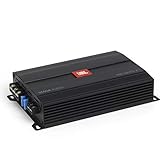
The JBL STAGE A3001 is the odd one out in this roundup in the most useful way: it is a 300W x 1 mono amplifier, which is a fraction of the output of everything else here, and that is exactly why it belongs. It suits a driver who wants to add a single efficient subwoofer to a factory audio system, keep the factory head unit, and change nothing else about the car. JBL’s Stage series is positioned as an accessible entry into the brand’s car audio ecosystem, and the A3001 is the subwoofer channel of that range.
Three hundred watts into one channel sounds modest next to a 1200W monoblock, but context matters. A 300W RMS amplifier driving a reasonably efficient subwoofer in a well-built enclosure will produce bass that most listeners describe as more than adequate, and it will do so on a stock charging system with 8-gauge power cable and a 40-60 amp fuse. The gain in a system like this comes from enclosure design, not from amplifier power: a subwoofer in a properly tuned enclosure will outperform a bigger amp driving the same driver in a leaky, poorly braced box every time.
Key Specs at a Glance
- Topology: Mono, single channel, 300W x 1 as stated in the listing
- Class: Class D family, compact and efficient
- Power cable: 8-gauge is generally adequate for this power class on short runs
- Fusing: typically 40-60 amps total for a 300W-class amp
- Typical current draw at full output: roughly 25-30 amps at 13.8 volts
- Price tier: Mid-range
One specification to verify on the product page is the impedance at which that 300W figure is quoted. Amplifier power ratings are meaningless without a load attached — 300W at 2 ohms is a very different amplifier from 300W at 4 ohms. A mono amp that makes 300W at 2 ohms will typically make roughly 150-200W at 4 ohms, which changes which subwoofer you should buy.
Why a 300W Mono Amp Still Makes Sense
Efficiency of the whole system is the argument. A 300W amp drawing about 25-30 amps can run on the factory alternator in nearly any car, needs only 8-gauge cable, and produces minimal heat — which means it can be mounted almost anywhere, including tight spaces where a 1200W amp would cook itself. For a listener whose priority is balanced sound with genuine low-frequency extension rather than window-rattling output, this is the smarter purchase. It is also the amp least likely to expose weaknesses elsewhere in the vehicle: no dimming headlights, no voltage sag, no whining alternator noise from an overloaded ground.
The trade-off is headroom. A 300W amp running a subwoofer at its limit will clip earlier than a larger amp running the same subwoofer at half output, and clipping is what destroys subwoofers. If you like to listen loud for extended periods, size up.
Pros
- Runs comfortably on a stock charging system with no electrical upgrades
- 8-gauge power cable and a modest fuse keep installation simple and cheap
- Low heat output means flexible mounting options
- Clean, well-known brand with wide installer familiarity
- Ideal match for a single efficient subwoofer in a factory-system upgrade
- Compact and easy to remove or relocate if you change vehicles
Cons
- 300W x 1 is limited headroom for large or inefficient subwoofers
- Verify the impedance at which the 300W figure is quoted before buying a subwoofer
- Not the right choice if you plan a serious bass build later
- Fewer tuning features than the VEVOR or the higher-tier amps here
How It Compares
Against the Recoil DI600.1, the JBL offers roughly half the power class at a higher price tier, and the Recoil is the better value if raw output is the goal. The JBL’s advantage is brand support and a design philosophy tuned toward clean, modest, factory-integration-friendly bass rather than maximum output. Against the DBASSO 700W RMS mono, the comparison is even sharper: the DBASSO offers more than twice the continuous output at a lower price tier, but demands more current, more cable, and more care. Choose the JBL if you want the simplest possible install with the least risk; choose the DBASSO if you want output and can support it.
5. Fosi Audio V3 Mono – Best for Home Audio and Desktop Mono Power

The Fosi Audio V3 Mono is not a car amplifier, and it should not be evaluated as one. It is a mini monoblock Class D power amplifier for home audio speakers, built around the TPA3255 chipset and rated at 240W. It suits a desktop listener driving a pair of passive bookshelf speakers with one amp per cabinet, a home setup where a single speaker needs dedicated power, or anyone who wants a small, cool-running amplifier on a shelf rather than a full-size receiver. If your project involves 12-volt vehicle wiring, stop here and look at the car amps above.
What makes the V3 Mono interesting is the chipset. The TPA3255 is a well-documented Class D amplifier integrated circuit that has become the backbone of the modern compact amplifier market, and it delivers high efficiency with very low idle heat — typically running barely warm to the touch at normal listening levels. That is a meaningful practical difference from a traditional Class AB home amplifier of similar output, which would need substantial heatsinking and ventilation. In a desktop or small-room system, that means you can place the amp almost anywhere.
Key Specs at a Glance
- Topology: Mini monoblock, single channel, one amp per speaker
- Chipset: TPA3255 Class D amplifier IC
- Rated output: 240W as listed
- Power source: Mains-powered external supply, not 12-volt vehicle DC
- Efficiency: Class D, high efficiency with low idle heat
- Price tier: Premium
As with the JBL, the 240W figure needs a load context to be meaningful. Compact Class D amplifiers in this class typically achieve their highest output figures at 4 ohms with the largest compatible power supply, and less at 8 ohms, which is the more common impedance for home hi-fi speakers. If your speakers are 8-ohm, plan on roughly half the headline number and choose speakers with reasonable sensitivity.
Why Monoblocks Work in Home Systems Too
Running one amplifier per speaker, rather than a single stereo amp, isolates the two channels electrically. Each speaker gets its own power supply, so a demanding passage in one channel cannot drag down the voltage available to the other. It also lets you place the amplifier right next to the speaker it drives, which shortens speaker cable runs — and shorter cable runs mean less resistance and less capacitance, both of which can subtly affect high-frequency response. For desktop systems where the speakers sit close together, a pair of these tiny amps fits neatly behind or beneath each cabinet.
The practical downside is cabling. Two amps mean two power supplies, two sets of speaker cables, and a signal split that requires either a preamp with two outputs or a splitter. It is more clutter than a single stereo amp, and it is only worth it if you specifically want the isolation or the per-channel placement.
Pros
- TPA3255 Class D chipset with high efficiency and low idle heat
- Very small footprint, suited to desktop and shelf placement
- One amp per speaker isolates channels and shortens cable runs
- Runs cool enough to place without dedicated ventilation
- Suits bi-amping and single-speaker applications
Cons
- Not usable in a 12-volt car audio system
- Requires one unit per speaker, which doubles cost and cabling
- 240W headline figure depends on impedance and power supply
- Needs a preamp or splitter to feed two units from one source
How It Compares
There is no direct alternative to the V3 Mono in this list, because everything else is a 12-volt car amplifier. The honest comparison is category-level: if you are building a car system, the MTX THUNDER1000.1 and the VEVOR are the relevant choices, and the Fosi is simply the wrong tool. If you are building a home or desktop system, the V3 Mono is the only product here that belongs in the conversation, and its nearest real competitor is a conventional stereo Class D amplifier — which would give you two channels in one box at a lower total cost, but without the per-channel isolation and placement flexibility.
6. MTX THUNDER1000.1 – Best Overall for Car Subwoofer Amplification

The MTX THUNDER1000.1 is the amp most people should buy if they want a car subwoofer amplifier that simply works, fits in a tight space, and does not demand a charging-system rebuild. It is a Class D mono block rated at 1000W RMS — a continuous figure, not a peak — in a compact chassis with selectable controls for system matching. It suits a driver running a single 10-inch or 12-inch subwoofer in the 400-800W RMS range who wants headroom on tap, reliable thermal behaviour, and a brand with decades of car audio history behind it.
The Thunder series has been a fixture of the car audio market for a long time, and that longevity matters for a specific reason: documentation. Wiring diagrams, gain-setting guides, and installer familiarity are all easier to come by for a well-known series than for a newcomer brand. If you are installing your first amplifier and want to find a forum thread or a video that shows exactly how someone else mounted and wired this model in a similar vehicle, that is a real advantage that does not show up on a spec sheet.
Key Specs at a Glance
- Topology: Class D mono block, single channel for subwoofer duty
- Continuous output: 1000W RMS
- Form factor: Compact chassis, notably smaller than typical full-size monoblocks
- Controls: Selectable settings for system matching; confirm the exact feature set on the product page
- Typical current draw at full output: roughly 85-95 amps at 13.8 volts, assuming ~85 percent efficiency
- Price tier: Premium
The Case for 1000W RMS as a Sweet Spot
Here is the arithmetic that makes 1000W RMS the most sensible target for a serious but not extreme build. At 85 percent efficiency, 1000 watts of output requires roughly 1176 watts of input. At 13.8 volts that is about 85 amps; at a realistic 12.5 volts under load, closer to 94 amps. A healthy 120-amp alternator, with the vehicle’s own electrical load consuming 40-50 amps, has roughly 70-80 amps of surplus — which means a 1000W amp at full output is right at the edge of what a stock system can sustain, and comfortably within range if you upgrade to a 1/0-gauge power cable, add a second ground, and replace the factory battery with an AGM unit. That is a much smaller project than the electrical overhaul a 2500W-class amp demands, and it delivers bass that satisfies the overwhelming majority of listeners.
The compact chassis deserves specific mention. Mono amplifiers are often long, and finding a mounting location that provides airflow, a short ground path, and access to the controls is a recurring problem in modern vehicles with tightly packed interiors. A smaller footprint opens up under-seat and side-panel locations that would otherwise be unavailable.
Pros
- 1000W RMS continuous output from a well-established brand
- Compact chassis fits install locations larger amps cannot
- Selectable controls for matching to different subwoofer configurations
- Wide documentation and installer familiarity
- Electrical demand is manageable with modest upgrades rather than a full rebuild
- Enough headroom for a future subwoofer upgrade within the 1000W class
Cons
- Premium tier pricing for output a budget amp also claims
- Full output still requires upgraded wiring and ideally an AGM battery
- Selectable control set is less extensive than the VEVOR’s remote level, bass boost and phase trio
- 1-ohm operation, if supported, will push current draw beyond stock-system limits
How It Compares
Against the Recoil RED1200-1, the MTX gives up some headline output — 1000W RMS versus a 1200-watt-class platform — but wins on chassis size, electrical friendliness and brand documentation. For a daily-driven vehicle where the amp has to disappear into the interior, the MTX is the more practical choice. Against the VEVOR 1200W RMS monoblock, the MTX costs more and offers fewer tuning controls, but its continuous rating is unambiguous and its thermal behaviour is the product of a mature design. If you want the lowest cost per rated watt, buy the VEVOR. If you want the amp you are least likely to think about again, buy the MTX.
7. DBASSO Mono Amplifier – Best for High-Output Sub Duty on a Tighter Budget

The DBASSO Mono Amplifier, from Best Balance Audio Systems, occupies a useful gap: 700W RMS continuous output, digital Class D topology, 1-ohm stability, and a budget price tier. It is specifically designed for high-output subwoofer duty, which means its power supply is built to sustain continuous bass rather than to produce an impressive peak number for a fraction of a second. It suits a builder who wants real output, runs a dual-voice-coil subwoofer that can be wired to 1 ohm, and is willing to upgrade power and ground wiring but does not want to buy a 1200W-class amplifier and the electrical infrastructure it implies.
The 1-ohm stability is the headline capability. Wiring a dual-voice-coil subwoofer’s coils in parallel presents 1 ohm if each coil is 2 ohms, which is the most common way to extract maximum power from a mono amplifier. Not every budget amp is genuinely stable at that load — some list 1-ohm support but derate heavily or trigger protection under sustained demand. If the listing states 1-ohm stability as a design feature, that is a meaningful capability at this price point.
Key Specs at a Glance
- Topology: Digital Class D mono amplifier
- Continuous output: 700W RMS
- Impedance stability: 1 ohm
- Design intent: specifically engineered for high-output subwoofer duty
- Typical current draw at full output: roughly 60-70 amps at 13.8 volts, assuming ~85 percent efficiency
- Recommended power cable: 4-gauge for runs up to about 15 feet
- Price tier: Budget
The 700W Middle Ground
Seven hundred watts RMS is a genuinely useful number because it sits below the threshold where a stock charging system becomes the limiting factor, but well above the point where bass starts to feel strained. At 85 percent efficiency, 700 watts of output needs about 824 watts of input, which is roughly 60 amps at 13.8 volts and about 66 amps at 12.5 volts. In a car with a 120-amp alternator, that is sustainable with upgraded cable and a healthy battery; in a car with a 90-amp alternator, it is sustainable if you accept some voltage sag at sustained full output and keep the gain set sensibly.
Compared with the 1200W-class amps here, the DBASSO asks for roughly half the electrical commitment while delivering a little over half the rated output. That is a favourable trade for most real-world systems, because the last 500 watts of amplifier output costs disproportionately more in wiring, batteries and alternator upgrades than the first 700.
Pros
- 700W RMS continuous output in the budget price tier
- 1-ohm stable, enabling maximum output from dual-voice-coil subwoofers
- Digital Class D design with high efficiency and modest heat output
- Lower current demand than 1200W-class amplifiers
- Purpose-built for sustained high-output subwoofer duty
- 4-gauge power cable is generally sufficient, keeping install cost down
Cons
- Less output headroom than the VEVOR or the Recoil RED1200-1
- Smaller brand with less installer documentation available
- 1-ohm operation still requires upgraded wiring and a healthy charging system
- Fewer tuning features than the VEVOR at a similar tier
How It Compares
Against the VEVOR 1200W RMS monoblock, the DBASSO gives up 500 watts of rated output and the remote level, bass boost and phase controls, but demands significantly less current and is easier on a stock electrical system. If your subwoofer is rated around 500-750W RMS, the DBASSO is arguably the better-matched amplifier, because running a subwoofer near its rating with a well-matched amp is safer than running it at half its rating from an oversized one with the gain set by ear. Against the JBL STAGE A3001, the DBASSO more than doubles the continuous output for a lower price tier, at the cost of a more demanding installation.
How to Choose
Choosing a mono block amplifier comes down to five decisions, and making them in the right order prevents the most expensive mistakes. Most buyers start with power, which is the wrong starting point — the correct order is subwoofer, then impedance, then power, then electrical capacity, then features.
Step 1: Start With Your Subwoofer’s RMS Rating, Not Its Peak Rating
Every subwoofer has two numbers: an RMS or continuous power rating, and a peak or max rating. Size your amplifier to the RMS figure. A subwoofer rated 500W RMS and 1500W peak should be paired with an amplifier that can deliver 500-750W RMS. There is nothing wrong with buying more amplifier than you need — headroom is good — but the gain control must then be set so the amplifier’s actual output matches the driver’s rating. An amplifier’s gain knob is not a volume control; it is a sensitivity control that matches the amplifier’s input stage to the head unit’s preamp voltage. Turning it up does not make the amplifier produce more power, it just makes it reach full output at a lower head-unit volume, and it pushes the signal into clipping much sooner.
Step 2: Work Out Your Final Impedance Before You Buy
Impedance is where most first-time buyers get confused, and it determines how much of an amplifier’s rated power you can actually access. The wiring rules are simple:
- Single voice coil, 4 ohms: presents 4 ohms. An amp rated 1000W at 1 ohm will typically make roughly 250-400W at 4 ohms.
- Single voice coil, 2 ohms: presents 2 ohms. Expect roughly 500-700W from that same 1000W-at-1-ohm amplifier.
- Dual voice coil, 2 ohms per coil, wired in parallel: presents 1 ohm. This is how you access the full rated output.
- Dual voice coil, 4 ohms per coil, wired in parallel: presents 2 ohms.
- Dual voice coil, 4 ohms per coil, wired in series: presents 8 ohms. Some mono amps will not be stable here or will make very little power.
- Two dual-4-ohm subwoofers, all coils in parallel: presents 1 ohm.
- Two dual-4-ohm subwoofers, coils in series then the pairs in parallel: presents 4 ohms.
The practical rule is that for an amplifier limited by its power supply, halving the impedance roughly doubles the output until the supply runs out of current. This is why 1-ohm stability is valuable: it is the only way to get the full rated number out of most mono amps.
Step 3: Do the Current Draw Arithmetic
This is the calculation almost nobody does, and it is the one that determines whether your install works. Amplifier output power is not the same as the power it draws from the vehicle.
Worked example — a 1000W RMS Class D amplifier: assume 85 percent efficiency. Input power equals output power divided by efficiency, so 1000 ÷ 0.85 = approximately 1176 watts. Current equals watts divided by volts, so 1176 ÷ 13.8 = approximately 85 amps. Under load, with the engine idling and accessories running, system voltage might drop to 12.5 volts, giving 1176 ÷ 12.5 = approximately 94 amps. Now compare that to your alternator. A typical compact car has a 90-130 amp alternator, and the vehicle itself consumes 40-60 amps for ignition, lights, fans, and electronics. That leaves 30-90 amps of surplus. A 1000W amp at full output will consume all of it. The amp does not run at full output continuously — music is dynamic, and average draw is often a third of peak — but sustained bass-heavy material will expose the shortfall as dimming lights, voltage sag and, in the worst case, amplifier protection shutdowns.
Step 4: Size Your Cable and Fuse From the Amplifier’s Fuse Rating
The amplifier’s own fuse rating, printed on the chassis, is the best guide to cable size. Add up the fuse values and match them to the table below, which reflects standard 12-volt wiring practice.
| Total Amplifier Fuse Rating | Minimum Cable Size | Typical Run Length | Approximate Power Class |
|---|---|---|---|
| Up to 60A | 8 AWG | Up to 12 ft | Up to ~300W RMS |
| 60-100A | 4 AWG | Up to 15 ft | ~300-700W RMS |
| 100-150A | 2 AWG or 1/0 AWG | Up to 18 ft | ~700-1200W RMS |
| 150-250A | 1/0 AWG | Up to 20 ft | ~1200-2000W RMS |
| 250A and above | Dual 1/0 AWG | Any | 2000W RMS and up |
Two rules matter as much as the gauge. First, the ground cable should be the same gauge as the power cable, and its run should be as short as possible — under three feet is the target, bolted to bare, unpainted chassis metal. A long ground run is one of the most common causes of alternator whine and intermittent amplifier faults. Second, the fuse goes as close to the battery as practical, within about 18 inches, so that a short circuit in the cable itself is protected. Fusing only at the amplifier protects the amplifier, not the car.
Step 5: Understand Thermal Protection and Where the Amp Lives
Every amplifier here has thermal protection: a circuit that reduces output or shuts the amp down when internal temperature exceeds a safe threshold. It is a protective feature, not a defect, but repeated thermal shutdowns shorten component life and ruin a listening session. Three factors determine whether you will ever trigger it. Efficiency is the first — Class D amps typically run at 80-90 percent efficiency, so a 1000W amp produces roughly 100-200W of waste heat at full output, versus 400-500W for an equivalent Class AB design. Mounting location is the second: amplifiers need airflow, and an amp buried under a seat with a blanket of carpet against its heatsink will run far hotter than the same amp on a vertical panel in open air. Mounting orientation is the third — heat rises, so mounting an amp with its heatsink fins horizontal and facing up traps heat, while a vertical mount lets convection carry it away. If you must mount in an enclosed space, choose a smaller amp with lower output rather than adding fans to a large one.
Step 6: Match Features to How You Actually Listen
A remote subwoofer level control is the single most useful feature for daily driving, because bass perception changes dramatically with vehicle speed and road noise, and reaching behind a seat to adjust gain while driving is not an option. A phase control matters in vehicles where the subwoofer is more than about three feet from the front midbass drivers, since the acoustic delay can cause cancellation around the crossover frequency. Bass boost is the most misused control on any amplifier: it applies a fixed low-frequency lift, and stacking