Our Top Picks
 Platypus Platy 2-Liter Ultralight Collapsible Backpacking Water Bottle2L7.5 x 7.5 x 13.8 inches0.1 PoundsCheck on Amazon
 HydraPak Seeker Collapsible Camping Water Storage2 Liter1.77 x 5.91 x 14.37 inches0.2 poundsCheck on Amazon
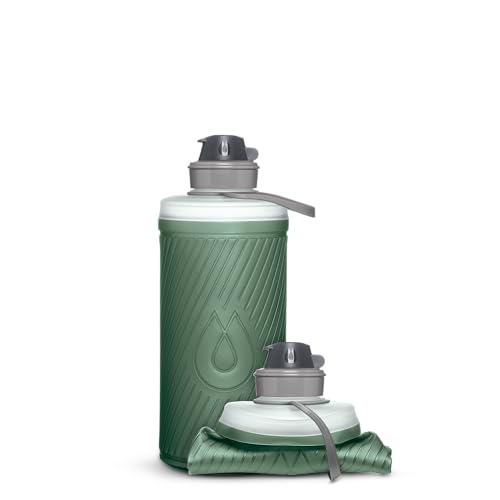 HydraPak Flux Collapsible Backpacking Water Bottle32 Ounces3.54 x 11.42 x 4.72 inches0.2 PoundsCheck on Amazon
 TakeToday Collapsible Water Bottles with Straw for Travel21 Ounces2.91 x 2.91 x 10.04 inches0.45 poundsCheck on Amazon
The best collapsible water bottles for backpacking are the ones sized to the longest dry stretch on your route, light enough that you forget them while they are empty, and tough enough that a seam will not split on day three. Seven soft bottles follow, ranging from a 350 milliliter flask to two-liter camp containers, and they are not interchangeable: a flask for a running vest and a two-liter bladder for camp are different tools.
Instead of ranking them against one another, this guide starts with arithmetic. You will find a water-carry planner, a weight-and-volume comparison between soft and rigid bottles, a short guide to treating water, and a product-by-product look at each listing. Everything about the products comes from titles and manufacturer documentation, and the numbers in the planner are estimates with assumptions we spell out.
Step one: the water-carry planner
Platypus Platy 2-Liter Ultralight Collapsible Backpacking Water Bottle


As an Amazon Associate we earn from qualifying purchases. Product prices and availability are accurate as of the date/time indicated.
HydraPak Seeker Collapsible Camping Water Storage (2L, Sage Green) | BPA & PVC Free, Leakproof, Ultra-Light, Filter Compatible, Ultra-Durable, for Camping, Backpacking, Emergency Preparedness


As an Amazon Associate we earn from qualifying purchases. Product prices and availability are accurate as of the date/time indicated.
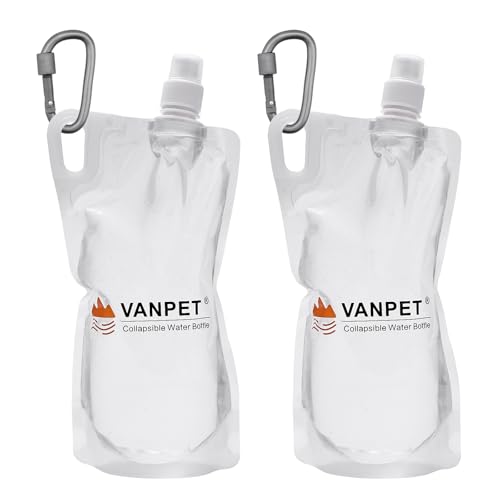
VANPET 1L Hiking Collapsible Water Bottles, 33OZ BPA-Free Plastic Flasks, Reusable Drink Bags, Foldable Backpacking Water Bottle for Travel Camping Hiking (2-Pack)


As an Amazon Associate we earn from qualifying purchases. Product prices and availability are accurate as of the date/time indicated.
HydraPak Flux Collapsible Backpacking Water Bottle (1L, Sage Green) | BPA Free, Ultra-Light, Spill-Proof Twist Cap, Ultra-Durable, High Flow, Bail Handle, for Hiking, Camping, Backpacking


As an Amazon Associate we earn from qualifying purchases. Product prices and availability are accurate as of the date/time indicated.

HydraPak Stow Collapsible Water Bottle (350ml, MTN Mammoth Grey) | BPA Free, Ultra Light, Spill-Proof Twist Cap, High Flow, Abrasion-Resistant, for Hiking, Camping, Backpacking, Skiing, Biking


As an Amazon Associate we earn from qualifying purchases. Product prices and availability are accurate as of the date/time indicated.
TakeToday Collapsible Water Bottles with Straw for Travel, 21oz, Black | BPA free, Platinum Silicone Foldable bottle with Leak-proof Lid, Wide Mouth, Carry Strap, for Outdoor, flights


As an Amazon Associate we earn from qualifying purchases. Product prices and availability are accurate as of the date/time indicated.

AXEN 500ML Soft Flask, TPU Foldable Running Hydration Flask, Soft Collapsible Water Bottle for Hydration Pack Cycling Marathon Running Hiking

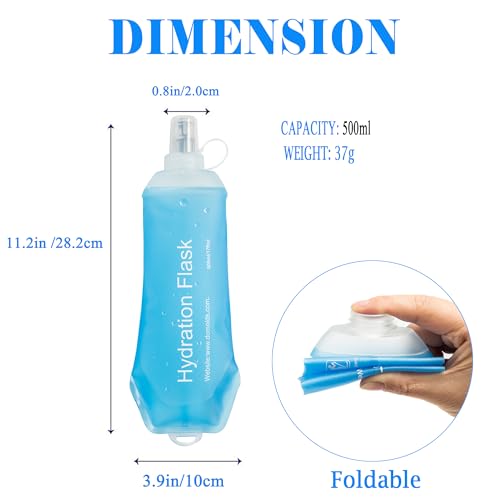


As an Amazon Associate we earn from qualifying purchases. Product prices and availability are accurate as of the date/time indicated.
Most backpackers carry too much water or too little because they never write down the plan. Try this worked example. The assumptions are ours and you should adjust them for your own body and route.
- Trip: a two-night loop with three hiking days.
- Pace: about 2 miles per hour, with 6 hours of hiking per day.
- Water use while hiking: about 0.5 liter per hour in mild weather, so 3 liters per hiking day. This is a planning estimate and not medical advice.
- Camp use: about 2 liters per evening and morning for cooking, drinking and cleaning.
- Source spacing: a reliable creek every 6 miles on day one, but a 10-mile dry stretch on day two.
On day one, with sources every 6 miles, you hike about 3 hours between refills and need around 1.5 liters at a time, so a 1-liter bottle plus a flask is enough. On day two, the 10-mile dry stretch takes roughly 5 hours at 2 miles per hour, which is about 2.5 liters of hiking water, plus a margin for heat, which brings you to around 3 liters of capacity. At camp, you want to fill up and carry extra for cooking and the next morning, which is where a 2-liter soft container earns its keep.
| Situation | Water to carry (estimate) | Capacity that fits |
|---|---|---|
| Short day hike, creek every few miles | 0.5 to 1 L | Single 500 ml to 1 L flask |
| Typical backpacking day, source every 6 miles | 1.5 to 2 L | 1 L plus a smaller flask |
| Long dry stretch, warm weather | 3 L or more | Two 1 L bottles plus a 2 L reservoir |
| Dry camp, cooking and morning use | 3 to 4 L | 2 L soft container, plus a bottle |
The point of collapsible bottles is that you can bring the capacity for the worst stretch and still have a small, light pack when you are not carrying water. Rigid bottles take up the same volume full or empty. Soft bottles flatten.
Step two: the weight and volume trade
None of the listings states bottle weight, so check the product pages. As a general estimate, a rigid one-liter bottle often weighs somewhere in the range of 150 to 300 grams, while a soft one-liter bottle often weighs well under 100 grams. Treat those as ballpark numbers and not as claims about any listed product.
| Capacity plan | Rigid bottles (estimate) | Soft bottles (estimate) | Saving (estimate) |
|---|---|---|---|
| Three 1-liter containers | About 450 to 900 g | About 150 to 300 g | About 300 to 600 g |
| Packed volume when empty | Three bottle-sized cylinders | A few folded sheets | Roughly 2 L of pack space |
A saving of a third to half a kilogram is not trivial for an ultralight hiker, but it comes with trade-offs. Soft bottles are more likely to puncture or abrade, they can be harder to drink from on the move, and they do not stand up on their own unless the design includes a base. That is why many people carry one rigid bottle and one or two soft ones. For help with the rigid half of that pair, see our look at insulated water bottles for hiking.
Seven bottles side by side
“Price tier” compares the listings with each other. The VANPET price covers a two-pack, so its per-bottle cost is lower than the tier suggests.
| Model | Key claims from the title | Price tier | Best for |
|---|---|---|---|
| VANPET 1L Hiking Collapsible Bottles (2-pack) | 33 oz, BPA-free plastic, foldable drink bags | Budget | Two bottles for the price of one |
| AXEN 500ML Soft Flask | TPU, foldable, for hydration packs and running | Budget | Running vests and day hikes |
| Platypus Platy 2-Liter Ultralight Collapsible Bottle | 2 L, ultralight, collapsible, backpacking | Budget | Camp water and long dry stretches |
| HydraPak Stow 350ml Collapsible Bottle | Spill-proof twist cap, high flow, abrasion-resistant | Mid-range | Emergency flask and sips on the go |
| TakeToday Collapsible Bottle with Straw, 21 oz | Silicone, leak-proof lid, wide mouth, carry strap | Mid-range | Travel and flights more than trail |
| HydraPak Seeker Collapsible Water Storage 2L | BPA and PVC free, leakproof, filter compatible | Premium | Camp storage with a filter |
| HydraPak Flux Collapsible Backpacking Bottle 1L | Spill-proof twist cap, bail handle, high flow | Premium | Trail bottle with a handle |
The seven bottles, one at a time
Platypus Platy 2-Liter Ultralight Collapsible Backpacking Water Bottle: the camp-water classic
The title is short and says what matters: 2 liters, ultralight, collapsible, built for backpacking. It does not include materials, cap type or weight, so check the product page. At 2 liters, this is not a drinking bottle for the trail but a carrying and storage container, and it fits the camp water use in the planner.
Two liters of water weighs about 2 kilograms, which is a real load, so you will fill it only when you need to. The ability to fold flat means you carry it nearly weightless until you reach a dry camp. This is the main reason ultralight hikers keep one in the pack.
A big soft bottle also acts as a settling container for a gravity filter, a pot-filling reservoir and a rinse container. The title does not state filter compatibility, so verify threads and fittings if you plan to connect one. Different brands use different thread standards, and a mismatch means a workaround or a leak.
Soft bottles of this size can feel floppy when full. Set them against a tree or in a pot to keep them upright, and avoid dragging them over rock. Rinse and dry them after every trip, or they develop an odor.
One more use worth planning: a soft 2-liter container can carry water to a camp kitchen so you filter once and cook from the container, which saves trips back to the source.
Pros
- 2 liter capacity for dry stretches and camp use
- Ultralight and collapsible, per the title
- Budget tier within this set
- Packs down to almost nothing
Cons
- Cap, material and weight are not stated in the title
- Filter compatibility is not stated; check the listing
- Heavy and floppy when full
Who it’s for: backpackers who need extra camp capacity without carrying a rigid jug.
HydraPak Seeker Collapsible Camping Water Storage, 2L: the filter-friendly camp reservoir
The Seeker is the other 2 liter option in the set, in Sage Green. The title lists BPA and PVC free construction, a leakproof design, ultra-light weight and ultra-durable build, filter compatibility, and uses for camping, backpacking and emergency preparedness. Those are marketing claims, not measured figures, but the filter compatibility line is the practical difference from the Platypus.
Filter compatibility is helpful for a clean workflow: you scoop untreated water into the Seeker, then thread a filter on the outlet and let gravity do the work. The title does not say which filters or threads, so check the product page before ordering. A bottle that does not fit your filter is only a bucket.
It is the second most expensive item here, which suggests a focus on durability. “Ultra-durable” is a claim, and the best check is to look for buyer notes on seam wear and cap leaks after months of use. Soft containers fail most often at seams, caps and folds, so be gentle with them, especially in cold weather when plastic is stiffer.
The emergency preparedness mention is worth noting. A 2 liter soft container is also handy for a storm kit or a car trunk. Remember that stored water should be rotated and the container cleaned according to the manufacturer’s guidance, and that treatment may be needed for safety.
Hang it from a branch or a tent loop, if the design allows, so gravity does the filtering while you set up camp. Check the listing for the hanging points.
Pros
- BPA and PVC free, per the title
- Filter compatibility named in the title
- Leakproof and ultra-durable claims, to verify in buyer notes
- Useful for camp and emergency storage
Cons
- Premium tier within this set
- Exact filter threads are not stated
- Weight is not given in the title
Who it’s for: campers and hikers who use a filter and want a reliable 2 liter reservoir.
VANPET 1L Hiking Collapsible Water Bottles, 2-Pack: two bottles, one low price
The VANPET listing sells two 1-liter, 33 ounce BPA-free plastic bottles, called flasks and reusable drink bags, foldable for travel, camping and hiking. The pack of two is the notable feature, since you can fill both for a dry stretch or carry one as a spare. Per-bottle cost is lower than the tier suggests.
The title does not state the plastic type, cap style, weight or seam construction. Budget soft bottles vary a lot in finish quality, and it pays to fill them with water and squeeze at home before a trip. If a seam weeps or a cap leaks, you will know before you hike.
A 1 liter size is a sensible middle ground. It is large enough for a few hours of hiking in mild weather, according to our planner, and small enough to handle when full. Two bottles give 2 liters of capacity with redundancy: if one fails, you still have the other.
A practical tip is to keep one bottle for treated water and one for untreated, and mark them so you do not mix them up. Mixing is a common way to reintroduce contaminants to treated water. Clean both well at the end of the trip.
Remember that a 33 oz capacity is the brim figure. Leave an inch of headspace so the cap closes cleanly, and squeeze out air when you screw it on to reduce sloshing.
Pros
- Two 1 liter bottles in the pack
- BPA-free plastic, per the title
- Budget tier, with a low per-bottle cost
- Foldable for packing
Cons
- Cap style, seam quality and weight are not in the title
- Quality at this tier can vary; test them at home
- Filter compatibility is not stated
Who it’s for: budget-minded hikers who want two soft bottles and will check them before the trail.
HydraPak Flux Collapsible Backpacking Water Bottle, 1L: the trail-ready bottle with a handle
The Flux, in Sage Green, is a 1 liter bottle described as BPA free, ultra-light, with a spill-proof twist cap, ultra-durable construction, high flow, a bail handle, and use for hiking, camping and backpacking. The bail handle is a visible feature: a wire or loop that lets you clip the bottle to a pack or hang it from a branch.
High flow describes the opening and cap, which are designed so water pours quickly. That helps when you fill from a trickling source or pour into a pot or filter. The title does not state the opening diameter, so look at photos to see how easy it is to dip into a stream or a shallow pool.
This is the most expensive 1 liter option here, together with the Seeker at the top of the set. For that price, check the build: cap threads that feel solid, seams without gaps, and a handle that does not tear out. Buyer feedback on cold-weather flexibility and cap wear will tell you more than the title.
A 1 liter soft bottle is a good fit for hikers who want a drinkable trail bottle that collapses after use. Because it is spill-proof by claim, it can ride in a pack side pocket. Do not rely on any bottle to stay watertight inside a sleeping bag stuff sack without trying it first.
Pros
- Bail handle named in the title
- Spill-proof twist cap and high flow per the title
- BPA free and ultra-light claims
- Good size for a trail bottle
Cons
- Premium tier among the 1 liter options
- Weight and opening size are not stated
- Filter compatibility is not mentioned
Who it’s for: backpackers who want a single quality 1 liter soft bottle with a clip-on handle.
HydraPak Stow Collapsible Water Bottle, 350ml: a flask, not a bottle for the whole trail
The Stow in MTN Mammoth Grey is a 350 milliliter bottle, roughly 12 ounces, with a spill-proof twist cap, high flow, and abrasion-resistant build, for hiking, camping, skiing and biking. This is a small flask, and it is not meant to supply a backpacker’s water for a day. It is a backup, a top-up or an emergency container.
Why would a backpacker want one? Because it weighs very little and packs down to the size of a wallet. It can ride in a jacket pocket for sips while you walk, serve as a mixing flask for drink powder, or provide a few extra ounces of emergency water. The title does not state weight, so check the product page.
The planner explains the capacity problem. At 0.5 liter per hour, 350 milliliters is about 40 minutes of hiking. For real trips, treat the Stow as a complement to a bigger bottle or a hydration reservoir. The price tier is mid-range, which is more than the budget flasks, so the extra cost should buy a better cap and tougher material. Check buyer comments.
A small flask also makes sense for trail runners and cyclists who already carry a vest or pack and want to add a bit of capacity. For skiing, remember that water can freeze and split a soft flask, so keep it close to your body and do not assume it tolerates freezing.
Pros
- Tiny when collapsed, with a spill-proof twist cap per the title
- Abrasion-resistant and high flow claims
- Works for hiking, camping, skiing and biking
- Good backup or top-up container
Cons
- 350 milliliters is too small for a main bottle
- Mid-range price for such a small flask
- Weight and freeze resistance are not stated
Who it’s for: hikers, runners and cyclists who want a pocket-size backup flask.
TakeToday Collapsible Water Bottle with Straw, 21 oz: the travel-first silicone bottle
This one is sold for travel as much as for the trail. The title calls it a 21 ounce collapsible bottle with a straw in black, made of platinum silicone, BPA free, with a leak-proof lid, wide mouth, carry strap, and use for outdoors and flights. Silicone is a different material than the plastic films and TPU used in many hiking flasks.
Silicone bottles tend to be thicker and heavier than thin plastic flasks, and they collapse into a compact shape instead of flattening completely. That makes them a good match for airports, where you can carry the bottle empty through security and fill it afterward, and for day trips. For a weight-sensitive backpacker, the weight matters, and the title does not list it.
The straw and wide mouth are handy for sipping and for adding ice, drink mixes or filtered water. A wide mouth is also easier to clean. The title does not state heat resistance, so do not assume it handles boiling water. Check the product page and follow the manufacturer’s care guidance.
For backpacking, this bottle makes more sense as a camp or town bottle than as a trail workhorse. It could serve as an easy-drinking bottle in camp, with a lighter flask for the trail. Its mid-range price places it between the budget flasks and the premium HydraPak models.
Pros
- Wide mouth, straw and carry strap per the title
- Silicone construction suits travel and flights
- BPA free and leak-proof lid claims
- Mid-range tier
Cons
- Likely heavier than thin-film hiking flasks; weight is not stated
- Not marketed specifically for backpacking
- Heat resistance is not stated
Who it’s for: travelers and campers who want an easy-sipping bottle with a straw more than the lightest possible pack.
AXEN 500ML Soft Flask: the running-vest flask
The AXEN flask is a 500 milliliter TPU soft flask described as foldable, for hydration packs, cycling, marathon running and hiking. The title positions it for running vests, where a soft flask rides in a chest pocket and shrinks as you drink. It is the lowest-cost item in the set, tied with the VANPET.
TPU is a flexible plastic often used in soft flasks. The title does not say whether the flask has a bite valve, a screw cap or a straw, so check the listing. For backpacking, a 500 milliliter flask covers about an hour of hiking in our planner, so it is a supplement, not a main container.
The flask format has a real advantage on the move. You can drink without stopping, you can reach it without taking off your pack, and it stays out of the way as it empties. Many ultralight hikers use two or more flasks in shoulder-strap pockets. The trade-off is that small flasks are awkward to fill from shallow water and hard to scoop with. A wide opening or a filter with a flask adapter helps.
Because it is soft, keep it away from sharp edges and from the hot surface of a stove. Rinse it after sugary drinks, which grow mold faster than plain water. Dry it thoroughly between trips.
Pros
- Lowest price tier in the set
- TPU soft flask designed for packs and vests, per the title
- 500 milliliters is a handy top-up size
- Foldable and light
Cons
- Cap type and valve are not stated in the title
- Too small to serve as a main backpacking bottle
- Hard to fill from shallow sources without an adapter
Who it’s for: runners and fast hikers who want a pocket flask to supplement a larger bottle.
How we picked these
Nobody on the team used or measured these units. The author line is “Editorial team,” and our testbench is published specifications, manufacturer documentation and buyer reviews. Product statements here come from the listing titles, and missing facts are flagged with “check the listing.”
We included all seven listings supplied for this keyword, covering 350 milliliter flasks to 2 liter camp containers. The TakeToday is more of a travel bottle than a backpacking one, and the AXEN is a running flask, so we say so in their sections. We also left out buyer scores and tallies because they shift, and because they say little about weight, seam life or cap threads, which are the details that matter on the trail.
The planner and weight tables are estimates with stated assumptions. They are not measurements of any listed bottle. If you need exact weights, check each manufacturer’s specifications.
Treating water: a bottle is not a filter
A collapsible bottle carries water and does not make it safe. Backcountry sources can carry bacteria, protozoa and viruses, and the right treatment depends on where you hike. Common options include filters, purifiers, chemical treatment and boiling. Follow the maker’s instructions and local advice, and ask land managers about water conditions on your route.
If you pair a soft bottle with a filter, check the thread type and the flow direction. Some filters thread onto standard bottle necks, others use proprietary fittings. The Seeker’s title says it is filter compatible, but the specific filters are not listed, so verify before you buy. A simple, clean routine is to keep one container for dirty water and one for clean water, label them, and never mix them.
If you expect cold nights, be careful with frozen water. Ice expands and can split seams and caps. Keep bottles inside your sleeping area or insulated pouch if freezing is likely, and do not assume a bottle tolerates being frozen unless the maker says so.
Care, drying and storage
After every trip
Rinse the bottle with warm water and a drop of mild soap, scrub the cap and threads with a small brush, and rinse again. Avoid abrasive cleaners that can scratch soft plastic.
Dry completely
Mold needs moisture. Prop the bottle open, hang it upside down, or inflate it with a bit of air and let it dry in a ventilated place. Store it with the cap off to prevent smells.
Watch the folds
Repeated folding at the same line causes wear. Roll or fold in different places occasionally, and avoid packing with sharp objects.
Hot liquids
Do not pour boiling water into a soft bottle unless the maker explicitly says it is rated for it. The titles in this set do not state a heat rating.
Sweet drinks
Drink mixes leave sugars that grow mold. Rinse immediately after use, and use a bottle brush on the cap area.
Mistakes buyers make
Buying one big soft bottle and nothing else
A single 2 liter container is not a trail bottle. Pair it with a smaller bottle or flask for drinking on the move.
Skipping the home test
Fill each bottle at home, squeeze it, and turn it upside down in a sink. A leak at home costs nothing. A leak on a trail costs water.
Assuming every cap fits every filter
Thread types vary. Check compatibility before buying a filter or a bottle, not after.
Ignoring weight because it is not on the page
The titles here do not list weight. Check the product page or manufacturer site, and compare your own gear list.
Treating a travel bottle as a trail bottle
The TakeToday suits flights and camp. For a pack-weight-sensitive trip, use a lighter flask.
Verdict
For a balanced setup, pair a HydraPak Flux 1L as a trail bottle with a Platypus Platy 2-Liter for camp water. If you use a filter, the HydraPak Seeker 2L is the one that names filter compatibility.
For budget builds, the VANPET two-pack and the AXEN flask cost the least, but test them at home first. The HydraPak Stow works as a pocket backup, and the TakeToday suits travel and camp. Confirm weights and fittings on the product pages, and always treat backcountry water.
Frequently asked questions
Are collapsible water bottles good for backpacking?
They can be, especially as a second or third container. A soft bottle weighs far less than a rigid one and packs down once empty, which saves space when you carry water only between sources. The trade-offs are durability, wider seams and caps that need care, and a bottle that cannot stand upright when full unless it is designed to. Many hikers pair one rigid bottle with one or two soft ones, and check each listing for details.
How much water should I plan to carry on a backpacking trip?
It depends on temperature, effort, body size and how far apart your water sources are. As a rough planning estimate, many hikers budget around half a liter per hour of moderate hiking in mild weather, and more in heat or at altitude. Plan your capacity from the longest dry stretch on your route, add a safety margin, and consult official trail information for current water conditions. People with medical conditions should ask a doctor about hydration needs.
Can I drink straight from natural water sources if I carry a collapsible bottle?
No. A bottle only carries water, and it does not make untreated water safe. Backcountry water can contain bacteria, protozoa and viruses, so use a filter, purifier or chemical treatment appropriate for your region and follow the maker’s instructions. One listing here says it is filter compatible, but check the specific fittings before assuming your filter will thread on. When in doubt about water quality, treat it.
Can collapsible bottles hold hot liquids or freeze?
Do not assume either. Many soft bottles are not designed for boiling water, and some plastics deform or leach when heated beyond the maker’s limits. Water that freezes expands and can split seams or caps. The listings here do not state temperature ratings, so check the product page, and avoid hot fills unless the manufacturer explicitly says the bottle supports them.
How do I clean and dry a collapsible bottle so it does not get moldy?
Rinse after every trip with warm water and a drop of mild soap, scrub the cap and any threads with a small brush, and rinse thoroughly. Dry it completely with the mouth propped open and the bottle inflated or hung upside down, because trapped moisture grows mildew. Store it with the cap off in a dry place. Follow the maker’s care guidance, which may rule out dishwashers or harsh cleaners.