The best Yeti cooler for most people is the Tundra 45 for weekend trips, the Roadie 24 for day outings, and the Hopper Flip 18 when you want a soft cooler you can carry on one shoulder. The right pick depends less on brand prestige than on how many days you need ice and how many people you are feeding. Yeti sells three families, hard-sided Tundra, rotomolded Roadie, and soft-sided Hopper, and each solves a different problem.
Our top picks


As an Amazon Associate we earn from qualifying purchases at no extra cost to you.
Quick comparison of the best Yeti coolers
| Pick | Best for | Type | Named size | Price range |
|---|---|---|---|---|
| Tundra 45 | Weekend camping, 2-4 people | Hard cooler | 45 qt | Premium |
| Tundra 65 | Long weekends, families | Hard cooler | 65 qt | Premium |
| Tundra Haul | Hauling heavy loads over distance | Wheeled hard cooler | One size | Premium+ |
| Roadie 24 | Day trips, tailgating, boats | Hard cooler | 24 qt | Upper-mid |
| Roadie 48 | Wheeled weekend trips | Wheeled hard cooler | 48 qt | Premium |
| Hopper Flip 18 | Lunch, picnics, short outings | Soft cooler | 18 qt class | Mid-range |
| Hopper M20 | Hands-free hiking and fishing | Backpack cooler | 20 L class | Premium |
Sizes above are the names Yeti prints on the product. Thick insulated walls mean usable interior space is always smaller than the number suggests, so confirm interior dimensions on the manufacturer’s spec sheet before you buy.
Best overall: Yeti Tundra 45
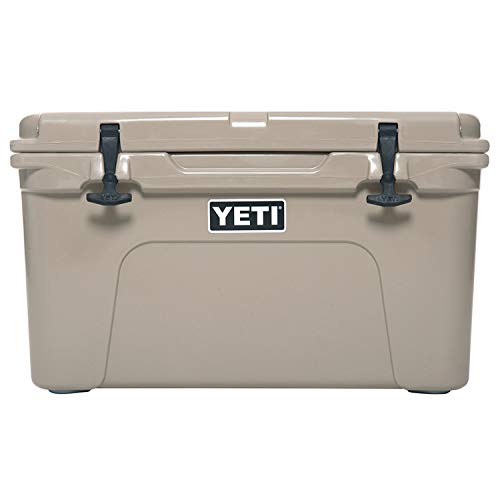
The Tundra 45 is the middle of the lineup and the size that fits the widest range of trips. It is a rotomolded hard cooler with a thick foam core, a freezer-style gasket, and tie-down slots, and it fits in the back of most SUVs and in a truck bed without crowding. Yeti’s own sizing guidance points weekend campers toward the Tundra 45 and 65, which is a fair reading of how people actually use them.
Who it suits: two to four people on a one to three night trip who want ice to last and a cooler that doubles as a seat. Main trade-off: it is heavy empty, so a loaded Tundra 45 is a two-hand lift, and it is poor value if you only need a lunch cooler.
Best for families and long weekends: Yeti Tundra 65
The Tundra 65 gives you room for drinks, a few days of food, and enough ice to keep both cold. Reviewers who compare the line note that Tundras hold less inside than their names suggest because of the thick walls, so the 65 behaves like a cooler somewhere in the high 50s to 60 quarts in practice. That is still plenty for a family of four.
Who it suits: families and groups who want one big cooler and do not mind carrying it with a partner. Main trade-off: size and weight. If you have to carry it far from the car, step up to a wheeled model instead.
Best wheeled: Yeti Tundra Haul and Roadie 48
The Tundra Haul is the tougher of the two, with a rotomolded body, large rubberized wheels, and a handle built for rough ground. The Roadie 48 is a lighter wheeled option that suits paved paths, campground loops, and tailgate lots. Both exist for the same reason: a full cooler is heavy, and rolling it beats lifting it.
Who they suit: anyone parking far from the campsite, boat ramp, or beach. Main trade-off: wheels and handles add weight and take up interior and footprint space, so you give up some storage per dollar compared with a standard Tundra of similar size.
Best compact hard cooler: Yeti Roadie 24
The Roadie 24 is the size most buyers underestimate. According to Yeti’s published figures it holds around 33 cans, enough for a day on the water or a tailgate, and it keeps its shape and its insulation without the bulk of a Tundra. It sits easily between car seats and in a boat locker.
Who it suits: day trips, lunch for a work crew, kayak or boat days. Main trade-off: it will not carry ice for a multi-day trip, and the price is high for what is essentially a small box.
Best soft cooler: Yeti Hopper Flip 18
The Hopper Flip 18 is a soft-sided cooler with a leakproof zipper, a stiff shell, and a wide opening that makes it easy to load. It is far lighter than a hard cooler and can be carried by hand or on the shoulder. The Hopper Flip 12 is a good step down for a personal lunch, and the larger Hopper M20 and M30 give you more room if you want more capacity in soft form.
Who it suits: picnics, beach days, sporting events, and short drives where weight matters more than multi-day ice. Main trade-off: soft walls are thinner than rotomolded ones, so ice does not last as many days, and the fabric needs careful drying to avoid odor.
Best for hiking and fishing: Yeti Hopper M20 backpack
If you walk to your spot, a backpack cooler beats a shoulder strap. The Hopper M20 is a backpack-style soft cooler with padded straps and a waterproof, leakproof build, and it keeps both hands free for trekking poles or a fishing rod.
Who it suits: hikers, anglers, and festival-goers. Main trade-off: you carry the weight on your back, so a full pack is tiring on a long walk.
How to choose the right Yeti cooler size
Choose by trip length first, then by headcount. Yeti advises roughly two parts ice to one part contents by volume, which is the number that most people ignore and then wonder why their ice melts early. Here is a worked example for a weekend:
- Four people, two nights, six drinks and three meals each.
- Estimate contents at about 24 qt of food and drinks.
- Apply a 2:1 ice ratio: add about 12 qt of ice for a total near 36 qt of usable space.
- Because usable space is smaller than the named size, step up from a 35 to a 45.
| Your situation | Size to look at | Why |
|---|---|---|
| Solo day trip | Hopper Flip 12 or Roadie 15 | Light, fits car seat |
| 2-4 people, 1-2 days | Hopper Flip 18 or Tundra 35 | Matches Yeti’s sizing guide |
| Weekend camping | Tundra 45 or 65, Roadie 48 | Room for ice plus food |
| Week-long or hunting trip | Tundra 75, 105 or 160 | More ice, longer retention |
| Long carry to the site | Tundra Haul, Roadie 48/60 | Wheels spare your back |
Hard cooler or soft cooler?
A hard cooler wins on ice retention, durability, and the ability to stand on it. A soft cooler wins on weight, portability, and storage when empty. If you camp for more than two nights, buy a hard cooler. If your outings are a few hours, a Hopper is more comfortable to use and easier to store in a closet.
Ownership realities: what wears first
- Latches and gaskets: rinse after use and check that the gasket stays flexible.
- Drain plug: it can go missing, so know the replacement part number before a trip.
- Soft cooler zippers: rinse sand and salt away or the zipper will stiffen.
- Odor: wash with mild soap and dry open. Never store a cooler shut with moisture inside.
Tips to get more from the ice you carry
Pre-chill the cooler overnight with a bag of sacrificial ice, start with cold drinks and food, and pack in layers with ice on top because cold air sinks. Keep the lid shut and use a second small cooler for drinks that get opened often. Keep the cooler in shade and cover it with a light blanket in direct sun. Small habits like these often matter more than moving up a size.
Frequently Asked Questions
Which Yeti cooler is best for camping?
The Tundra 45 or Tundra 65 suits most camping trips because they combine long ice retention with a manageable size. If you park far from the site, the Tundra Haul or Roadie 48 spares your back. Pick the size by days of ice you need, not only by the amount of food.
Are Yeti coolers worth the price?
They are worth it if you use a cooler often and need it to last for years. The premium pays for thick insulation, rugged construction, and a strong warranty from the manufacturer. For occasional use, a less expensive hard cooler may be enough.
What size Yeti cooler do I need?
Count food and drink volume, then add roughly twice that volume in ice per Yeti’s guidance. Because usable interior is smaller than the named size, go one size up when you are between two options. Day trips fit a Roadie 24, weekends a Tundra 45 or 65.
How long does ice last in a Yeti cooler?
Yeti says its rotomolded hard coolers keep ice for days, but real results depend on heat, how often you open the lid, and the ice-to-contents ratio. Pre-chilling and keeping the cooler in shade can add noticeable time. Soft coolers hold ice for hours to a day or two, not a week.
Should I buy a Tundra or a Roadie?
Choose a Tundra for trips of two or more days and a Roadie for day trips and travel in a car or boat. Roadies are lighter and shaped to fit in tighter spaces. Tundras offer more sizes and the most insulation.
How do I clean a Yeti cooler?
Wash the inside and the gasket with mild dish soap and warm water, rinse, and let it air dry with the lid open. For odors, a mixture of water and baking soda or white vinegar works. Avoid harsh abrasives that can scratch the interior.