Key takeaways
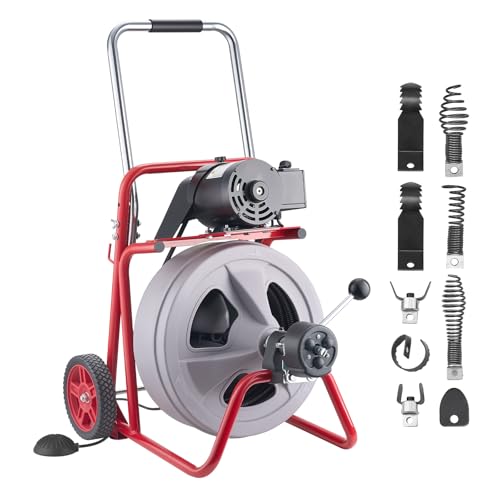
- Spade or straight cutter: useful for opening a path through soft buildup and testing progress.
- Retrieving head: designed to snag or pull back certain obstructions; use care around fragile piping.
- Grease or scraper cutter: suited to scraping deposits from pipe walls, where compatible with the line.
- Root cutter: available in different shapes and sizes for cutting roots in suitable pipes. Use a head sized for the pipe; an oversized cutter can bind.
Best Drum Drain Machines for Clogs & Roots: Quick Picks
The best drum drain machine for most homeowners is a 5/8-inch-cable model with a 50-foot cable, a ground-fault-protected power supply, and interchangeable cutter heads; choose a lighter 1/2-inch machine for smaller indoor lines, or a professional 3/4-inch machine when long runs and recurring root intrusion justify the extra weight and skill required.
A drum machine stores its cable in a rotating drum, helping contain mess and reducing cable whip compared with an exposed sectional machine. That containment doesn’t make it risk-free: a powered cable can snag, kink, or injure an operator. Match the machine to the drain diameter and access point, not simply the longest cable or biggest motor you can afford.
Our top picks


As an Amazon Associate we earn from qualifying purchases at no extra cost to you. Ratings are shown as listed on Amazon.
Compare the Main Drum-Machine Sizes
| Machine class | Typical cable | Typical reach | Approx. machine weight | Best fit |
|---|---|---|---|---|
| Compact indoor | 1/4 or 5/16 inch | 25–50 ft | 20–45 lb | Small branch drains, tight storage |
| Home / light professional | 3/8 inch | 50–75 ft | 35–70 lb | Many sinks, tubs, and smaller building lines |
| General-purpose | 1/2 or 5/8 inch | 50–100 ft | 60–120 lb | Accessible 2–4 inch drains; occasional root work |
| Heavy-duty professional | 3/4 inch | 75–100 ft or more | 100–180+ lb | Frequent work on larger lines and stubborn obstructions |
These are broad market ranges, not universal specifications: cable capacity, drum configuration, and weight vary by model. Check the manufacturer’s rated pipe size and cable length before buying. A cable that is too small for the pipe can loop or knot; one that is too stiff can damage a small or fragile line.
Choose by the Job, Not by the Biggest Motor
For occasional indoor clogs: compact 1/4- or 5/16-inch cable
For hair and soap buildup in a sink, tub, or shower branch, a compact machine is easier to carry upstairs and store. Its short reach and thinner cable are limitations, but they’re also advantages in small piping where a large cable would be difficult to control. These machines are not a sensible choice for cutting roots in a building sewer.
For a capable home machine: 3/8-inch cable
A 3/8-inch machine is a practical step up when clogs recur beyond the trap or there are several fixtures to maintain. It usually offers more reach and cutting options than a compact unit without the bulk of a sewer machine. Confirm whether the cable is approved for the pipe size you intend to clear, and don’t assume extra cable automatically means greater usable reach: bends and access geometry can limit progress.
For sewer lines and occasional roots: 1/2- or 5/8-inch cable
This class is a common middle ground for owners of larger properties and maintenance crews. A 5/8-inch cable generally handles demanding work more confidently than a small indoor cable, while remaining more manageable than a heavy 3/4-inch setup. It can clear roots that fit the cable and cutter, but reaching roots is not the same as removing them completely. Roots often return through the same entry point, so repeated blockages call for a camera inspection and, where needed, a durable repair.
For daily or heavy sewer work: 3/4-inch cable
A professional machine’s larger cable and cutting capacity can make sense for frequent work on appropriately sized lines. The trade-off is substantial: more weight, harder transport, higher purchase and maintenance costs, and greater consequences if a cutter catches. Buy this size for a defined workload and compatible access—not because a larger motor sounds safer or faster.
Motor Power, Cable Reach, and Cutter Heads
Motor ratings are not directly comparable unless the manufacturer specifies the same measurement and operating conditions. For a drum machine, look beyond horsepower: check the rated cable size, drum capacity, rotational speed, overload protection, and whether the machine has a foot switch. More torque can help drive an appropriate cable through resistance, but it can also increase the force at a snag. It does not compensate for the wrong cable, poor access, or an obstructed line that needs inspection.
Choose enough cable to reach the obstruction from the cleanout, allowing for the distance to the pipe and bends. For example, if the cleanout is 15 feet from the suspected blockage and the route includes several bends, a 25-foot cable leaves little reserve; a 50-foot option offers working margin. Extra length is useful only if the drum is rated for that cable and the operator can control it.
- Spade or straight cutter: useful for opening a path through soft buildup and testing progress.
- Retrieving head: designed to snag or pull back certain obstructions; use care around fragile piping.
- Grease or scraper cutter: suited to scraping deposits from pipe walls, where compatible with the line.
- Root cutter: available in different shapes and sizes for cutting roots in suitable pipes. Use a head sized for the pipe; an oversized cutter can bind.
Interchangeable heads are more useful than a large assortment of specialized cutters that don’t match your actual drains. Confirm how heads attach, whether they are included, and whether replacement cables and connectors remain available.
Decision Matrix: Which Class Fits You?
| Your situation | Likely choice | Why | Trade-off |
|---|---|---|---|
| One or two indoor clogs a year; limited storage | Compact 1/4- or 5/16-inch machine | Light enough to carry and store; suited to small branches | Short reach and little suitability for sewer work |
| Several fixtures or recurring branch-line clogs | 3/8-inch machine | Balances reach and handling for regular household maintenance | Not the right tool for every large or root-filled line |
| Longer property line; occasional professional-style work | 1/2- or 5/8-inch machine | More capable cable for larger drains and tougher obstructions | Heavier, costlier, and less forgiving to operate |
| Frequent sewer calls and trained operators | 3/4-inch professional machine | Designed for sustained, demanding work on compatible lines | High transport, storage, upkeep, and injury risks |
Drum machines commonly span a broad price range: compact units may cost a few hundred dollars, while larger professional machines can run into several thousand. Compare the complete setup, including cables, cutters, gloves, transport wheels, and replacement parts—not just the machine’s base price.
Portability and Safety Are Buying Criteria
Before choosing a heavy machine, measure doorways, stairs, vehicle access, and storage space. Wheels help on level ground but don’t eliminate the challenge of lifting a loaded machine. A removable drum or a lighter unit may be preferable if one person must carry it. For infrequent jobs, hiring a drain professional may cost less than buying, maintaining, and safely storing a sewer machine.
Use the machine only as its manual directs. Wear eye protection and appropriate gloves, keep loose clothing and hair away from rotating parts, and use a ground-fault circuit interrupter (GFCI) with corded equipment as specified by the manufacturer. Keep the foot control within reach, stand where you can stop the machine immediately, and never force a cable that binds. Do not run a powered cable through a fixture unless the machine and access method are intended for it. Stop if the cable kinks, repeatedly catches, or the pipe material or condition is uncertain.
Ownership: Cables and Cutters Need Care
Cables are wear items. Corrosion from leaving them wet, repeated kinks, fatigue near the coupling, and damage from forcing a stuck cable can shorten their life. After use, clean off debris, dry the cable and drum thoroughly, and inspect for cracks, flattened sections, and damaged connectors before rewinding. Replace a badly kinked or fatigued cable rather than trusting it under power.
Cutter edges also dull and can become damaged. Inspect and sharpen or replace them according to the maker’s instructions; a dull cutter can encourage excessive pressure and make work less predictable. Keep spare cutters and compatible fasteners on hand if the machine will be used regularly. Store the cable lightly lubricated only if the manufacturer recommends it, and keep the machine unplugged while changing heads or servicing it.
For a household that needs one versatile machine, prioritize a manageable 3/8-inch or 1/2-inch setup matched to the drains you actually have. Step up to 5/8 or 3/4 inch only when pipe size, recurring workload, operator experience, and transport all support the choice.