Key takeaways
- Allow roughly 24–30 inches for a frequently used walking route.
- Allow 18–24 inches between the loveseat and a coffee table, depending on how often people pass through.
- Leave about 2–4 inches from the wall when the frame or upholstery needs breathing room.
- Check the packaged dimensions, not just the assembled dimensions.
The best loveseats for small living rooms are compact models 48–60 inches wide, with a seat depth of about 20–22 inches, durable easy-clean upholstery, and at least 24–30 inches of clear passage around the main entry route.
Our top picks
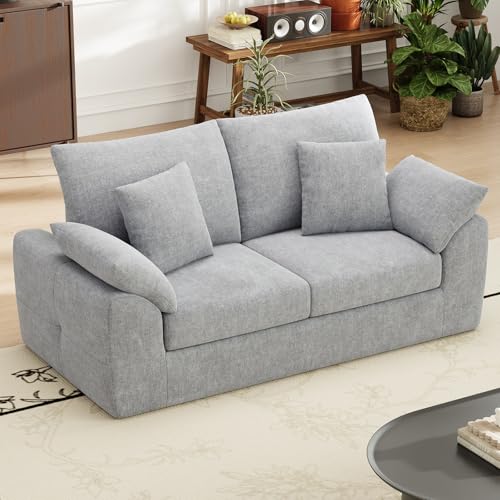

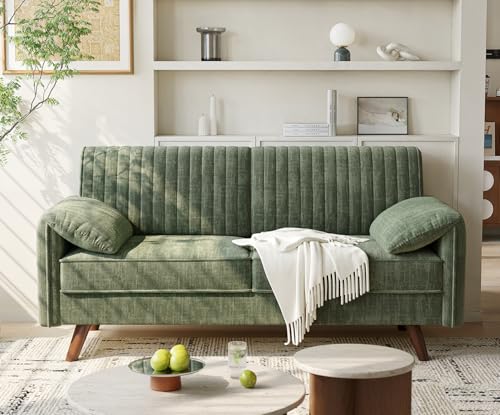

As an Amazon Associate we earn from qualifying purchases at no extra cost to you. Ratings are shown as listed on Amazon.
Quick picks by small-room situation
| Room or usage | Best loveseat type | Target width | Recommended seat depth | Why it works |
|---|---|---|---|---|
| Very small studio | Armless or slim-track-arm loveseat | 48–54 in | 19–21 in | Preserves walking space and visual openness |
| Everyday lounging | Standard two-seat loveseat | 55–62 in | 21–23 in | Better shoulder and leg support without becoming sofa-sized |
| Frequent overnight guests | Loveseat sleeper | 52–64 in | 21–24 in | Converts into a guest bed, but requires extra clearance |
| Pets, children, or heavy use | Tight-weave performance-fabric loveseat | 54–62 in | 20–22 in | Balances cleanability, comfort, and daily durability |
| Occasional seating on a tight budget | Firm foam or futon-style loveseat | 48–58 in | 19–21 in | Usually lighter and less expensive, though less plush |
How to choose among the best loveseats
1. Measure width, depth, and the delivery route
Loveseat width is measured from the outside of one arm to the outside of the other. In a compact room, the published width is only the first constraint. Measure the wall, the doorway, elevator, stair turns, and the path from the entrance to the final position.
A useful clearance calculation is:
Available furniture width = wall width − required side clearance − walkway clearance.
For example, if a wall is 92 inches wide, you want 4 inches on each side, and a nearby walkway needs 28 inches, the usable width is not 84 inches. The walkway must be subtracted if the loveseat projects into it. A safer plan may allow only a 56–60-inch loveseat, leaving room for a small table or floor lamp.
- Allow roughly 24–30 inches for a frequently used walking route.
- Allow 18–24 inches between the loveseat and a coffee table, depending on how often people pass through.
- Leave about 2–4 inches from the wall when the frame or upholstery needs breathing room.
- Check the packaged dimensions, not just the assembled dimensions.
2. Compare seat depth before judging softness
Seat depth is the distance from the front edge of the cushion to the back cushion. A deeper seat can feel relaxed, but in a small room it may consume more floor space and leave shorter users without proper back support.
- 19–21 inches: upright and space-efficient; suitable for reading, conversation, and smaller occupants.
- 21–23 inches: the most versatile range for everyday sitting and television viewing.
- 24 inches or more: lounge-oriented; comfortable for stretching out but more demanding on floor area.
Do not confuse overall depth with seat depth. A loveseat with thick back cushions may be 34 inches deep externally while offering only 20 inches of usable seat depth. Conversely, a low-back design can provide a deep seat in a relatively shallow frame.
3. Match upholstery to the hardest daily use
Upholstery durability is determined by more than a fabric label. Tight weaves generally resist snagging better than loose bouclé or open-loop textures, while removable covers make routine cleaning easier. Performance polyester is often a practical choice for apartments because it is widely available, colorfast, and easier to spot-clean than many natural fibers.
| Upholstery | Strengths | Watch-outs | Best use |
|---|---|---|---|
| Tight-weave polyester | Resists everyday abrasion; broad color selection | May hold oily marks if neglected | High-use apartments and families |
| Performance fabric | Often designed for stain resistance and easier cleaning | “Performance” is not a universal standard; inspect care instructions | Pets, children, and frequent entertaining |
| Leather or protected leather | Wipes clean; develops character over time | Can scratch, feel cold, and cost more | Minimalist rooms and careful households |
| Velvet | Soft, visually rich, and comfortable | Shows pressure marks and directional shading | Moderate-use sitting areas |
| Bouclé or loose textured fabric | Soft appearance and tactile comfort | Loops can catch on claws, zippers, and rough clothing | Lower-risk households and decorative use |
Look for a published abrasion rating when available. A rating around 15,000 double rubs can suit moderate residential use, while 30,000 or more offers a stronger margin for busy households. Abrasion figures do not guarantee stain resistance or structural quality, so also inspect the frame, cushion construction, and warranty.
Loveseat versus loveseat sleeper
A standard loveseat is usually the better choice when comfort and floor space matter every day. Its cushions can be thicker, its mechanism simpler, and its frame lighter. A sleeper is worthwhile when it replaces a separate guest bed or when overnight visitors are common.
Check three measurements for a sleeper:
- Closed depth: determines how much room remains for everyday movement.
- Open bed projection: commonly adds about 70–85 inches from the back of the frame, depending on the mattress orientation.
- Sleeping surface: compact models may be narrower or shorter than a conventional bed.
Before buying, mark the open footprint on the floor with painter’s tape. Include space to walk around the bed and open any drawers or doors that the sleeper might block. A sleeper that fits only when the room is emptied may be frustrating in practice.
Comfort details that matter in a small frame
Firmness is personal, but a compact loveseat should not feel cramped. Sit with your back against the cushion and check that your feet reach the floor without pressure behind the knees. The armrests should not force your shoulders inward, and the front edge should support your thighs without cutting into them.
- Foam cushions: offer predictable support and retain shape well, especially at higher densities.
- Fiber-filled cushions: feel softer but usually need more frequent fluffing.
- Foam-and-fiber blends: provide a compromise between structure and initial plushness.
- Attached back cushions: stay in place but can be harder to repair or replace.
- Removable cushions: simplify cleaning and rotation, provided the covers are washable or professionally cleanable.
For a room used mainly for reading or conversation, choose a seat height around 17–19 inches and a moderate depth. For lounging, a deeper seat and lower profile may be preferable, but verify that the lower arms and back still provide support.
What wears out first and how to extend ownership
In a frequently used loveseat, the first visible wear often appears on the front edge of the seat, the arm caps, and the cushion covers. Sagging can result from compressed filling, stretched webbing, or a weakened frame rather than from upholstery alone.
- Rotate loose seat cushions every one to three months if the design permits.
- Vacuum seams and under cushions regularly; grit acts like sandpaper on fabric.
- Blot spills instead of rubbing them deeper into the weave.
- Use only the cleaner specified by the manufacturer, and test it on a hidden area first.
- Keep sleeper mechanisms free of blankets, toys, and pet hair before closing them.
- Do not sit repeatedly on the arms; narrow frames are especially vulnerable to uneven loads.
Removable, replaceable covers and separately available cushion inserts can matter more over five years than a slightly lower purchase price. Also check whether the legs are replaceable and whether the frame warranty covers structural failure rather than only manufacturing defects.
Final buying decision
Choose a 48–54-inch slim loveseat if preserving circulation is the priority. Choose a 55–62-inch standard loveseat for the best balance of comfort and compactness. Choose a sleeper only after measuring its fully opened footprint and confirming that the mattress size suits your guests. For the most demanding households, prioritize a tight-weave or performance upholstery, removable cushions, a sturdy frame, and a seat depth near 21–22 inches.
The best loveseat is therefore not the smallest one available. It is the widest model that leaves a dependable walkway, provides the right sitting posture, and can withstand the cleaning and maintenance your household will actually perform.