Our Top Picks
 Silipull Golf Putting Mat Indoor 30x8.27 Inch Alignment2'6" x 8" (L x W)30.47 x 8.19 x 0.08 inches0.52 poundsCheck on Amazon


The best putting trainer overall is the PuttOUT Premium Pressure Putt Trainer (Stone). It is the only compact aid in this roundup that gives you feedback on both halves of a putt — start line and pace — in a single, repeatable rep, and it folds flat enough to live in a golf bag pocket, which means it works equally well on a living-room rug, a hotel carpet or a practice green. It suits anyone from a 20-handicapper who three-putts twice a round to a scratch player who wants a focused ten-minute daily drill. If your problem is that you cannot see where your eyes and shoulders are aiming, the budget-tier KINGTOP Classic Golf Putting Mirror fixes setup for a fraction of the cost. If you have a spare room and want a permanent, tour-like surface, the premium PERFECT PRACTICE Standard 9’6″ Putting Mat is the closest thing to a real green you can roll out at home. Everything else in this list is a variation on those three jobs: alignment, pace, or a place to roll the ball.
Top 3 Picks
Best overall: PuttOUT Premium Pressure Putt Trainer (Stone)
A parabolic ramp with a micro target at the top of the curve. Roll a putt that arrives with the right pace and it settles in the target; arrive too firm and it rolls back at you; arrive too soft and it never climbs. That single mechanic teaches distance control better than any mat, and it takes up no more floor than a laptop.
Best budget: KINGTOP Classic Golf Putting Mirror
A rigid alignment mirror with printed reference lines for eye position, shoulder tilt and putter path, usually supplied with a carry pouch. It costs a fraction of a premium mirror and answers the one question most players never check: is my setup actually aiming where I think it is? Pair it with any cheap target and you have a complete practice station.
Best premium: PERFECT PRACTICE Standard 9’6″ Putting Mat
The longest, truest surface in this roundup, with a raised back end, a return channel and two hole sizes so you can practice both realistic putts and a reduced target that demands precision. It is the pick for a dedicated home green where the mat stays down and gets used daily, and it is the only one here that convincingly bridges the gap between a training aid and a real putting surface.
Quick Comparison
| Product | Best for | Key specs / format | Price tier |
|---|---|---|---|
| PuttOUT Premium Pressure Putt Trainer (Stone) | Pace and start-line feedback in tiny spaces | Folding parabolic ramp with micro target; ball returns on a miss; packs into a bag pocket; no power, no consumables | Mid-range |
| KINGTOP Classic Golf Putting Mirror | Checking eye line and shoulder aim on a budget | Rigid alignment mirror with printed guides; tee holes and gates on most versions; carry pouch; flat-pack storage | Budget |
| SKLZ Golf Putting Cup Accuracy Trainer, Gray | Turning practice into a target game | Weighted cup-style target with a reduced opening; portable, unpowered; works indoors and out | Budget |
| BIRDIEBLAST Golf Putting Mirror | Putter-face and ball-position checks | Alignment mirror with a printed putter line and ball-position reference; portable panel with pouch | Budget |
| PUTT-A-BOUT Grassroots Par Three Putting Green | A big home green on a mid-range budget | 9 ft x 3 ft (108 in x 36 in) surface; three target cups; printed hazard graphics; rolls up for storage | Mid-range |
| Silipull Golf Putting Mat Indoor Alignment Track, Black | Hallway-length alignment drills | 30 in x 8.27 in (about 76 cm x 21 cm); narrow printed alignment lane; small target at the end | Mid-range |
| QPPKII Golf Ball Return Putting Unit | High-rep indoor practice with no bending | Putting hole unit with a ball-return mechanism; compact footprint; sits on carpet or a mat | Budget |
| Swing Minder Perfect Roll Putting Wheels (Set of 3) | Grooving a square face and true roll | Three wheel-style attachments that fit to the putter; fit is putter-specific; no power required | Mid-range |
| EyeLine Golf Putting Mirror | Precise, durable setup feedback | Premium rigid mirror with detailed alignment markings; thicker and flatter than budget mirrors | Premium |
| GOTOSOBAY Putting Green Indoor with Auto Ball Return | Premium home practice with zero bending | Indoor mat with a raised cup and auto ball-return channel; typically sold in the 7-10 ft class | Premium |
| Eleko Meyar Portable Golf Putting Mat | A premium mat you can move room to room | Portable roll-out mat with target cup and alignment markings; stores rolled or folded | Premium |
| PERFECT PRACTICE Standard 9’6″ Putting Mat | A permanent, tour-like home green | 9 ft 6 in narrow single-lane mat; raised back end with return channel; two hole sizes | Premium |
How We Chose
This roundup was assembled from published product listings, manufacturer specifications and established category norms for putting training aids — not from any physical trial, measurement session or ownership period. Selection started with the three jobs a putting aid can actually do: show you where you are aimed (mirrors), teach you how hard to hit it (pressure trainers and reduced targets), or give you a surface to roll the ball on (mats and return units). Products were kept only if they clearly belonged to one of those jobs and did it without needing a second purchase to be useful.
From there we weighed four things. First, spec fit: real dimensions where the listing states them, and an honest spec class where it does not. Second, portability, because an aid that lives in a closet gets used far less than one that lives in a bag pocket. Third, upgrade path — whether the product still earns its place after your handicap drops. Fourth, ownership cost, including what wears out first and whether the aid needs power, batteries or replacement parts. Price tiers reflect general market positioning (budget, mid-range, premium) rather than any specific figure, because listing prices move constantly.
1. PuttOUT Premium Pressure Putt Trainer (Stone) – Best for Pace and Start-Line Feedback
As an Amazon Associate we earn from qualifying purchases at no extra cost to you.
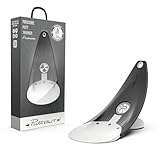
This is the aid to buy if your putting problem is a mystery you cannot name. Most players assume they miss because they aimed badly, when the more common fault is pace: a putt that arrives at the hole with the wrong speed never goes in, no matter how good the line. The PuttOUT Premium Pressure Putt Trainer makes that fault visible in about three seconds.
It suits almost any skill level, but it is especially good for three groups: apartment dwellers with a rug and no floor space, travellers who want a drill in a hotel room, and low-handicap players who already putt a straight line and need to sharpen distance control inside ten feet. It is also the single best value in this list for anyone who wants one small object that covers two skills rather than one.
Key specs
- Format: a folding ramp with a curved roll surface and a micro target at the crest of the curve
- Feedback mechanic: a putt with the right pace settles into the target; a firm putt rolls back toward you; a soft putt fails to climb and returns down the ramp
- Setup: seconds, no tools — it sits directly on carpet, a rug, a mat or a real green
- Portability: folds flat enough for a golf bag side pocket or a backpack
- Power and consumables: none
- Price tier: mid-range
Strengths
The genius of the design is that it converts a vague feel into a binary result. You either hit the target or you did not, and the ball tells you immediately which side of the equation you missed on. Because the target sits at the top of a curve rather than on flat ground, the ball has to arrive with a specific amount of energy — that is the pace lesson, and it transfers to the course far better than a mat that only rewards line.
It is also unusually durable for a plastic training aid. There are no batteries, no moving parts to wear out and no printed surface to fade. Stored in a bag pocket, one of these can last a decade. The main structural risk is the same as any thin plastic: a crack if it is dropped onto a hard floor or crushed under luggage, which is why a soft pouch or a padded bag pocket matters.
Pros
- Coaches pace and start line in one rep, which no mirror can do
- Instant ball return means you never break your setup to fetch a ball
- Fits in a bag pocket, so practice can happen anywhere
- No power, no batteries, no replacement parts
- Works with any putter, any grip and any stroke style
Cons
- The target is small, which is frustrating for the first week
- You cannot practice long lag putts — the ramp only rewards putts from roughly six to ten feet
- Needs a flat, reasonably quick surface; deep shag carpet swallows the roll
- Gives no information about your setup, eye line or shoulder aim
How it compares: against the EyeLine Golf Putting Mirror, the two solve different problems and the honest answer is that a serious player eventually wants both. The mirror shows you whether you are aimed and set up correctly; the PuttOUT shows you whether the ball arrived with the right speed. If you can only buy one and your miss is a pull or a push, buy the mirror. If your miss is consistently short or consistently long, buy the PuttOUT. Against a full mat like the Silipull alignment track, the PuttOUT is far more informative per square foot, but a mat gives you a consistent surface to build a repeatable stroke on — which matters more for a beginner than feedback does.
2. KINGTOP Classic Golf Putting Mirror – Best for Alignment on a Budget

If you have never checked your eye line, this is the cheapest way to find out something genuinely useful about your putting. A putting mirror sits flat on the ground and reflects your eyes, shoulders and putter face back at you while you set up. Almost everyone who tries one for the first time discovers their eyes are not over the ball, their shoulders are open or closed, or their putter face is aimed somewhere other than where they think.
This is the pick for beginners and improvers on a tight budget, for juniors, and for anyone building a first practice station at home. It is also a sensible second purchase for a player who already owns a mat but has never verified their setup. Because it stores flat, it slides into a golf bag’s apparel pocket or a laptop sleeve without adding noticeable weight.
Key specs
- Format: a rigid flat mirror panel with printed reference lines
- Alignment guides: printed marks for eye position, shoulder line and putter path, plus tee holes or gate positions on most versions
- Extras: typically supplied with a carry pouch and a couple of alignment gates
- Surface: works on any flat surface, indoors or on a practice green
- Power and consumables: none
- Price tier: budget
Strengths
The value proposition is simple: this does eighty per cent of what a premium mirror does for a fraction of the cost. The printed lines are the important part — they give you a reference to check your eyes against, and a putter-path channel to swing through. Once you know what a correct setup looks like, you can rehearse it without the mirror and check back weekly.
It is also a genuinely portable aid. Unlike a mat, it takes up no floor space when stored, and it weighs little enough that you can carry it in a golf bag without noticing. On a practice green it doubles as a target line and a gate, which makes it more versatile than its price suggests.
Pros
- The cheapest reliable way to verify eye line, shoulder aim and face angle
- Stores flat and travels in a bag pocket
- Doubles as a gate and alignment reference on a real green
- No power, no wear parts, nothing to charge
- Useful at every handicap level, including low single figures
Cons
- It only tells you about setup — it says nothing about pace
- Reflective surfaces glare in direct sunlight, which limits outdoor use
- Budget mirrors can flex slightly on uneven ground, which distorts the reflection
- It is useless unless you know what a correct setup looks like — a lesson or a good reference photo helps enormously
How it compares: the nearest alternative in this list is the BIRDIEBLAST Golf Putting Mirror, which leans harder into putter-face and ball-position reference lines. If your fault is a mis-aimed face, the BIRDIEBLAST markings are marginally more useful; if your fault is eye position and shoulder tilt, this one’s broader guides are easier to read. Against the premium EyeLine Golf Putting Mirror, the difference is build quality and precision rather than function — the EyeLine panel is thicker, flatter and stays true for longer, which matters if you practice on a real green where the ground is rarely perfectly level. For a first mirror, this is the sensible buy.
3. SKLZ Golf Putting Cup Accuracy Trainer, Gray – Best for Making Practice Feel Like a Hole

Some players do not need data. They need a target that feels like a hole and a reason to care about the result. The SKLZ Golf Putting Cup Accuracy Trainer is exactly that: a weighted cup-style target with an opening smaller than a regulation hole, so a putt that would have lipped out on the course drops in here only if you hit your line precisely.
It suits casual players, juniors and anyone who finds alignment drills tedious. It is also a good choice for a player who already owns a mat and wants to add a scoring element to practice, or for someone who practices on a carpet with no mat at all. Because it is unpowered and simple, it is the kind of aid that survives being thrown in a car boot for years.
Key specs
- Format: a portable cup-style target with a reduced opening relative to a regulation hole
- Weighting: designed to stay put when a putt catches the edge
- Surface: usable on carpet, mats, artificial turf and real greens
- Power and consumables: none
- Price tier: budget
Strengths
The reduced opening is the whole point. A regulation hole is 4.25 inches across; shrinking the effective target forces you to be more precise with your line, and the effect shows up quickly on the course, where a normal hole suddenly looks generous. It also gives practice a score, which is the single biggest predictor of whether you will actually keep doing it.
Durability is excellent because there is nothing to break. There is no printed surface to fade, no electronics, no moving parts and no mat backing to compress. Left outdoors it will eventually discolour and the plastic will become brittle with prolonged UV exposure, but stored in a garage or a bag it lasts essentially indefinitely. It also makes a perfectly serviceable chipping target, which stretches the value further.
Pros
- Cheapest way to add a real target and a score to practice
- Smaller-than-regulation opening sharpens line precision
- Virtually indestructible and needs no power
- Doubles as a chipping target on a lawn
- Packs into a bag or a car boot without a second thought
Cons
- Gives no pace feedback — a putt that hits the target at the wrong speed still counts as a hit
- No return mechanism, so you walk to fetch every ball
- Small target can be discouraging for high handicappers in the first sessions
- Does nothing to reveal setup or aim faults
How it compares: the closest alternative here is the QPPKII Golf Ball Return Putting Unit. The QPPKII wins on convenience because the ball comes back to you, which roughly doubles the number of reps you can fit into ten minutes; the SKLZ cup wins on simplicity, durability and price, and it works on grass as well as indoors. If you practice on a hard floor indoors and hate bending down, choose the return unit. If you want something you can use on the lawn with a wedge as well as a putter, the SKLZ cup is the more flexible object. Neither teaches pace — for that you need the PuttOUT ramp.
4. BIRDIEBLAST Golf Putting Mirror – Best for Putter-Face and Ball-Position Checks

This mirror takes a slightly different approach from the KINGTOP panel. Its emphasis is on the putter line and ball position, with printed reference marks that let you confirm where the ball sits in your stance and whether the putter face is square to your intended start line at address. That makes it the better choice for a player whose miss is a consistent push or pull rather than a general aim problem.
It suits improvers who have already had some coaching or who have watched enough instruction to know what they are looking for. It is also a good fit for a junior or a beginner who is being taught a repeatable setup and needs a visual reference to rehearse it at home. Like the KINGTOP, it stores flat and travels easily, so it can live in the bag and come out on the practice green.
Key specs
- Format: a portable alignment mirror panel with printed reference lines
- Alignment guides: putter line and ball-position markings, plus eye-line and shoulder references
- Extras: typically supplied with a carry pouch; some versions include gates
- Surface: any flat surface, indoors or outdoors
- Power and consumables: none
- Price tier: budget
Strengths
Ball position is one of the most under-checked variables in putting. Move the ball an inch forward in your stance and the face will very often close a fraction at impact; move it back and it opens. Because the markings here give you a fixed reference for where the ball should sit, you can test whether your current position is producing the start line you want. That is a more specific diagnosis than a general aim check.
The putter line is the second useful feature. Laying the putter along a printed line at address makes a mis-aimed face immediately obvious, and the correction is something you can feel and repeat. As with any mirror, the surface needs to stay flat and unscratched for the reflection to be trustworthy, so it should be stored in its pouch rather than loose in a bag with keys and tees.
Pros
- Putter-line and ball-position markings give a more specific diagnosis than a plain mirror
- Light, flat and easy to carry to a practice green
- Cheap enough to buy alongside a mat without blowing a practice budget
- No power, no maintenance, no consumables
- Works for both right- and left-handed players in most configurations
Cons
- Still only setup feedback — nothing about pace or strike quality
- Printed markings on budget mirrors can wear or dull with heavy use
- Glare limits use in bright, direct sun
- Requires some prior knowledge to interpret correctly
How it compares: against the KINGTOP Classic mirror, this one is the more specialised tool. Choose KINGTOP if you want broad eye-line and shoulder guidance at the lowest possible price; choose BIRDIEBLAST if you already know your aim is roughly right and suspect your ball position or face angle is the culprit. Against the premium EyeLine Golf Putting Mirror, the gap is in optical quality and rigidity rather than the concept — the EyeLine panel is thicker and holds its flatness better on real greens, which is worth paying for only if you practice outdoors regularly.
5. PUTT-A-BOUT Grassroots Par Three Putting Green (9-Feet x 3-Feet) – Best for a Big Home Green on a Mid-Range Budget

If you want a mat that feels like a real putting surface rather than a narrow strip, this is the value pick. At 9 feet by 3 feet it is roughly 27 square feet of putting surface — more than three times the area of a typical single-lane mat — and it is wide enough to hit breaking putts across the mat rather than only straight ones down the middle.
It suits a player with a garage, a basement or a spare room who wants to practice lag putting and left-to-right or right-to-left break, which narrow lane mats simply cannot teach. It is also the sensible choice for a family that wants one durable mat everyone can use, and for anyone who wants three targets rather than one so practice can be varied without moving anything.
Key specs
- Dimensions: 9 ft x 3 ft (108 in x 36 in)
- Targets: three cups with flag markers
- Surface detail: printed hazard and rough graphics to frame the green
- Storage: rolls up; light enough for one person to move and reposition
- Backing: designed to grip hard floors and low-pile carpet
- Price tier: mid-range
Strengths
The size is the argument. A 9-foot putt is a real putt — it is the distance where most amateurs leave themselves a three-footer and then miss it. Practising that length on a wide surface lets you work on speed and break together, which is what actually happens on a golf course. Three cups also let you set up a scoring drill: putt to one, then the next, and count how many attempts it takes to hole all three.
The ownership realities are manageable. The mat rolls up for storage, so it can disappear behind a sofa or stand in a corner. The main long-term wear point is the foam or rubber backing: if a rolled mat is stored tightly for months, the surface can develop a slight memory ripple where the roll was compressed. Storing it loosely rolled, or laying it flat when it is not in use, keeps it running truer for longer. Printed graphics fade with UV exposure, so keep it out of direct sun if it lives in a conservatory.
Pros
- 9 ft x 3 ft gives genuine lag-putt and breaking-putt practice
- Three cups make drills and scoring possible without moving the mat
- Wide enough for cross-mat breaking putts
- Rolls up for storage in a small home
- Substantially cheaper than premium mats of similar length
Cons
- No ball return, so you retrieve every ball yourself
- Roll speed is slower than a well-maintained real green
- Foam backing can ripple if the mat is stored tightly rolled for long periods
- Needs roughly 10 ft of clear floor and about 4 ft of width
How it compares: the direct premium alternative is the PERFECT PRACTICE Standard 9’6″ Putting Mat. Perfect Practice is longer, narrower, faster and has a return channel and two hole sizes, which makes it the better pure practice tool — but it costs several times as much and its narrow lane rules out cross-mat breaking putts. The PUTT-A-BOUT wins on surface area per unit of spend and on break practice, and it is the better buy for a family or a casual player. Against the Silipull alignment track, this is a completely different class of product: the Silipull is a 30-inch lane for alignment reps, while this is a proper practice green.
6. Silipull Golf Putting Mat Indoor Alignment Track, Black – Best for Tight Spaces and Alignment Drills

At 30 inches by 8.27 inches, this is the smallest mat in the roundup — small enough to unroll along a hallway, beside a desk or in front of a television. That is the point. Its printed alignment lane narrows your focus to one thing: rolling the ball down a straight line with the face square. It is the cheapest way to build a daily habit when you have no floor space at all.
It suits apartment dwellers, office workers who want a five-minute break drill, and beginners who are still learning what a square face feels like. It is not the right product for anyone who wants to practise pace, because at 30 inches there is no meaningful distance to control. Think of it as a stroke trainer rather than a putting green.
Key specs
- Dimensions: 30 in x 8.27 in (about 76 cm x 21 cm)
- Format: narrow single-lane mat with a printed alignment track
- Target: a small cup or target at the end of the lane
- Storage: rolls up small; stores in a cupboard or a bag
- Surface: low-pile putting surface designed to run faster than carpet
- Price tier: mid-range
Strengths
Constrained practice is underrated. When the lane is only eight inches wide, a putter face that is open or closed sends the ball into the side wall immediately, and you feel the correction rather than reading about it. Over a few weeks that feedback builds a much more repeatable face angle, which is the foundation everything else is built on.
The practical strengths are size and setup time. It takes seconds to unroll and seconds to put away, which removes the main excuse for skipping practice. Because it is narrow, it also fits in places a full mat cannot — between a sofa and a wall, along a corridor, or under a desk. The trade-off is that a narrow, lightweight mat is more prone to sliding on hard floors, and its short length means you cannot work on the one skill that saves the most strokes: distance control.
Pros
- Fits in genuinely tiny spaces — hallways, flats, offices
- Printed alignment lane gives clear, immediate face-angle feedback
- Unrolls and stores in seconds, so daily practice is realistic
- Low-pile surface runs faster and truer than carpet
- Cheap enough to buy as a second aid alongside a mirror
Cons
- 30 inches is too short for any meaningful pace or lag practice
- Lightweight backing slides on smooth hard floors
- The narrow lane can mask a stroke that swings too far inside or outside
- No ball return and no alignment markings beyond the printed track
How it compares: the QPPKII Golf Ball Return Putting Unit occupies a similar footprint but solves a different problem — it gives you a hole that returns the ball, which is ideal for volume reps, whereas the Silipull gives you a lane that polices your face angle. If your miss is a pull or a push, take the Silipull. If your problem is that you never practise because fetching balls is tedious, take the QPPKII. Neither is a substitute for the PUTT-A-BOUT green if you have the space: a 9-foot mat lets you work on speed, and speed is where most strokes are lost.
7. QPPKII Golf Ball Return Putting Unit, Indoor Golf Putting Hole – Best for Ball-Return Convenience Indoors

This is a small, focused gadget: a putting hole unit with a ball-return mechanism, so every putt that finds the target comes back to you without you bending down. That sounds trivial until you count the reps. A ten-minute session with a return unit can easily contain twice as many putts as the same ten minutes spent walking to a cup and back.
It suits anyone practising indoors on carpet or a mat, especially players with back trouble who want to avoid repeated bending, and anyone who struggles to stay motivated during repetitive drills. It is a budget-tier purchase, which makes it a low-risk add-on to an existing mat rather than a standalone practice system.
Key specs
- Format: a compact putting hole unit with a ball-return mechanism
- Footprint: small — it sits on carpet, a rug or the end of a mat
- Setup: place and putt; no assembly tools required
- Compatibility: works with any standard putter and golf ball
- Price tier: budget
Strengths
The return mechanism is the whole value. It removes the single biggest friction point in home practice, which is the walk to the cup. Because the unit is small, it can also be repositioned to create variety: move it a foot to the left and you have a new target line, which is exactly the kind of variability that transfers to the course.
Durability is the trade-off you accept at this price. The return mechanism is the one moving part, and it is the thing that will fail first — usually because dust, hair and carpet fibres collect in the channel, or because the unit gets kicked or stepped on. Keeping the channel clean and storing the unit off the floor extends its life considerably. There is no alignment feedback at all, so it pairs well with a mirror rather than replacing one.
Pros
- Ball return roughly doubles the number of reps per session
- No bending down, which matters for players with back issues
- Very small footprint; fits anywhere a mat fits
- Cheap enough to try without much risk
- Repositionable, so you can vary target line easily
Cons
- The return mechanism is the failure point and needs periodic cleaning
- No alignment, face-angle or pace feedback whatsoever
- Needs a flat surface; a thick carpet pile can stall the return
- Budget build quality — it will not survive being stood on
How it compares: the premium version of the same idea is the GOTOSOBAY Putting Green Indoor with Auto Ball Return, which builds the return channel into a full-length mat so you get distance practice as well as convenience. If you already own a mat, the QPPKII is the cheaper way to add return; if you are starting from nothing, buying a mat with an integrated return saves you a purchase and a storage problem. Against the SKLZ Golf Putting Cup, the QPPKII trades durability and outdoor versatility for convenience — the SKLZ cup will still work on a lawn in ten years, while this unit is an indoor tool.
8. Swing Minder Perfect Roll Putting Wheels Training Aid (Set of 3) – Best for Grooving a Square Face and a True Roll

This is the most specialised aid in the roundup and the one that most directly addresses strike quality. It is supplied as a set of three wheel-style training components that attach to the putter and give feedback on how the face is meeting the ball — the goal being a putt that rolls end over end rather than one that skids, hops or spins off the face.
It suits a committed improver or a low-handicap player who already putts a decent line and wants to eliminate the small strike errors that cause a ball to wobble off line in the first six inches. It is not the right first purchase for a beginner, and it is not for someone who wants to roll a few putts while watching television — this is a deliberate, technical aid.
Key specs
- Format: a set of three wheel-style training components that fit to the putter
- Purpose: feedback on face angle and roll quality at impact
- Fit: putter-specific — attachment aids depend on the head and hosel shape
- Portability: very small; lives in a bag pocket
- Power and consumables: none
- Price tier: mid-range
Strengths
Attaching something to your own putter is a real advantage over a separate mat or mirror, because the feedback arrives through the club you actually use. You feel the correction rather than seeing it on a surface. For players who respond better to feel than to visual reference, that is a meaningful difference, and it is why attachment-style aids remain popular on tour practice greens.
The set of three gives you options: use one for a basic face check, all three for a stricter constraint, and vary the configuration as your stroke improves. Because the components are small and unpowered, there is nothing to charge and nothing to replace. The realistic wear points are the attachment surfaces and any rubberised contact points, which will eventually lose grip if they are left attached in a hot car. Take them off after practice and store them in a pouch.
Pros
- Feedback arrives through your own putter, so the feel transfers directly
- Targets strike and roll quality, which mats and mirrors cannot address
- Very small and light — fits any bag pocket
- No power, no batteries, no printed surfaces to fade
- Set of three allows progressive difficulty
Cons
- Fit is putter-specific, so it may not suit every head or hosel shape
- Attaching and removing the components before and after each session is fiddly
- Teaches nothing about pace or green reading
- Training aids cannot be used during a round, so the benefit depends entirely on transfer
How it compares: against the EyeLine Golf Putting Mirror, the split is visual versus tactile. The mirror shows you a mis-aimed face at address; the Swing Minder wheels tell you what the face did at impact. If your putts start on line and then wobble,