Our Top Picks
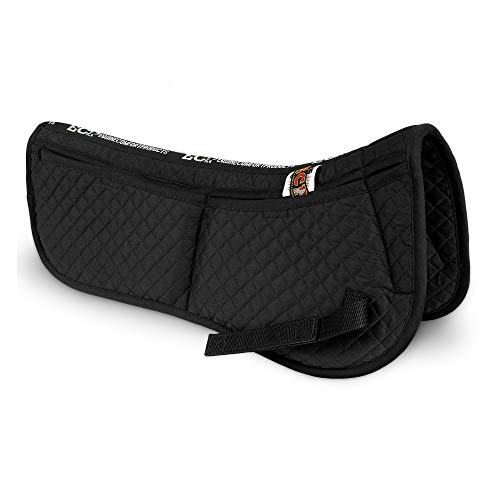 ECP Equine Comfort Products Adjustable Shock Absorbing Memory8.5 x 22"11 x 9 x 6 inches1 poundsCheck on Amazon
 Weaver Equine 31" x 32" Contoured Single Weave32" x 32"31 x 31 x 0.1 inches4.8 poundsCheck on Amazon

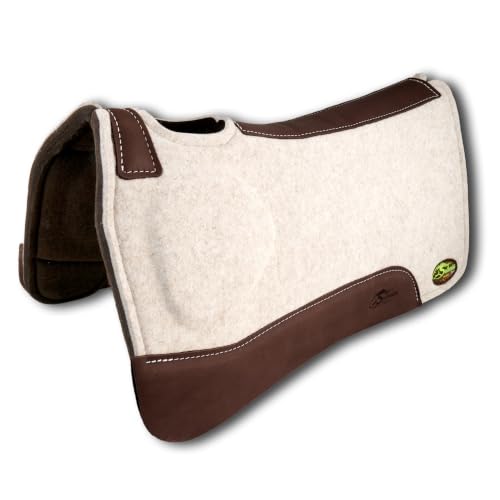


The best saddle pad for most horses and riders is the Weaver Equine 31″ x 32″ Contoured Single Weave Wool Blend Felt Western Saddle Pad. Its contoured spine channel, dense wool-blend felt body and shock-absorbing build fit the broad middle of western saddles, backs and riding schedules, which is why it takes the overall pick. Riders who need maximum pressure distribution — a wide, flat or older back, a heavier rider, long trail days, or a saddle that has never sat quite level — should go straight to the Southwestern Equine OrthoRide all-wool build-up, the premium choice here. If you want several inexpensive pads to rotate and launder without worry, the Tough 1 square pad with fleece bottom is the budget answer. English riders have a separate shortlist: the TGW RIDING quilted square pad for everyday flatwork and the Harrison Howard close contact pad for jumping. The rest of this guide sorts the category by material — wool, felt, foam and gel — and matches each type to the rider it actually suits.
Top 3 Picks
Best overall: Weaver Equine 31″ x 32″ Contoured Single Weave Wool Blend Felt Western Saddle Pad
Contoured enough to clear a high wither, dense enough to hold its shape under a working western saddle, and sized at 31″ x 32″ to cover the skirt of most full-size western saddles. The single-weave wool blend balances breathability with durability better than the acrylic alternatives, so it works for arena work, ranch chores and long trail days alike. It is the pad most riders should buy first if they only want one.
Best budget: Tough 1 Square Saddle Pad with Fleece Bottom, 30 x 30
A straightforward square western pad with a fleece underside that grips the back and wicks sweat, sold in neutral taupe, black and cream. It is cheap enough to own two or three and rotate them through the wash, which is the single biggest factor in keeping a horse’s back comfortable. Thin padding means it is a schooling pad, not a pressure-relief solution.
Best premium: Southwestern Equine OrthoRide All Wool Build-Up, Made in USA
An all-wool western pad with a classic contour and added build-up where the saddle panels need lifting, made in the USA. All-wool construction gives it the best natural resilience, moisture management and long-term shape retention of anything in this roundup. It is the pick for horses with muscle loss behind the shoulder, wide flat backs, or a saddle that needs a small fit correction rather than a replacement.
Quick Comparison
| Product | Best for | Key specs | Price tier |
|---|---|---|---|
| Weaver Equine Wool Blend Felt Western Saddle Pad, 30″ x 30″ | Traditional square-pad western riding | 30″ x 30″ square; wool-blend felt top and bottom; shock absorbing; western cut | Premium |
| Southwestern Equine OrthoRide All Wool Build-Up | Horses needing a fit correction or extra lift | All wool; classic contour; build-up panels; made in USA; western | Premium |
| ECP Equine Comfort Products Adjustable Memory Foam Half Pad | Adding cushioning under an existing pad | Half pad; memory foam; adjustable; shock absorbing; English or western use | Mid-range |
| Harrison Howard Trail Seat Saver, Ride-on Western Pad | Light, casual riding and short trail rides | Ride-on seat saver style; lightweight; western; minimal structure | Budget |
| Harrison Howard Western Bareback Saddle Pad with Matching Girth | Bareback-style riding with a girth | Bareback pad plus matching girth; western styling; soft underside | Mid-range |
| Weaver Equine 31″ x 32″ Contoured Single Weave Wool Blend Felt Pad | One pad for everything western | 31″ x 32″; contoured spine channel; single weave wool-blend felt; shock absorbing | Premium |
| TGW RIDING Premium English Quilted Square Pad | Schooling and lesson horses, colour variety | English square cut; quilted; multiple colour options; girth keepers | Budget |
| Tough 1 Square Saddle Pad with Fleece Bottom, 30 x 30 | Rotating several cheap schooling pads | 30″ x 30″ square; fleece bottom; taupe/black/cream; western | Budget |
| Harrison Howard Close Contact Jumping Pad, Velvet Hue | Forward-cut jump saddles | Close contact cut; wither relief; velvet-finish fabric; girth straps | Mid-range |
| TuffRider Basic Pony Saddle Pad, Diamond Quilted, Flannel Lined | Ponies and small saddles | Pony size; diamond quilting; flannel lining; breathable; red | Budget |
| Weaver Equine 32″ x 32″ Contoured Acrylic Pad | Big western saddles on a tighter budget | 32″ x 32″; contoured; acrylic felt; shock absorbing; easy to launder | Mid-range |
| Reinsman Contoured Trail Pad with Tacky Too Bottom | Hills, long distances, saddle stability | Contoured; non-slip Tacky Too bottom; breathable; stain and UV resistant | Premium |
How We Chose
Every pad in this roundup was selected on published specifications and category behaviour rather than personal riding experience. The first filter was material class, because wool, felt, acrylic, memory foam and gel differ predictably in how they spread load, how much heat they trap, how they are cleaned and how long they last — a pad that wins on pressure distribution can still be the wrong buy for someone who will not hand wash wool twice a month.
The second filter was fit: stated dimensions, contour and cut, and whether the pad is designed for a western skirt, a close contact jump saddle, a pony saddle or no saddle at all. Third came use case, since a bareback pad and a build-up pad solve entirely different problems even though both sit on a horse’s back. Finally we looked at upgrade path and price tier, so a rider who starts with a budget schooling pad has an obvious next step rather than a dead end. Brands were limited to established tack names whose product lines are documented and consistently available, and every claim about a specific product is drawn from how that product is described and sized, not from a trial we ran.
1. Weaver Equine Wool Blend Felt Western Saddle Pad (30″ x 30″) – Best for Traditional Western Riders
As an Amazon Associate we earn from qualifying purchases at no extra cost to you.

This is the classic western square pad in its most familiar form: 30 inches by 30 inches, wool-blend felt, no contour, no gimmicks. It suits the rider who wants a pad that sits squarely under a standard western saddle, looks traditional, and does not need to be fitted or fussed over. It is a strong choice for arena work, ranch riding and general hacking on a horse with an unremarkable back — average withers, average muscling, and a saddle that already fits well.
Key specs
- Dimensions: 30″ x 30″ square — the standard footprint for most full-size western saddles
- Material: wool-blend felt, typically finished top and bottom for a consistent surface against both saddle and hair
- Construction class: dense felt body, roughly 1/2″ to 3/4″ thick in the felt band, with shock-absorbing behaviour under load
- Discipline: western — fits most stock, trail and ranch saddles with skirts up to roughly 26″ to 28″ long
- Care class: hand wash or gentle machine wash in cold water, reshape and air dry flat; heat and agitation are what ruin felt
What it does well
Felt is the workhorse material of western pads for a reason. A wool-blend felt body holds its shape instead of bunching into folds under the bars, which means the contact surface stays flat and predictable ride after ride. Compared with a thin quilted cotton pad, the density gives real cushioning, and compared with a pure foam pad, the blend breathes better and manages sweat rather than holding it against the skin.
The square cut also has practical advantages. There is no contour channel to line up with the wither, so tacking up is fast, and the extra material at the corners protects the skirt edges from rubbing on long days. For a rider who wants one pad that will still look presentable after a season of regular use, this is a sensible, unfussy purchase.
Pros
- Dense felt body resists bunching and keeps a flat contact surface
- Breathes and manages moisture better than foam or gel equivalents
- Traditional square shape is quick to position and covers the skirt well
- Wool-blend felt is more forgiving to clean than 100% wool
- Neutral look works with almost any western saddle
Cons
- No contour, so it is not the best match for a high or narrow wither
- Square corners can curl if the pad is dried flat without reshaping
- Premium tier pricing for a pad with no structural extras
- Requires more careful laundering than an acrylic pad
How it compares
The nearest alternative in this list is the Weaver Equine 31″ x 32″ contoured single weave pad, which is the same brand and the same general material family but adds a spine channel and slightly more coverage. If your horse has a defined wither or your saddle’s skirts are long, the contoured pad is the better buy. If your horse’s back is flat and your saddle sits well, this 30″ x 30″ version does the same job with less material to manage and less to spend.
2. Southwestern Equine OrthoRide All Wool Build-Up – Best for Pressure Relief and Fit Correction
This is the pad you buy when the problem is not the pad but the fit. The OrthoRide build-up is an all-wool western pad with a classic contour and additional thickness built into the panels, which lets it lift the front or rear of a saddle that sits slightly low or bridges in the middle. It suits older horses with muscle loss behind the shoulder, wide flat backs that spread a saddle’s weight over too large an area, and riders whose saddles are close to correct but not quite there. It is made in the USA, which matters to buyers who want a known supply chain and a repairable, traditional product.
Key specs
- Material: 100% wool — no synthetic filler, so the pad relies on wool’s natural crimp and resilience
- Shape: classic western contour with a spine channel that follows the wither
- Build-up: additional thickness in the panel areas to raise the saddle where it needs lifting
- Origin: made in the USA
- Care class: hand wash in cold water with a wool-safe detergent, press water out, dry flat away from direct heat
What it does well
All-wool is the gold standard for pressure distribution because wool fibres are springy at the microscopic level. They compress under load and recover, which spreads weight across more of the back instead of concentrating it under the bars. Wool also moves moisture away from the hair and evaporates it, so the back stays drier than it would under a foam or gel pad of similar thickness. Over years of use, a good wool pad tends to mould itself to the shape of the horse rather than packing down into a flat board.
The build-up element is what separates this pad from a standard wool square. A horse with a hollow behind the shoulder or a saddle that dips at the cantle needs material added in a specific place, not everywhere. Build-up panels do that job, and because they are wool rather than foam, they add height without adding a hard, heat-trapping slab.
Pros
- All-wool construction gives the best natural pressure distribution in this roundup
- Build-up panels correct minor saddle fit issues without buying a new saddle
- Excellent moisture management — wicks and breathes rather than trapping sweat
- Contour channel clears the wither and keeps the spine free of direct pressure
- Made in the USA, with a material that can be maintained for many years
Cons
- The most expensive tier here, and the heaviest
- Wool demands careful washing — hot water and agitation will felt and shrink it
- Bulk can be too much under a saddle that already fits correctly
- Build-up must be matched to the horse’s shape; the wrong placement makes things worse
How it compares
Against the Weaver Equine wool-blend felt pad, this pad trades convenience for performance. The blend is easier to launder and lighter to handle, but it will not mould and recover the way pure wool does, and it offers no build-up. If your horse’s back is straightforward, the Weaver pad is the more practical purchase. If your saddle needs a nudge into balance, or your horse has lost topline condition, the OrthoRide is the one pad in this list designed to solve that specific problem — and it is worth involving a saddle fitter or your veterinarian before deciding how much build-up you actually need.
3. ECP Equine Comfort Products Adjustable Memory Foam Half Pad – Best for Layering Under an Existing Pad
A half pad is a different tool from a full pad, and this one is aimed at riders who already own pads they like and simply want more cushioning where the saddle panels sit. Because it is adjustable, it can be tuned — more material under one side than the other, or a thinner configuration as a horse’s condition changes. It suits riders who switch saddles, riders whose horses change shape seasonally, and anyone who wants to add pressure relief without changing the look of their turnout.
Key specs
- Type: half pad — covers the panel contact area only, not the full saddle footprint
- Material: memory foam, which conforms to the back under the rider’s weight rather than springing back instantly
- Adjustability: inserts or shims can be added or removed to change the amount and placement of cushioning
- Function: shock absorption and pressure redistribution
- Compatibility: designed to sit directly on the back, underneath a standard pad, with either English or western saddles
- Care class: spot clean between uses, hand wash the cover when needed, and dry the foam completely before storage
What it does well
Memory foam’s advantage is that it distributes load by deforming slowly to match the shape beneath it, which means it fills hollows instead of bridging over them. Under a saddle that contacts the back unevenly, that behaviour can reduce peak pressure points noticeably. The adjustable element is the real differentiator: a fixed half pad commits you to one thickness, while this one lets you add a shim where the saddle dips and leave the other side alone.
It is also the most versatile item in this roundup in terms of saddles. Because it sits under whatever pad you already use, it moves between horses and disciplines without requiring a new colour-matched set for each one. For a rider with two saddles and one horse, that flexibility is worth more than the cushioning itself.
Pros
- Memory foam conforms to the back and fills hollows rather than bridging them
- Adjustable inserts let you tune the amount and position of cushioning
- Works under English or western tack, so it moves between saddles
- Adds pressure relief without changing your existing pad and turnout
- Mid-range pricing compared with all-wool alternatives
Cons
- Adds thickness, which can make a correctly fitting saddle too tight — check the fit after adding it
- Memory foam holds heat, so it is a poor choice for hot climates and heavy work
- Only covers the panel area, leaving the rest of the back under your regular pad
- Foam degrades faster than wool and will need replacing sooner
How it compares
The nearest alternative here is the Reinsman Contoured Trail Pad, which solves a similar problem — a stable, comfortable interface between horse and saddle — but does it with a full pad and a non-slip bottom rather than a layer of foam. Choose the ECP half pad if you want to keep your current pads and tune the fit; choose the Reinsman if you want one complete pad that grips and breathes. If your horse shows persistent back soreness, treat the pad as one variable among several and get a professional saddle fit assessment rather than stacking more foam under the saddle.
4. Harrison Howard Trail Seat Saver, Ride-on Western Saddle Pad – Best for Casual Bareback-Style Riding

This is a ride-on seat saver rather than a saddle pad in the traditional sense. It sits directly on the horse’s back and gives the rider a padded surface to sit on without a saddle, which makes it a good fit for short, casual rides, leading a child around, or a quick bareback session in the arena. It is not designed to go under a western saddle, and buyers who treat it as a general-purpose pad will be disappointed.
Key specs
- Type: ride-on seat saver / bareback-style pad
- Discipline: western styling, no tree, no skirt coverage
- Construction class: lightweight padded top with a soft underside
- Use case: short rides, schooling, casual hacking without a saddle
- Care class: generally machine washable on a gentle cycle; check the specific label before washing
What it does well
Its job is simple and it does it cheaply. A ride-on pad keeps the rider’s seat off the horse’s hair and spine, distributes a little of the rider’s weight, and prevents the sweat and friction that come with riding bareback on a hot day. Because it is light and unstructured, it folds up small, lives in a grooming box and can be thrown on in seconds. For a beginner building confidence without a saddle, or a rider who wants a padded seat for a ten-minute walk around the field, that is enough.
It also functions as a protective layer. Direct bareback riding concentrates the rider’s seat bones on a small area of the back; a padded ride-on spreads that contact a little and puts a washable barrier between rider and horse. For a horse that is ridden bareback occasionally, that is a reasonable trade against the cost of a proper bareback pad.
Pros
- Very inexpensive entry point into riding without a saddle
- Lightweight and easy to store or carry
- Protects the horse’s back from sweat and friction during bareback rides
- Simple to clean compared with felt or wool
- Fast to put on and take off
Cons
- Minimal pressure distribution — not a substitute for a saddle pad under a western saddle
- No structure, so it offers no wither clearance or spine protection beyond basic padding
- Limited durability under frequent use
- Not suitable for long rides or heavier riders
How it compares
Its closest relative in this list is the Harrison Howard Western Bareback Saddle Pad with matching girth, which costs more but gives you a complete bareback setup: a pad that stays put and a girth to hold it there. If you only ride bareback around the arena, the seat saver is the cheaper answer. If you want to hack out without a saddle and have the pad stay in position on hills, the bareback pad with girth is the better investment.
5. Harrison Howard Western Bareback Saddle Pad with Matching Girth – Best for Riders Who Want a Complete Bareback Setup

This is the step up from a seat saver: a bareback pad with a matching girth, so the pad stays anchored to the horse instead of sliding as you mount and ride. It suits riders who genuinely ride bareback-style — often, on trails, or as a training variation — and want something more secure than a simple padded square. It is also a good middle ground for riders who want to feel the horse’s movement without committing to a treeless saddle.
Key specs
- Type: bareback pad with matching girth included
- Discipline: western styling, treeless, no rigid structure
- Construction class: padded seat area with a soft, sweat-friendly underside
- Sizing: typically one general size, so check the stated dimensions against your horse’s back width
- Care class: machine washable on a gentle cycle; the girth needs separate, more frequent cleaning
What it does well
The girth is what changes the experience. A bareback pad without a girth shifts when you mount from the ground or ride on uneven ground; one with a girth stays where you put it, which means consistent contact and less risk of the pad bunching under your seat bones. The padded seat also gives enough cushioning for an hour of riding without numbing the rider, which is the main complaint about riding truly bareback.
As a training tool it has real value. Riding without a tree forces the rider to balance rather than brace against stirrups, and a bareback pad makes that possible for longer than a few minutes. For a horse, the pad provides a washable, padded interface that keeps sweat and dirt off the hair and spreads the rider’s weight slightly better than bare skin contact.
Pros
- Matching girth keeps the pad stable on hills and during mounting
- Padded seat makes longer bareback sessions genuinely comfortable
- Complete, colour-matched setup at a mid-range price
- Useful as a balance-training tool for riders
- Machine washable and easy to maintain
Cons
- No tree, so weight distribution is still far from a saddle’s
- Not appropriate for heavy riders, long distances or rough terrain
- Girth quality is basic and will be the first part to wear
- One-size construction means fit varies between horse shapes
How it compares
Compared with the Harrison Howard Trail Seat Saver, this is the more serious piece of equipment and the better buy for anyone who rides without a saddle more than occasionally. The seat saver is cheaper and lighter but has nothing to hold it in place. If your goal is simply a padded surface for short sessions, save the money; if you want to ride out bareback and stay secure, the girth is worth the extra.
6. Weaver Equine 31″ x 32″ Contoured Single Weave Wool Blend Felt Pad – Best Overall Western Pad

This is the pad most western riders should buy if they are only buying one. At 31″ x 32″ it covers the skirt of a full-size western saddle with a little margin, and the contoured spine channel means it follows the wither instead of pressing across it. The single weave wool blend is the middle ground between a pure wool pad that demands careful washing and a cheap acrylic pad that packs down after a season. It suits arena work, trail riding, ranch chores and everything in between, on horses with normal to moderately high withers.
Key specs
- Dimensions: 31″ x 32″ — sized for standard and slightly oversized western saddles
- Shape: contoured, with a spine channel that clears the wither and keeps pressure off the backbone
- Material: single weave wool-blend felt with shock-absorbing behaviour under load
- Discipline: western — stock, trail, ranch and pleasure saddles
- Care class: cold hand wash or gentle cycle in a wash bag, reshape while damp, dry flat away from heat
What it does well
The contour is the feature that earns this pad the top spot. A flat square pad sits across the wither and, on a horse with any height to it, creates a pressure ridge along the spine. A contoured pad dips in the middle and rises at the sides, so the channel stays open and the load lands on the muscled areas either side of the backbone where it belongs. On a horse with a high wither, that difference is visible in the sweat pattern after a ride.
The wool blend then handles moisture and durability. Wool fibres wick sweat away from the hair and release it, and because the pad is felted rather than woven loosely, it holds its shape instead of stretching out under the bars. Single weave construction also tends to be denser and firmer than a loose knit, which means the pad stays flat and does not fold into a crease that could rub. Add the extra inch of coverage in both directions and you have a pad that fits a wide range of saddles without needing a second purchase.
Pros
- Contoured spine channel clears the wither and protects the backbone
- 31″ x 32″ coverage suits most full-size western saddles
- Wool blend breathes and wicks better than acrylic felt
- Dense single weave holds its shape and resists creasing
- Works across arena, trail and ranch use — a genuine one-pad solution
Cons
- Premium tier pricing
- Needs careful laundering to avoid shrinkage and felting
- More pad than a well-fitting saddle on a flat-backed horse strictly needs
- Limited colour options compared with budget synthetic pads
How it compares
The nearest alternative is the Weaver Equine 32″ x 32″ contoured acrylic pad, which shares the contour and the size but swaps wool for synthetic fibre. The acrylic version is cheaper and easier to launder, but it breathes less, wicks less and tends to pack down and pill sooner. Against the 30″ x 30″ wool-blend square, this pad wins on wither clearance and coverage. Unless you specifically want a flat square pad or a synthetic one, this is the version to choose.
7. TGW RIDING Premium English Quilted Square Pad – Best Budget English Schooling Pad

A quilted English square pad in a range of bright colours, aimed squarely at schooling, lessons and everyday flatwork. It suits riders who need several pads to keep in rotation, riders at a yard where pads go through the wash constantly, and anyone who wants their turnout to look sharp without spending premium money. It is not a pressure-relief pad, and it should not be asked to be one.
Key specs
- Cut: English square, quilted, with girth strap keepers
- Colour range: pink, mint green, red and other bright options
- Sizing class: typically offered in pony, cob and full sizes — match to your saddle’s flap length
- Construction class: quilted synthetic shell with a padded fill, thin relative to a half pad
- Care class: machine washable in a wash bag, cool water, air dry
What it does well
For the money, this pad covers the basics competently. The quilting keeps the fill evenly distributed rather than migrating to one corner, the girth keepers stop the pad from sliding back under the saddle, and the synthetic shell sheds hair and dust far better than cotton. In a busy yard where a pad might be washed weekly, that combination means it survives without looking tired.
The colour range is a genuine practical advantage in a shared setting. When several riders keep pads in the same tack room, distinct colours reduce mix-ups and make it easy to see at a glance whose pad is whose. For lesson programmes and pony clubs, that is a real benefit rather than a cosmetic one.
Pros
- Very low cost per pad, making rotation affordable
- Bright colour options simplify identification in shared tack rooms
- Quilting keeps padding evenly distributed
- Girth keepers prevent slipping
- Synthetic shell is easy to wash and quick to dry
Cons
- Thin padding — minimal shock absorption
- Quilted fill compresses with repeated washing and use
- Not contoured for high withers in the way a shaped pad is
- Bright colours are not to every rider’s taste
How it compares
Against the Harrison Howard Close Contact jumping pad, this is the cheaper and less specialised option. The Close Contact pad is cut for a forward-cut jump saddle and adds wither relief, which matters if you jump; the TGW square is a general-purpose flatwork pad that happens to cost less. Against the TuffRider pony pad, the TGW wins on size range — if you need a pony pad specifically, TuffRider is the more precise fit, but if you need one pad that fits a full-size horse, the TGW is the sensible budget buy.
8. Tough 1 Square Saddle Pad with Fleece Bottom, 30 x 30 – Best Budget Western Pad

A simple 30″ x 30″ square western pad with a fleece underside, offered in taupe, black and cream. It is the pad to buy in multiples: cheap enough that you can own three, keep one clean, and never put a damp pad back on a horse. It suits schooling, hacking and everyday western riding on a horse with an uncomplicated back, and it is a sensible first pad for a new rider who is not yet sure what they need.
Key specs
- Dimensions: 30″ x 30″ square, the standard western footprint
- Underside: fleece, which grips the hair and wicks sweat away from the skin
- Colours: taupe, black and cream — neutral options that hide dust
- Construction class: thin padded body, no contour, no build-up
- Care class: machine washable; brush dried sweat and hair off the fleece before washing to protect the drum
What it does well
The fleece bottom is the reason to choose this over a plain quilted square. Fleece grips, so the pad stays put under the saddle without relying on the girth to hold it in position, and it wicks moisture away from the hair instead of holding a wet layer against the skin. That combination makes it more comfortable for the horse than a bare synthetic underside, particularly on warm days.
The bigger advantage is economic. Because the pad is inexpensive, you can buy two or three and rotate them, washing after every ride or two. Rotation is one of the most effective things a rider can do for a horse’s back — a clean, dry pad prevents the sweat and grit build-up that causes rubs — and it is only practical when pads are cheap enough to own several. This pad makes that strategy affordable for almost anyone.
Pros
- Fleece underside grips the back and wicks sweat
- Low enough cost to own and rotate several
- Neutral colours suit any western saddle
- Machine washable and quick to dry
- Standard 30″ x 30″ size fits most western saddles
Cons
- Fleece collects hay, burrs and shavings and needs brushing before washing
- Thin padding offers little shock absorption
- No contour, so it is not ideal for high withers
- Wears out faster than a felt or wool pad under heavy use
How it compares
Against the Weaver Equine 30″ x 30″ wool-blend felt pad, this is the budget counterpart. The Weaver pad gives denser cushioning, better shape retention and a longer service life; the Tough 1 gives you three pads for the price of one and a fleece surface many horses find comfortable. Against the Weaver acrylic contoured pad, the Tough 1 loses on wither clearance and size but wins decisively on price. For a first pad or a schooling pad, it is hard to argue with.
9. Harrison Howard Close Contact Jumping Pad, Velvet Hue – Best for Jump Saddles

This pad is cut for a close contact or forward-cut jump saddle, which means it follows the shape of the panel rather than hanging square beneath it. It suits showjumping and cross-country riders, riders whose saddles have a high, forward wither cut, and anyone who has struggled to keep a square pad from bunching under the front of a jump saddle. The velvet-finish fabric gives it a smart, show-ready look without a show-pad price.
Key specs
- Cut: close contact, shaped to follow a forward-cut jump saddle’s panel
- Feature: wither relief shaping at the front to reduce pressure over the shoulder area
- Surface: velvet-finish fabric in a range of hues
- Retention: girth straps hold the pad in position
- Sizing class: typically offered in pony, cob and full — match the size to your saddle, not your horse
- Care class: brush off after each ride, machine wash cool in a bag, air dry
What it does well
The shaped cut is the whole point. A square pad under a jump saddle leaves excess material at the front, which folds, rubs and can pinch at the shoulder. A close contact pad follows the panel line, so there is no surplus fabric and no fold to create a pressure point. The wither relief shaping at the front does the same job for the spine: it lifts the pad away from the highest point of the back so the channel stays open.
The velvet-finish outer is a practical choice as well as an aesthetic one. It resists the light dust and scurf that show up immediately on dark cotton, and it holds its appearance through repeated brushing between washes. For riders who compete at a level where turnout is judged, that matters, and it makes the pad usable for both schooling and shows without owning two sets.
Pros
- Shaped cut eliminates the folds that square pads create under jump saddles
- Wither relief keeps the spine channel open
- Velvet-finish fabric looks smart and resists showing dust
- Girth straps keep the pad locked in position over fences
- Mid-range pricing rather than show-pad money
Cons
- Only fits forward-cut saddles — it will look and sit wrong on a dressage or general-purpose saddle
- Padding is thin, so it is not a pressure-relief solution
- Velvet finish needs brushing to stay presentable
- Colour availability varies, which can complicate matching to a yard’s colours
How it compares
The nearest alternative here is the TGW RIDING quilted square pad. If you ride in a jump saddle, the Harrison Howard’s shaped cut is functionally better and worth the extra money, because the pad will not fold under the front of the panel. If you ride in a general-purpose or dressage saddle, or you want a pad that works across several saddles in a shared yard, the TGW square is the more flexible and cheaper choice.
10. TuffRider Basic Pony Saddle Pad, Diamond Quilted, Flannel Lined – Best Budget Pony Pad

A diamond-quilted pony pad with a flannel lining, sized for ponies and small saddles rather than full-size horses. It suits pony club families, riding schools with a string of small ponies, and anyone who has watched a full-size pad hang halfway down a pony’s sides and drag under the rider’s leg. It is deliberately basic: thin, breathable and inexpensive.
Key specs
- Size: pony — cut shorter and narrower than a full-size pad
- Quilting: diamond pattern that holds the fill evenly across the pad
- Lining: flannel, which is soft against the hair and wicks light sweat
- Breathability: designed as a breathable schooling pad
- Colour: red, with other options depending on availability
- Care class: machine washable, cool water, air dry; brush the flannel before washing
What it does well
Correct sizing is the strongest argument for this pad. A pad that is too large for a pony’s saddle hangs below the flap, bunches under the rider’s leg and can catch on the rider’s boot or the pony’s side. A pony-specific pad sits where it should, which reduces rubbing and looks correct. Flannel lining adds a soft layer that wicks light sweat and is gentler on clipped or sensitive skin than a bare synthetic underside.
The diamond quilting does a quiet but useful job: it stabilises the fill so the padding does not migrate to the edges after a few washes. On a budget pad that is likely to be laundered often, that structure is what keeps it usable for more than a season. For a riding school with a dozen ponies and a constant washing rotation, that reliability is the main thing a pad needs to deliver.
Pros
- Pony-specific sizing means a correct fit rather than a draped full-size pad
- Flannel lining is soft and wicks light sweat
- Diamond quilting keeps the fill evenly distributed
- Inexpensive enough to buy in quantity for a yard
- Machine washable and quick drying
Cons
- Only fits ponies — not usable on a full-size horse
- Thin padding with no shock-absorbing structure
- Basic construction will not survive heavy daily use for years
- Limited colour choice
How it compares
Against the TGW RIDING quilted square pad, the difference is sizing precision. The TGW pad comes in multiple sizes including pony options and offers far more colour choice; the TuffRider is a dedicated pony pad with a flannel lining that some sensitive ponies prefer. If you need a specific colour or a range of sizes across a yard, TGW is easier to standardise on. If you want one well-priced pony pad with a soft lining, this is the more targeted buy.
11. Weaver Equine 32″ x 32″ Contoured Acrylic Pad – Best Mid-Range Western Pad for Easy Care

A larger, contoured western pad made from acrylic felt rather than wool, aimed at riders who want the shape and coverage of a premium pad without the laundering routine. At 32″ x 32″ it suits bigger western saddles, longer skirts and taller horses. It is the practical choice for riders who know they will not hand wash a wool pad twice a month and would rather machine wash and move on.
Key specs
- Dimensions: 32″ x 32″ — the largest footprint in this roundup, suited to full-size and oversized western saddles
- Shape: contoured with a spine channel for wither clearance
- Material: acrylic felt — a synthetic alternative to wool felt, with shock-absorbing behaviour
- Care class: machine washable on a gentle cycle, dries
Affiliate disclosure. As an Amazon Associate we earn from qualifying purchases at no extra cost to you. Prices accurate as of the date shown.Best Saddle Pads for HorsesCheck price on Amazon