Our Top Picks


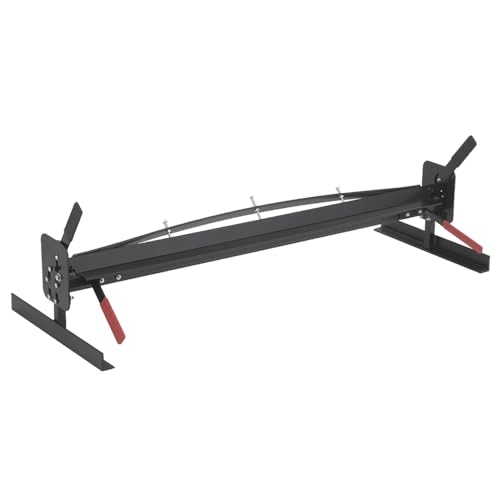


For most professional fabrication shops, the best sheet metal brake for professional fabrication is the KAKA INDUSTRIAL BP-1650, a 50-inch box and pan brake rated to 16 gauge. It is the only model in this roundup that combines full-length bending capacity with a segmented-finger design, which is what box and pan work actually demands, and 16-gauge mild steel covers the bulk of brackets, panels, enclosures, and duct transitions that move through a job shop. It suits a shop with a permanent bench or stand and a steady flow of 20- to 16-gauge work. If you bend on site instead of at a bench, the Malco MB48A is the better answer at 48 inches and 22-gauge capacity in a genuinely portable package. If you are starting out with light-gauge trim, flashing, and small enclosures, the VEVOR 36-inch 20-gauge brake is the budget pick that gets you forming metal without committing serious money. Everything below is organized around the six things that decide whether a brake earns its floor space: bending length, maximum gauge, clamping strength, angle accuracy, portability, and long-term shop durability.
Top 3 Picks
Best overall: KAKA INDUSTRIAL BP-1650 Box and Pan Brake, 50 in, 16 Gauge. Fifty inches of bend length at a 16-gauge mild steel rating is the sweet spot for professional fabrication, because it handles a full 4-foot panel and still has enough capacity for structural brackets and chassis parts. The box and pan finger set lets you form the fourth side of a box, which a straight brake cannot do without a separate setup. It is heavy, it wants a permanent home, and it is priced in the premium tier, but it is the one brake on this list that will not be the limiting factor in your shop.
Best budget: VEVOR Sheet Metal Brake, 36-Inch, 20 Gauge. Thirty-six inches of bend length and a 20-gauge low-carbon steel capacity is the practical entry point for a shop that forms trim, flashing, small panels, and light enclosures. It is portable, it costs a fraction of a full-size box and pan brake, and it will teach you the clamping and springback habits you need before you spend premium money. The trade-off is honest: thinner material only, and no segmented fingers for box work.
Best premium: KAKA INDUSTRIAL EB-4816B Magnetic Sheet Metal Brake, 48 in, 16 Ga. A magnetic brake replaces the clamp bar with a magnetic bed, so setup collapses from minutes to seconds and clamping pressure is uniform across the full 48 inches. At 16 gauge and 48 inches it covers professional-grade mild steel work, and the repeatability on high-mix, low-volume runs is where it separates itself from a conventional box and pan brake. It only holds ferrous material, which is the one real constraint to weigh before buying.
Quick Comparison
| Product | Best for | Key specs | Price tier |
|---|---|---|---|
| VEVOR Box and Pan Brake, 24 in | Deep-angle box and pan work in small shops | 24 in bend length; 20-gauge low-carbon steel class; 0–135° bending range; segmented fingers; portable bench-top | Mid-range |
| KASTFORCE KF5006 Box and Pan Brake | Benchtop box and pan folding in tight shops | 24 in max capacity; box and pan finger configuration; metal forming folder; bench-mount form factor | Mid-range |
| Malco MB48A Portable Mini Brake | HVAC, roofing and ductwork fabrication on site | 48 in bend length; 22-gauge capacity; portable mini brake; HVAC/ductwork focus | Premium |
| VEVOR Sheet Metal Brake, 36-Inch | Budget straight bending at 36 inches | 36 in bend length; 20-gauge low-carbon steel capacity; portable mini brake form factor | Budget |
| JEGS 81510 Metal Brake with Stand | A ready-to-work brake-and-stand setup | 36 in bend length; 22-gauge capacity; includes stand; bench-height working position | Mid-range |
| Erie Tools 30″ Heavy Duty Hand Brake | Heavy-gauge short-part bending on a budget | 30 in bend length; 16-gauge steel class with thicker aluminum capability; bench-top hand brake | Budget |
| WORKPRO Hand Seamer, 6-Inch | Edge, seam and flange work a brake cannot reach | 6 in jaw length; hand-operated seamer/brake pliers; heavy-duty steel build | Budget |
| KAKA INDUSTRIAL 3-IN-1/12 | Shear, brake and slip-roll work in one small footprint | 12 in working width; 20-gauge capacity; 3-in-1 shear/brake/roll combination machine | Premium |
| KAKA INDUSTRIAL BP-1650 Box and Pan Brake | Full-length professional box and pan fabrication | 50 in bend length; 16-gauge capacity; box and pan segmented fingers; floor or stand mounted | Premium |
| Sheet Metal Brake, 18-Inch (Americangaslogs) | Portable light-gauge bending at 0–90° | 18 in bend length; 18-gauge mild steel capacity; 0–90° bending range; portable | Budget |
| Prolinemax Pro 48″ Sheet Metal Brake | HVAC and roofing straight bends at 48 inches | 48 in bend length; 20-gauge galvanized steel; 14-gauge aluminum capability; HVAC/roofing focus | Mid-range |
| KAKA INDUSTRIAL EB-4816B Magnetic Brake | Fast-setup, full-length 16-gauge precision | 48 in bend length; 16-gauge capacity; magnetic bed clamping; ferrous material only | Premium |
How We Chose
This roundup is built from published manufacturer specifications, category standards for sheet metal forming, and the practical constraints that show up in real fabrication work. No brake here was tested or handled by us; every claim traces back to the listed capacity, configuration, and form factor. The first filter was capacity honesty: a brake’s bend length and maximum gauge are the two numbers that decide whether it can do your work at all, so we grouped models by what they can physically form rather than by price alone. The second filter was configuration. A straight brake, a box and pan brake, a magnetic brake, a 3-in-1 combination machine, and a hand seamer solve different problems, and recommending a straight brake to someone forming enclosures would be a disservice. The third filter was category fit and upgrade path: a portable mini brake is the right tool for a service van and the wrong tool for a production bench, and we say so in each section. Finally, we weighed ownership realities, including what wears first, what maintenance a brake needs, and where the design limits show up after years of use. The result is twelve tools sorted by the situation they actually fit, with the trade-offs stated plainly.
1. VEVOR Box and Pan Brake, 24 in – Best for Deep-Angle Box and Pan Work in Small Shops
As an Amazon Associate we earn from qualifying purchases at no extra cost to you.

The 24-inch VEVOR box and pan brake is aimed at the fabricator who forms boxes, pans, channels, and enclosure shells rather than long duct runs. Its distinguishing feature is the 0–135° bending range, which is wider than the 0–90° range found on most compact brakes, so you can fold a hem or an acute return past square in a single setup instead of improvising with a second operation. It is a bench-top machine with a portable form factor, which makes it a reasonable fit for a garage shop, a prototyping bench, or a maintenance department that needs to make a bracket or a cover without walking to a shear and press brake.
Key specs
- Bending length: 24 in
- Capacity: 20-gauge low-carbon steel class
- Bending angle range: 0–135°
- Configuration: box and pan with segmented fingers
- Form factor: portable bench-top
- Best material match: mild steel, light-gauge aluminum
- Price tier: mid-range
Where it earns its place. The segmented fingers are the reason to choose this over a straight brake of the same length. With the fingers removed or repositioned, you can bend the first three sides of a box and then close the fourth, which is the whole point of a box and pan design. The 135° range adds capability that most compact brakes simply do not have: hems, J-trim, and returns that need to fold back on themselves. For electrical enclosures, HVAC transitions, and small chassis parts, that combination covers a surprising amount of work.
Where it runs out of headroom. Twenty-gauge capacity is a light-gauge rating, and 24 inches of bend length means a 4-foot panel is out of the question. If your work is mostly 16-gauge brackets or full-width duct sections, this brake will be the bottleneck in a matter of weeks. The machine also rewards setup discipline: finger alignment needs to be checked against a straightedge before critical bends, and clamping pressure on very thin material can leave witness marks unless you use a shim or a protective strip.
Pros
- 0–135° range covers hems and acute returns that 0–90° brakes cannot reach
- Segmented fingers allow genuine box and pan forming
- Compact and movable, so it can live on a bench and be stored out of the way
- Mid-range pricing makes it an accessible step up from a straight hand brake
- 24-inch width suits small enclosures, covers, and trim pieces
Cons
- 20-gauge capacity rules out most structural or 16-gauge work
- 24 inches of bend length is limiting for duct and panel runs
- No stand included, so you need a solid bench to get it to working height
- Thin material can be marked by the clamp bar without a protective shim
How it compares with the nearest alternative. The closest match in this list is the KASTFORCE KF5006, which is also a 24-inch box and pan folder. The VEVOR’s advantage is the wider 0–135° bending range, which the KF5006 listing does not claim, making the VEVOR the better choice if you regularly form hems or acute angles. Against the Erie Tools 30-inch hand brake, the comparison flips: the Erie Tools is rated for a much heavier 16-gauge class, but it is a straight hand brake rather than a box and pan machine, so it cannot form a closed box side. Choose the VEVOR if box geometry and angle range matter more than thickness; choose the Erie Tools if thickness is the priority and your parts are flat panels.
2. KASTFORCE KF5006 Box and Pan Brake – Best for Benchtop Box and Pan Folding in Tight Shops

The KASTFORCE KF5006 is a 24-inch box and pan brake and sheet metal folder built for the shop that has to fold boxes, pans, and channel sections but does not have room for a floor-standing machine. It is a metal forming folder in the classic benchtop configuration: a fixed bed, a clamping bar with segmented fingers, and a bending leaf that swings the material up against the fingers. The appeal is straightforward. If your parts are small enclosures, trays, brackets with returns, or duct fittings under two feet wide, a 24-inch box and pan brake does the job of a much larger machine in a fraction of the footprint.
Key specs
- Maximum capacity: 24 in working width
- Configuration: box and pan brake / sheet metal folder
- Function: metal forming, box and pan folding
- Form factor: benchtop
- Best material match: light-gauge mild steel and aluminum
- Price tier: mid-range
Where it earns its place. The KF5006 is a box and pan machine first, which means the finger set is the feature that matters most. Being able to lift out individual fingers lets you fold a flange that stops short of a previously formed side, which is exactly how a tray or an enclosure shell gets built. For a shop doing electrical work, sign fabrication, HVAC transitions, or custom brackets, that geometry is the difference between a brake that gets used weekly and one that collects dust because it can only make flat angle bends.
Where it runs out of headroom. A 24-inch bed is the hard ceiling. Any part wider than two feet has to be formed in sections or outsourced, and multi-piece bends introduce alignment error that shows up as a twisted flange. The machine is also in the light-gauge class by design, so 16-gauge steel is off the table. Like all benchtop brakes in this size, it needs to be bolted or clamped to a rigid bench; a flexing bench translates directly into inconsistent bend angles, because the whole machine moves when you pull the leaf.
Pros
- True box and pan finger set for enclosures, trays and channel work
- 24-inch working width covers most small-part fabrication
- Benchtop footprint fits a garage or a corner of a working shop
- Mid-range pricing sits well below floor-standing box and pan machines
- Simple mechanical design with few parts to fail
Cons
- No published bending-angle range as wide as the 0–135° VEVOR equivalent
- Light-gauge capacity only, so no structural steel work
- Requires a rigid, dedicated bench for repeatable results
- Two-foot width limit forces multi-setup work on larger panels
How it compares with the nearest alternative. The VEVOR 24-inch box and pan brake is the direct competitor, and the two are close enough that the deciding factor is angle range versus price. The VEVOR advertises 0–135°, which matters if you form hems and acute returns; the KF5006 is the classic box and pan folder without that published range. Against the KAKA INDUSTRIAL 3-IN-1/12, the KF5006 wins on width — 24 inches versus 12 — while the KAKA wins on versatility, because it also shears and rolls. If you need to cut and curve as well as bend, the 3-in-1 is the more efficient purchase; if you only need to fold, the KF5006 gives you twice the bend length for similar money.
3. Malco MB48A Portable Mini Brake – Best for HVAC, Roofing and Ductwork Fabrication on Site

The Malco MB48A is a 48-inch portable mini brake rated to 22-gauge capacity, built for HVAC, roofing, and ductwork fabrication. It is the tool for the installer who bends on the job site rather than at a bench, and it is priced in the premium tier because portability at that length is genuinely hard to engineer. Malco is a long-established name in HVAC and sheet metal tools, and the MB48A reflects that lineage: a full four-foot bend length in a machine light enough to carry to a rooftop or a service van.
Key specs
- Bending length: 48 in
- Capacity: 22-gauge class
- Form factor: portable mini brake
- Primary applications: HVAC, roofing, ductwork fabrication
- Best material match: galvanized steel, light aluminum, flashing stock
- Price tier: premium
Where it earns its place. Four feet of bend length in a portable machine is the whole argument. Ductwork, flashing, roof trim, and drip edge all come in standard widths that a 24- or 30-inch brake cannot handle in one pass, and a brake that lives in the shop does not help when the work is on a roof. The 22-gauge rating matches the material that HVAC and roofing work actually uses: galvanized sheet, light aluminum, and coated flashing stock. Setup is fast because there is no stand to level and no bench to find.
Where it runs out of headroom. The 22-gauge rating is the constraint. This is a light-gauge machine by design, and it will not touch 16-gauge brackets or structural work. Premium pricing is also a real consideration: you are paying for portability and brand reputation, not for raw capacity, and a shop that never leaves the building can get more thickness and more rigidity for the same money from a floor-standing box and pan brake. Portable brakes also flex more than heavy bench machines, so bend angles need to be checked more often and springback compensation becomes a habit rather than an occasional adjustment.
Pros
- 48-inch bend length in a genuinely portable package
- 22-gauge capacity matches HVAC and roofing material classes
- Fast setup with no stand or permanent bench required
- Strong brand pedigree in HVAC and sheet metal tooling
- Handles full-width flashing and trim in a single pass
Cons
- Premium price tier for a light-gauge machine
- 22-gauge ceiling excludes heavier fabrication work
- Portable frames deflect more, so angles need verification
- No box and pan finger set for enclosure-style geometry
How it compares with the nearest alternative. The Prolinemax Pro 48-inch brake is the closest match on length, and both are aimed at HVAC and roofing work. The Prolinemax is listed with a 20-gauge galvanized steel capacity and a 14-gauge aluminum capability, which is a heavier rating than the Malco’s 22 gauge, and it sits in the mid-range tier rather than premium. What the Malco brings instead is portability and a well-known HVAC tooling brand. If the brake stays in a shop or on a truck bed and you want maximum capacity per dollar, the Prolinemax is the stronger spec sheet. If the brake travels to the work and you want the tool built for that life, the MB48A is the one to carry.
4. VEVOR Sheet Metal Brake, 36-Inch – Best for Budget Straight Bending at 36 Inches

The 36-inch VEVOR sheet metal brake is the budget entry point in this roundup: a portable mini brake rated for 20-gauge low-carbon steel with three feet of bend length. It is the machine for the shop that needs to form panels, flashing, trim, and simple angle brackets without spending mid-range money, and it is also a sensible first brake for someone moving up from hand tools. Three feet of width is the practical threshold for most light fabrication, because it covers common panel and flashing widths that a 24-inch machine cannot.
Key specs
- Bending length: 36 in
- Capacity: 20-gauge low-carbon steel class
- Form factor: portable mini brake
- Best material match: mild steel, aluminum, light galvanized stock
- Price tier: budget
Where it earns its place. The value proposition is width per dollar. A 36-inch bed at a budget price lets a small shop form trim, pan sections, and light panels in one pass instead of in two, and doing a bend in one pass is the single biggest determinant of whether the result is flat and square. Low-carbon steel is the friendliest material to bend, so a 20-gauge rating on mild steel translates into comfortable work on 22- and 24-gauge stock and on light aluminum, with a little capacity in reserve for the occasional heavier piece.
Where it runs out of headroom. Budget brakes are built to a price, and the differences show up in the details: thinner bed plates, lighter clamping hardware, simpler hinges, and less rigidity in the bending leaf. That means bend angle consistency depends more on technique, and you should expect to compensate for springback by overbending rather than dialing in a number once and repeating it. There is also no finger set for box and pan work, so closed-box geometry is out of reach. Treat the 20-gauge figure as a full-width limit, not a starting point.
Pros
- 36-inch bend length at a budget price tier
- 20-gauge low-carbon steel capacity covers common light fabrication
- Portable, so it can be moved or stored when not in use
- Simple enough for a first-time brake owner to learn on
- Handles flashing, trim, panels and light brackets
Cons
- No segmented fingers, so no box and pan forming
- Lighter construction means less repeatable bend angles
- No stand included, and it needs a rigid surface to work well
- 20-gauge ceiling excludes structural or 16-gauge parts
How it compares with the nearest alternative. The closest competitor is the Americangaslogs 18-inch brake, which is also budget tier but shorter and rated to 18-gauge mild steel with a 0–90° range. That is a meaningful split: the Americangaslogs bends thicker material, while the VEVOR bends wider material. For trim, flashing, and panels, width wins, and the VEVOR 36-inch is the better buy. For small, thick brackets, the 18-gauge rating matters more than the extra 18 inches of bed. Compared with the JEGS 81510, the VEVOR gives up the included stand and the 22-gauge rating but costs less, which makes it the right choice if you already have a bench and want to spend your budget on width rather than accessories.
5. JEGS 81510 Metal Brake with Stand – Best for a Ready-to-Work Brake and Stand Setup

The JEGS 81510 is a 36-inch metal brake rated to 22 gauge that ships with a stand, which changes the buying calculation more than it first appears. A brake without a stand has to be bolted to a bench that is rigid enough not to flex, and finding or building that bench is a real project. The JEGS 81510 arrives at working height with a stable base, so it can be set up in a bay and used the same day. It suits a garage or small shop that wants a dedicated bending station without fabricating a stand first.
Key specs
- Bending length: 36 in
- Capacity: 22-gauge class
- Included: matching stand
- Working height: stand-mounted, bench-height operation
- Best material match: light-gauge mild steel, aluminum, trim stock
- Price tier: mid-range
Where it earns its place. The stand is the feature. A bending leaf has to be swung through an arc, and that motion needs clearance below the bed and a base that does not rock. A stand engineered for the machine gives you both, plus a consistent working height that reduces fatigue on repeat work. Thirty-six inches of width handles most trim, panel, and bracket work in one pass, and the 22-gauge rating is adequate for light-gauge fabrication and automotive-style sheet metal tasks.
Where it runs out of headroom. Twenty-two gauge is a light rating, lighter than the 20-gauge VEVOR and considerably lighter than the 16-gauge machines in this list. If your work regularly involves 18- or 16-gauge steel, this brake is not the answer regardless of how convenient the stand is. The stand also adds floor footprint and weight, which turns it into a fixed installation rather than something you tuck away, so it fits a shop with permanent space and not a shared garage that has to be cleared for a car.
Pros
- Ships with a stand, so it is usable immediately
- Stable, correct-height working position improves bend consistency
- 36-inch bend length covers common panel and trim widths
- Mid-range pricing includes the stand rather than charging separately
- Simple mechanical design with an accessible bending leaf
Cons
- 22-gauge capacity is the lightest rating in this roundup
- Stand makes it a fixed installation with a permanent footprint
- No box and pan finger set for enclosure geometry
- Heavier and harder to relocate than a portable mini brake
How it compares with the nearest alternative. The natural comparison is the VEVOR 36-inch brake, which has the same bend length and a heavier 20-gauge rating but no stand. The JEGS wins on immediate usability: you unbox it, bolt it together, and start bending at a comfortable height. The VEVOR wins on capacity and on cost, and it wins outright if you already own a heavy bench. Against the Prolinemax Pro 48-inch, the JEGS gives up a foot of bend length and the heavier galvanized rating, but the Prolinemax is oriented toward HVAC and roofing runs rather than a general-purpose garage bending station.
6. Erie Tools 30″ Heavy Duty Sheet Metal Hand Brake – Best for Heavy-Gauge Short-Part Bending on a Budget

The Erie Tools 30-inch heavy-duty hand brake is the anomaly in the budget tier: a bench-top bender listed for 16-gauge steel with aluminum capability at a budget price. That combination of thickness and price is rare, and it comes with a trade-off that is visible in the specification itself. Thirty inches of bend length is shorter than the 36- and 48-inch machines around it, so you are buying thickness and rigidity rather than width. It suits a shop that makes brackets, gussets, mounting plates, and small structural parts in 16-gauge steel and does not need to bend full panels.
Key specs
- Bending length: 30 in
- Capacity: 16-gauge steel class, with thicker aluminum capability
- Form factor: bench-top hand brake
- Best material match: mild steel, aluminum
- Price tier: budget
Where it earns its place. Sixteen-gauge capacity at a budget price changes what a small shop can make in-house. A 16-gauge bracket, a reinforcement plate, or a chassis tab is a job that would otherwise be sent out or cut and welded instead of formed, and having a brake that handles it removes a bottleneck. The 30-inch bed also keeps the machine bench-top sized, so it does not demand floor space, and the shorter bed is inherently stiffer than a longer one, which helps hold a consistent angle across the bend.
Where it runs out of headroom. Thirty inches will not bend a four-foot panel, and that limitation arrives fast in HVAC, roofing, and cabinet work. There are also no segmented fingers, so box and pan geometry is not possible. A budget machine rated for 16 gauge should be treated conservatively: bend full-width 16-gauge stock only when the machine is securely mounted, and expect the effort at the handles to rise sharply as thickness increases. Thin material, conversely, can be harder to control on a heavy-duty brake because the clamp is built for thicker stock.
Pros
- 16-gauge steel class capacity at a budget price tier
- 30-inch bed is stiff and holds angles well on short parts
- Bench-top footprint suits a crowded shop
- Handles aluminum well, including thicker aluminum stock
- Removes the need to outsource small structural brackets
Cons
- 30-inch width is the shortest heavy-duty bed here
- No box and pan finger set
- Heavy-gauge bends require significant handle effort
- Thin material control is less precise than on a light-gauge machine
How it compares with the nearest alternative. Compared with the VEVOR 24-inch box and pan brake, the Erie Tools is the opposite tool: more thickness, less geometry. The VEVOR gives you fingers and a 0–135° range for boxes and hems; the Erie gives you 16-gauge capacity for flat parts. If your work is brackets and plates, the Erie is the more capable machine. If your work is enclosures and trays, the VEVOR’s fingers are worth more than the extra thickness. Against the KAKA INDUSTRIAL BP-1650, the Erie matches the gauge class but gives up 20 inches of bend length and the segmented finger set, which is precisely what the premium price buys.
7. WORKPRO Hand Seamer, 6-Inch – Best for Edge, Seam and Flange Work a Brake Cannot Reach
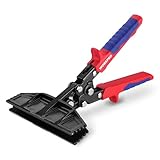
The WORKPRO hand seamer is not a bench brake and should not be judged as one. It is a 6-inch hand-operated sheet metal bender in the seamer/brake-pliers family, built for bending, seaming, and flanging material that a bench machine cannot physically reach. That includes installed ductwork, roof edges, cabinet liners, and formed panels that are already fastened in place. In a professional shop it is a complementary tool rather than a replacement for a brake, and at the budget tier it is one of the cheapest ways to add capability you cannot get from a fixed machine.
Key specs
- Jaw length: 6 in
- Type: hand seamer / sheet metal brake pliers
- Operation: manual, one-handed or two-handed depending on gauge
- Build: heavy-duty steel
- Best material match: light-gauge steel, aluminum, flashing
- Price tier: budget
Where it earns its place. Reach is the entire value. A bench brake can only bend material you can carry to it and fit between the bed and the clamp bar. A hand seamer goes to the work: it folds a flange on a duct already hung, crimps a seam on a roof edge, or straightens a lip on an installed panel. Six-inch jaws are long enough to make a clean, straight flange in one grip on light-gauge stock, and short enough to work inside a cabinet or against a wall. For HVAC and roofing work, this is the tool that handles the last ten percent of the job that the brake cannot.
Where it runs out of headroom. Hand force is the limit. On light-gauge flashing and 24- to 26-gauge stock, a 6-inch seamer is comfortable. As thickness climbs toward 20 gauge, the effort becomes substantial and the jaw length becomes a lever working against you. The bend is also only as straight as your grip, so long, uniform flanges on visible surfaces are better made on a brake. There is no depth control, so consistent flange widths come from marking the material first.
Pros
- Reaches installed material that no bench brake can access
- Very low cost for the capability it adds
- Six-inch jaws make clean short flanges and seams
- Heavy-duty steel build suited to daily site use
- Stores in a tool bag or a drawer, unlike any bench machine
Cons
- Not a substitute for a bench brake on repeat or long bends
- Limited to light-gauge material by hand force
- Flange consistency depends on the operator’s grip
- No angle reference, so bend angles are estimated
How it compares with the nearest alternative. There is no direct equivalent in this list, because every other tool here is a fixed or portable bench machine. The right way to place the WORKPRO seamer is alongside a brake rather than against one. A shop running the Malco MB48A on HVAC work should still carry a seamer for installed duct and roof edges; a shop running the KAKA BP-1650 at the bench should keep one for touch-up and field work. Compared with the smallest brakes in this roundup, the seamer costs far less and does jobs they cannot, but it will never match their bend length or angle repeatability. Buy it as an addition, not as your only bending tool.
8. KAKA INDUSTRIAL 3-IN-1/12 Sheet Metal Brake – Best for Shear, Brake and Slip-Roll Work in One Small Footprint

The KAKA INDUSTRIAL 3-IN-1/12 is a 12-inch, 20-gauge combination machine that shears, bends, and slip-rolls in a single bench-top unit. That combination is the reason to consider it. Instead of three separate tools competing for bench space, one machine covers cutting a blank, forming a bend, and rolling a curve — which is exactly the sequence most small parts go through. It suits a workshop with limited floor area, a prototyping bench, or a maintenance shop that makes small brackets, covers, and curved sections rather than long panels.
Key specs
- Working width: 12 in
- Capacity: 20-gauge class
- Functions: shear, brake (bender), slip roll
- Form factor: bench-top combination machine
- Best material match: light-gauge mild steel, aluminum, copper, brass
- Price tier: premium
Where it earns its place. Workflow is the argument. A part that needs a shear cut, two bends, and a rolled radius normally travels between three machines, and each move introduces alignment error and handling time. A 3-in-1 keeps the blank on one machine through the whole sequence, which is faster and more accurate on small parts. The slip roll is the capability most often missing from a shop that owns only a brake, and it opens up curved flanges, tubes, and radiused covers that cannot be formed any other way by hand.
Where it runs out of headroom. Twelve inches of working width is narrow. Combination machines also compromise: each function is less capable than a dedicated tool of the same price, so a 12-inch 3-in-1 will not out-shear a dedicated 12-inch shear or out-bend a dedicated 12-inch brake in terms of rigidity and feel. The 20-gauge ceiling keeps it in light-gauge territory, and setup changes between functions take time, so it is a poor fit for high-volume production where a machine stays on one operation all day. Premium pricing for a 12-inch working width is the other consideration.
Pros
- Shear, brake, and slip roll in one bench-top footprint
- Keeps a small part on one machine through cut, bend, and roll
- Adds curve-forming capability no plain brake provides
- Suits small parts, prototypes, and maintenance work
- Conserves bench and floor space in a crowded shop
Cons
- 12-inch working width is the narrowest here
- Each function is less rigid than a dedicated machine
- Function changes cost setup time
- Premium price tier for a light-gauge, narrow machine
How it compares with the nearest alternative. The KASTFORCE KF5006 is the closest comparison in purpose, since both are box and pan folding machines in a benchtop size. The KAKA wins on versatility — it shears and rolls, which the KF5006 does not — while the KF5006 wins on width, with 24 inches against 12. For a shop making small curved and folded parts, the 3-in-1 is the more useful single purchase. For a shop making folded parts only, the KF5006’s extra foot of width is worth more than a slip roll it will rarely use. Compared with the Erie Tools 30-inch brake, the KAKA gives up thickness and width but adds two entire processes.
9. KAKA INDUSTRIAL BP-1650 Box and Pan Brake – Best Overall for Full-Length Professional Fabrication

The KAKA INDUSTRIAL BP-1650 is a 50-inch box and pan brake rated to 16 gauge, and it is the machine this roundup recommends for professional fabrication. Fifty inches of bend length clears a standard four-foot panel with room to spare, and 16-gauge mild steel capacity covers the brackets, enclosures, chassis parts, duct transitions, and mounting plates that make up the bulk of real shop work. The box and pan finger set means you can form the fourth side of a box, which is the capability that separates a fabrication brake from a sheet metal bender. It is a floor-standing machine in the premium tier, and it is built to be the last brake a small shop buys.
Key specs
- Bending length: 50 in
- Capacity: 16-gauge class
- Configuration: box and pan with segmented fingers
- Form factor: floor or stand mounted
- Best material match: mild steel, aluminum, light stainless with derating
- Price tier: premium
Where it earns its place. Capacity and geometry arrive together here. A 50-inch bed at 16 gauge means full-width bends on material heavy enough to be structural, and the segmented fingers let you work around flanges you have already formed. That combination is what makes a box and pan brake the backbone of a fabrication bench. The extra length over a 48-inch machine matters more than it looks: standard sheet sizes and panel dimensions leave you with margin instead of a bend that just barely fits the bed.
Where it runs out of headroom. It is heavy and it is not portable. This machine wants a permanent position with clearance for the bending leaf to swing and enough room to feed a full sheet. Premium pricing also means the budget has to be real, and if your work is mostly 22-gauge flashing and trim, you are paying for capacity you will not use. Stainless steel requires derating: a 16-gauge mild steel brake typically handles stainless two gauge numbers lighter, so treat 20-gauge stainless as the practical ceiling unless the material is fully annealed.
Pros
- 50-inch bend length handles standard four-foot panels
- 16-gauge capacity covers structural and enclosure work
- Segmented box and pan fingers allow closed-box geometry
- Heavy construction holds angle consistency across full-width bends
- An upgrade path that ends the search for a bigger brake
Cons
- Premium price tier and a significant investment
- Heavy and fixed, with no portability
- Requires dedicated floor space and swing clearance
- Stainless and heavy aluminum require derating
How it compares with the nearest alternative. The KAKA INDUSTRIAL EB-4816B magnetic brake is the closest competitor and the most interesting comparison in this list. Both are 48- to 50-inch machines in the 16-gauge class. The BP-1650 uses a conventional clamp bar and segmented fingers, which works on steel, aluminum, and stainless alike and gives you true box and pan geometry. The EB-4816B replaces the clamp bar with a magnetic bed, which cuts setup time dramatically and clamps uniformly, but only holds ferrous material. If your work is mostly mild steel and setup speed is the bottleneck, the magnetic brake wins. If you form aluminum and stainless and need box geometry, the BP-1650 is the more flexible machine, and it is the one we would put at the center of a general fabrication shop.
10. Sheet Metal Brake, 18-Inch (Americangaslogs) – Best for Portable Light-Gauge Bending at 0-90 Degrees

The 18-inch Americangaslogs sheet metal brake is a portable bender rated for 18-gauge mild steel with a 0–90° bending range. It is the smallest conventional brake in this roundup by bend length, but it carries a heavier gauge rating than several larger budget machines, which is the trade-off it is built around. It suits a bench with limited space, a mobile setup, or a fabricator who needs to form small, relatively thick parts rather than wide, thin ones.
Key specs
- Bending length: 18 in
- Capacity: 18-gauge mild steel class
- Bending angle range: 0–90°
- Form factor: portable
- Best material match: mild steel, aluminum
- Price tier: budget
Where it earns its place. Eighteen-gauge capacity at an 18-inch width is a genuinely useful combination for small parts: brackets, clips, hinge leaves, reinforcing plates, and small covers. Because the bed is short, it is stiff, and short beds hold bend angles well — a bend across 18 inches is easier to keep uniform than a bend across 48. The 0–90° range covers square and right-angle work, which is what the overwhelming majority of small bracket fabrication needs, and the portable form factor means it can be stored on a shelf and brought out when needed.
Where it runs out of headroom. Eighteen inches is narrow. Any part wider than a foot and a half needs multiple setups or a different machine, and multi-setup bends on visible surfaces rarely look clean. The 0–90° range excludes hems and acute returns, so you cannot fold material back on itself. And because it is a budget machine, the clamping hardware and hinge are built to a price, which means heavy or repeated 18-gauge work will show wear sooner than on a heavier machine.
Pros
- 18-gauge mild steel capacity at a budget price tier
- Short, stiff bed holds angles consistently on small parts
- Portable and easy to store
- 0–90° range covers the majority of bracket and clip work
- Low entry cost for a shop adding bending capability
Cons
- 18-inch width is the narrowest conventional bed here
- No hems or acute angles with a 0–90° range
- Budget hardware will wear faster under regular 18-gauge use
- No box and pan finger set
How it compares with the nearest alternative. The VEVOR 36-inch brake is the direct comparison: same budget tier, double the width, but a lighter 20-gauge rating. If your parts are wider than 18 inches and thin, the VEVOR is the better tool. If your parts are small and up to 18 gauge, the Americangaslogs is the better tool, because no amount of extra bed length makes up for a lighter capacity rating. Against the Erie Tools 30-inch brake, the Americangaslogs gives up both width and thickness, but it costs less and is easier to store — a reasonable choice when the work is genuinely small.
11. Prolinemax Pro 48″ Sheet Metal Brake – Best for HVAC and Roofing Straight Bends at 48 Inches

The Prolinemax Pro 48-inch sheet metal brake is a 48-inch bender rated for 20-gauge galvanized steel with a 14-gauge aluminum capability, aimed squarely at HVAC and roofing fabrication. That dual rating is the detail that matters: aluminum is softer and lower in yield strength than steel, so a brake rated for 20-gauge galvanized can comfortably form aluminum two gauge numbers heavier, and the listing says so explicitly. It sits in the mid-range tier,