Our Top Picks
 Waterdrop G3P600 Tankless Reverse Osmosis Water Filter System600 GPD18.06 x 5.68 x 17.76 inches31 poundsCheck on Amazon
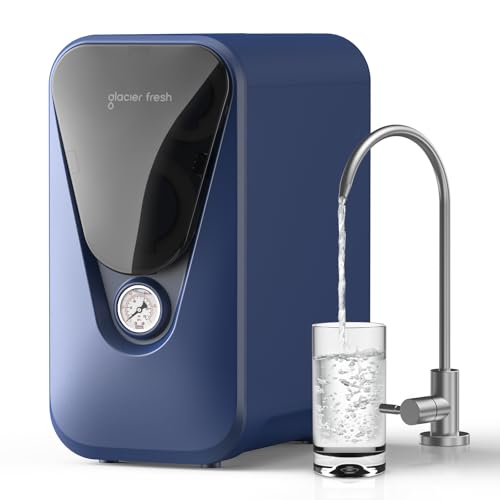 GLACIER FRESH GFU03 Electric-Free Reverse Osmosis Water FilterU03-Classic13.58 x 8.27 x 16.54 inchesCheck on Amazon


The best under sink reverse osmosis water systems for most kitchens in 2026 come down to a short list of well-established designs. The iSpring RCC7AK-BN is our overall pick: it pairs a proven five-stage RO platform with a sixth alkaline remineralization stage, and it’s NSF certified, which matters because certification is one of the few claims a manufacturer can’t simply invent. If you want the lowest upfront cost, the APEC Water ROES-50 is the classic budget workhorse. If you want a tankless system that frees up cabinet space and delivers water at high flow, the Waterdrop G3P600 is the premium pick. Tank-and-tankless designs, filtration stage counts, and installation requirements vary a lot, and this guide compares all of them on the specs that actually affect how the system performs in your kitchen.
Top 3 Picks
Best Overall: iSpring RCC7AK-BN
This is the system to buy if you want one decision that covers most bases: NSF certification, a five-stage RO platform plus an alkaline remineralization stage, a brushed nickel faucet, and a tanked design that works in nearly any cabinet. It’s mid-range in price and widely supported with replacement filters.
Best Budget: APEC Water ROES-50
APEC’s ROES-50 is a straightforward 50 GPD five-stage system that has been a budget benchmark for years. You give up flow rate and some convenience features, but you get a reliable, simple RO platform with a low entry price and inexpensive consumables.
Best Premium / Tankless: Waterdrop G3P600
At 600 GPD, this tankless system eliminates the storage tank entirely, freeing cabinet space and delivering water at a much higher flow rate than tanked units. It costs more and needs a power outlet under the sink, but for a busy kitchen it’s the most convenient design here.
Quick Comparison
| Product | Best For | Key Specs | Price Tier |
|---|---|---|---|
| iSpring RCC7AK-BN | Most kitchens; balanced all-rounder | 75 GPD, 6-stage, alkaline pH+, tanked, NSF certified | Mid-range |
| iSpring RCC7-BN | Straightforward RO without remineralization | 75 GPD, 5-stage, tanked, NSF certified | Mid-range |
| Waterdrop G3P600 | Space-saving tankless, high flow | 600 GPD, tankless, electric, compact | Premium |
| iSpring RCC7AK-BLK | Same platform, black faucet finish | 6-stage, alkaline, tanked, NSF/ANSI 58 | Mid-range |
| APEC Water ROES-50 | Lowest upfront cost | 50 GPD, 5-stage, tanked | Budget |
| VIVA21 5-Stage | Budget with WQA Gold Seal | 5-stage, under sink, WQA Gold Seal to NSF/ANSI 58 & 37 | Budget |
| GLACIER FRESH GFU03 | High-output without electricity | 800 GPD, electric-free, tankless-style | Budget |
| Waterdrop G5P500A | Alkaline tankless, mid-price | 8-stage, alkaline, tankless RO | Mid-range |
| Philips Reverse Osmosis System | Tankless with brand-name support | 600 GPD, tankless | Premium |
| Waterdrop WD-T4-A | Alkaline pH+ with many stages | 10-stage, 450 GPD, alkaline, NSF/ANSI 372 | Premium |
| Express Water ROALK10D | High-stage alkaline, larger homes | 100 GPD, 10-stage, alkaline, tanked | Premium |
| Waterdrop T3-T | Affordable remineralization | 220 GPD, remineralization, faster flow | Budget |
How We Chose
We built this list from manufacturer specifications, published certification listings, and the standard engineering realities of reverse osmosis: stage count, membrane rating in gallons per day, whether the system stores water in a pressure tank or produces it on demand, and what the installation actually demands of your cabinet and plumbing. We did not test any of these systems, and we don’t own them; every claim here traces back to what the listing, the brand, or the certification body states.
The selection criteria had four parts. First, category fit: does the system solve a real problem better than the alternatives at its price point? A budget system should be genuinely inexpensive to buy and own, while a premium system should justify its cost with flow rate, convenience, or water quality features. Second, specs that change daily use: GPD affects recovery speed, stage count affects what’s filtered and what’s added back, and tanked versus tankless affects both footprint and refill behavior. Third, use case: a one-person apartment and a family of five have different flow needs, and a rental kitchen has different installation constraints than a home you own. Fourth, upgrade path: can you add a remineralization stage, swap the faucet, or move to a higher-capacity membrane later without replacing the whole system? Systems that are easy to service and support long-term scored higher than ones that lock you into a single proprietary cartridge.
1. iSpring RCC7AK-BN – Best for Most Kitchens
As an Amazon Associate we earn from qualifying purchases at no extra cost to you.

The RCC7AK-BN is the safest default recommendation in this category because it sits right in the middle of every trade-off. It’s a tanked five-stage RO system with an added alkaline sixth stage, rated at 75 GPD, and it carries NSF certification, which covers the materials and the reduction claims rather than just the marketing copy. The brushed nickel faucet is a nice touch if your kitchen hardware isn’t chrome.
Who it suits: anyone who wants a single purchase that works in a standard under-sink cabinet, produces enough water for a household of two to four people, and adds minerals back for taste. It’s also the right pick if you’re unsure between budget and premium and would rather not gamble on a lesser-known brand.
Key specs:
- Membrane rating: 75 GPD
- Stages: 6 (sediment, carbon block, carbon, RO membrane, post-carbon, alkaline remineralization)
- Storage: pressure tank (tanked design)
- Certification: NSF certified
- Faucet: brushed nickel finish included
- Power: none required
Strengths: The alkaline stage is the headline feature. Standard RO strips minerals along with contaminants, which some people find makes the water taste flat. The sixth stage adds back a blend of minerals and raises pH, which addresses taste rather than health claims. The system needs no electricity, so it works during a power outage and doesn’t consume a wall outlet. Because it’s one of the most widely sold RO systems in its class, replacement filters are easy to find and reasonably priced, which matters more than the sticker price over five years of ownership.
Pros:
- NSF certified with a clear, verifiable claim
- Alkaline remineralization improves taste without electricity
- 75 GPD is comfortable for most households
- Tank stores water so you get instant flow at the faucet
- Widely available replacement filters
Cons:
- The storage tank takes up meaningful cabinet space
- After heavy use you can notice the tank refilling
- No tankless convenience or digital monitoring
- Remineralization is a taste feature, not a health upgrade
Compared with the nearest alternative: the RCC7-BN is the same platform minus the alkaline stage. If taste isn’t a concern for you and you’d rather save a little, the five-stage version is the smarter buy. If you want the alkaline stage but a different finish under the faucet, the RCC7AK-BLK delivers the same performance with a black faucet. Both share the 75 GPD tanked architecture, so your choice here is about taste and cosmetics, not capability.
2. iSpring RCC7-BN – Best for Straightforward RO Without Extras
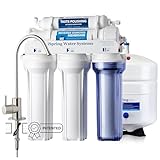
The RCC7-BN is the plain version of the system above: five stages, 75 GPD, NSF certified, tanked, and no remineralization stage. It removes the alkaline cartridge and the cost that comes with it while keeping the high-capacity 75 GPD membrane that distinguishes it from the 50 GPD budget crowd.
Who it suits: buyers who want clean, reliable RO water and don’t care about pH adjustment. It’s also a good fit if you already add minerals another way, or if you simply prefer the taste of straight RO water. Renters who plan to move the system to a new home should note it’s a conventional tanked install, which is easy to replicate but not trivial to relocate.
Key specs:
- Membrane rating: 75 GPD
- Stages: 5 (sediment, two carbon stages, RO membrane, post-carbon)
- Storage: pressure tank (tanked design)
- Certification: NSF certified
- Faucet: brushed nickel finish included
- Power: none required
Strengths: The five-stage layout covers the essentials in the right order. Sediment protection keeps grit away from the carbon blocks, carbon removes chlorine that would otherwise degrade the RO membrane, and the post-carbon polishes taste right before the faucet. Skipping the alkaline stage makes replacement simpler and cheaper over time, since you have one fewer cartridge to track. The 75 GPD rating means the tank refills noticeably faster than a 50 GPD unit, which shows up on the second and third glass you draw in a row.
Pros:
- Lower ongoing filter cost than the alkaline version
- High-capacity 75 GPD membrane for its class
- NSF certified and no electricity needed
- Simple five-stage layout that’s easy to understand and service
Cons:
- No remineralization, so some people find the taste flat
- Tank still occupies cabinet space
- Same refill behavior as any tanked system
Compared with the nearest alternative: against the RCC7AK-BN, this is a straight taste-versus-cost trade. Against the APEC ROES-50, it wins on flow rate and certification story but costs more upfront. If your household draws a lot of water at once, the 75 GPD membrane is the more comfortable choice; if you rarely fill more than a glass or two, the APEC’s lower price is hard to argue with.
3. Waterdrop G3P600 – Best Tankless for Busy Kitchens

The G3P600 is the system that changes how the category feels. At 600 GPD, it produces water roughly eight times faster than a 75 GPD tanked unit, and because it’s tankless, there’s no storage tank eating your cabinet. You trade a power outlet and a higher price for genuinely on-demand high-flow water.
Who it suits: busy households, large families, and anyone whose under-sink cabinet is already crowded. It’s also the best fit if you cook with filtered water constantly and hate waiting for a tank to refill. It is not the right pick if you have no outlet under the sink or you want to keep things simple and unpowered.
Key specs:
- Membrane rating: 600 GPD
- Design: tankless, on-demand
- Power: requires an electrical outlet under the sink
- Footprint: compact, no storage tank
- Faucet: smart-style faucet included with the system
Strengths: The flow rate is the whole story. Tanked systems feel fast for a glass and then slow down; a 600 GPD tankless unit doesn’t have that problem, so filling a pot for pasta or a pitcher for the fridge stays quick. Removing the tank also frees the better part of a cabinet, which in a small kitchen is a real, tangible gain. Tankless designs generally avoid the standing-water concern some people have with tanks, and they tend to run quieter without the refill cycling.
Pros:
- 600 GPD flow, dramatically faster than tanked systems
- No storage tank, so more usable cabinet space
- Compact, modern install
- No tank refill lag during heavy use
Cons:
- Needs a power outlet under the sink
- Higher upfront cost than tanked systems
- No water during a power outage
- Replacement cartridges generally cost more
Compared with the nearest alternative: the G5P500A is also a Waterdrop tankless unit but adds an eight-stage alkaline profile at a slightly lower tier. If remineralization matters to you, the G5P500A is the better fit; if raw flow is what you want, the G3P600’s 600 GPD is the stronger number. Against the tanked iSpring systems, the choice is simple: pay more and give up the outlet to gain space and speed, or pay less and accept the tank.
4. iSpring RCC7AK-BLK – Best for Matching Dark Kitchen Fixtures
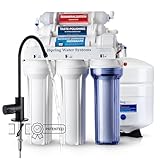
Functionally, the RCC7AK-BLK is the RCC7AK-BN in different clothing. It’s the same alkaline six-stage, tanked platform certified to NSF/ANSI 58, with a black RO faucet instead of brushed nickel. If your kitchen has matte black hardware, this is the version that won’t stick out.
Who it suits: anyone who has already decided on the iSpring alkaline platform but wants the faucet to match a modern black-and-white kitchen. It’s also a reasonable choice if you’ve had issues with plated finishes showing water spots, since matte black tends to hide them better.
Key specs:
- Stages: 6, including alkaline remineralization
- Certification: NSF/ANSI 58
- Storage: pressure tank
- Faucet: black RO faucet finish
- Power: none required
Strengths: You get the full alkaline package with a finish that suits contemporary kitchens. NSF/ANSI 58 is the standard specifically for reverse osmosis systems, covering both material safety and the reduction of specific contaminants, which is a more targeted certification than a general material-safety mark. Because it’s the same internals as the RCC7AK-BN, you benefit from the same filter availability and the same straightforward five-minute cartridge swaps you’d do a few times a year.
Pros:
- NSF/ANSI 58 certified RO system
- Alkaline remineralization included
- Black faucet matches modern kitchens
- Shares filters and parts with the wider RCC7AK family
Cons:
- Same tank footprint as its sibling
- Finish choice is the only meaningful difference
- No flow advantage over the brushed nickel version
Compared with the nearest alternative: against the RCC7AK-BN, pick purely on aesthetics, because the water you get is identical. Against the RCC7-BN, you’re deciding whether the alkaline stage is worth the extra cartridge and cost. If you’ve never tried remineralized RO water, it’s worth trying before committing to the six-stage version for years.
5. APEC Water ROES-50 – Best Budget Pick

The ROES-50 is the system that has quietly equipped a huge number of kitchens for years. It’s a 50 GPD, five-stage, tanked RO system from a brand that specializes in this exact category, and it typically costs the least of anything here.
Who it suits: first-time RO buyers, small households, renters, and anyone who wants reliable filtration without a big outlay. If you live alone or with one other person and mostly use filtered water for drinking and coffee, 50 GPD is plenty.
Key specs:
- Membrane rating: 50 GPD
- Stages: 5
- Storage: pressure tank
- Power: none required
- Faucet: included
Strengths: Simplicity and price. The five-stage layout is the same proven sequence used across the category, and APEC’s replacement filters are inexpensive and easy to source. There’s no electricity, no proprietary cartridge lock-in, and no learning curve. For a small household, the 50 GPD membrane with a pressure tank delivers perfectly normal faucet flow for drinking and cooking because the tank buffers the slow production rate.
Pros:
- Lowest upfront cost in this group
- Simple, serviceable five-stage design
- No power required
- Cheap, widely available replacement filters
Cons:
- 50 GPD recovers slowly after heavy draw
- No remineralization
- Tank takes cabinet space
- Fewer upgrade options than higher-capacity platforms
Compared with the nearest alternative: against the iSpring RCC7-BN, you save money but lose 25 GPD of recovery and the NSF certification story. Against the VIVA21 five-stage, both are budget five-stage tanked systems; the VIVA21 leans on WQA Gold Seal certification to NSF/ANSI 58 and 37, which is worth weighing if certification credibility is your priority. Otherwise, buy whichever is easier to get filters for in your area.
6. VIVA21 5-Stage Reverse Osmosis System – Best Budget Pick With Third-Party Certification
VIVA21’s five-stage system competes directly with the APEC on price but differentiates with WQA Gold Seal certification to NSF/ANSI 58 and 37. That’s a meaningful detail for buyers who want an independent body to have verified the reduction claims, not just the manufacturer’s word.
Who it suits: budget-conscious buyers who still want a certification they can look up. It suits small to medium households with standard under-sink cabinets and anyone who prefers a no-electricity install.
Key specs:
- Stages: 5
- Design: under sink, tanked
- Certification: WQA Gold Seal to NSF/ANSI 58 & 37
- Power: none required
- Faucet: included
Strengths: The certification is the selling point. NSF/ANSI 58 covers reverse osmosis system performance, and NSF/ANSI 37 addresses the durability and safety of the plumbing components, so together they cover more than a generic material-safety claim. The five-stage sequence is standard and predictable, filter changes are conventional, and there’s nothing proprietary about the design that would trap you into expensive cartridges.
Pros:
- WQA Gold Seal certified to two relevant standards
- Budget price with a credible certification story
- Standard five-stage layout, easy to service
- No electricity needed
Cons:
- Lower flow than mid-range 75 GPD systems
- No remineralization stage
- Brand support network is smaller than the major names
Compared with the nearest alternative: against the APEC ROES-50, the choice is certification versus brand familiarity. Both are tanked five-stage systems in the same performance class; the VIVA21 has the stronger certification paper trail, while APEC has a longer track record and easier filter sourcing. If neither factor is decisive for you, the lower price wins.
7. GLACIER FRESH GFU03 – Best Budget High-Output Without Electricity

The GFU03 is unusual in this list: an 800 GPD system that runs without electricity. That combination is rare and genuinely useful, because it delivers tankless-level output without requiring an outlet under the sink.
Who it suits: kitchens without a spare outlet, homeowners who want high flow but refuse to add an electrical circuit, and anyone worried about losing water during a power outage. It also suits larger households that draw a lot of water at once.
Key specs:
- Membrane rating: 800 GPD
- Design: electric-free, no storage tank
- Power: none required
- Footprint: compact
Strengths: The headline is the combination of high output and zero electricity. Systems this fast usually need a pump, and pumps need power. Removing that requirement simplifies installation and keeps the system running when the grid doesn’t. With no tank, you also reclaim cabinet space, though the absence of a tank means flow at the faucet depends on the system’s production rate at that moment, which is why the high GPD rating matters here more than it would on a tanked unit.
Pros:
- 800 GPD without an electrical connection
- No tank, so more usable cabinet room
- Works during power outages
- Budget tier despite high output
Cons:
- No tank buffer, so instantaneous flow depends on supply pressure
- Performance can vary with your home’s water pressure
- Fewer stages than alkaline-focused competitors
- Newer brand with a shorter track record
Compared with the nearest alternative: against the Waterdrop G3P600, you sacrifice the polish and smart features but gain the ability to install without power, and you save money. If you have an outlet free and want the most refined tankless experience, the Waterdrop is better. If you don’t, or you want outage resilience, the GFU03 is the more practical pick.
8. Waterdrop G5P500A – Best Mid-Range Alkaline Tankless

The G5P500A is Waterdrop’s answer to buyers who want tankless convenience and alkaline water without jumping to the top price tier. It’s an eight-stage tankless RO system with alkaline remineralization.
Who it suits: households that want both space savings and better-tasting water, and buyers who find the G3P600’s stage count limiting. It’s a good middle path for a family that drinks a lot of water and cares about taste.
Key specs:
- Stages: 8, including alkaline stage
- Design: tankless
- Power: requires an outlet under the sink
- Footprint: compact, no tank
Strengths: Eight stages is more filtration and conditioning steps than most competitors at this price, and the alkaline finish addresses the flat-taste complaint that comes with straight RO. Tankless design means no tank to refill, so heavy draws don’t slow you down. Waterdrop’s cartridge system is designed for tool-free changes, which reduces the most annoying part of RO ownership to a couple of minutes a few times a year.
Pros:
- Alkaline remineralization plus tankless convenience
- Eight stages at a mid-range price
- No tank, compact install
- Easy cartridge replacement design
Cons:
- Requires an electrical outlet
- Proprietary cartridges cost more than generic filters
- No water during a power outage
Compared with the nearest alternative: against the G3P600, you give up raw flow in favor of alkaline treatment and more stages, at a lower tier. Against the tanked iSpring RCC7AK, you gain speed and cabinet space but pay more and need power. Choose based on whether your priority is flow, taste, or simplicity.
9. Philips Reverse Osmosis System – Best Premium Tankless With Brand Support

Philips’ 600 GPD tankless system brings a globally recognized brand into the under-sink category. It’s a premium-priced, tankless, on-demand design for buyers who value brand support and warranty confidence over the lowest possible cost.
Who it suits: buyers who want a name they recognize, easy access to support, and a high-flow tankless install. It’s also a sensible pick for anyone who has had trouble getting help from smaller RO brands.
Key specs:
- Membrane rating: 600 GPD
- Design: tankless, on-demand
- Power: requires an outlet under the sink
- Footprint: compact, no tank
Strengths: Brand support is the differentiator. Philips has a global service and warranty infrastructure that most specialist RO brands can’t match, which matters if a part fails two years in. The 600 GPD tankless design gives you fast, on-demand water and frees cabinet space, the same core benefits as the Waterdrop G3P600. For a household treating the system as a long-term appliance rather than a DIY project, that support is worth real money.
Pros:
- Recognized brand with broad support network
- 600 GPD tankless flow
- No tank, compact footprint
- Premium build and finish expectations
Cons:
- Premium price
- Requires an outlet
- Replacement cartridges are typically proprietary
Compared with the nearest alternative: against the Waterdrop G3P600, the specs are close, so the decision comes down to brand preference, support, and which cartridge ecosystem you’d rather buy into long term. Against the Waterdrop WD-T4-A, the Philips offers fewer stages but broader service reach. If you want the most stages for the money, the WD-T4-A wins; if you want the safest ownership experience, the Philips does.
10. Waterdrop WD-T4-A Alkaline pH+ Reverse Osmosis System – Best Premium Alkaline

The WD-T4-A is the most feature-dense system here: a 10-stage, 450 GPD alkaline system with NSF/ANSI 372 certification, which covers lead-free plumbing materials. It’s aimed at buyers who want the longest filtration chain and pH adjustment in one unit.
Who it suits: households that want maximum stage count and alkaline water, especially where plumbing materials are a concern given the NSF/ANSI 372 lead-free certification. It suits buyers who are done compromising and want the top of the Waterdrop line.
Key specs:
- Stages: 10
- Membrane rating: 450 GPD
- Features: alkaline pH+ remineralization, dual flow
- Certification: NSF/ANSI 372 (lead-free materials)
- Design: tankless
Strengths: Ten stages means multiple sediment and carbon stages before the membrane plus post-treatment and alkaline conditioning after it, which is a longer chain than any other system in this list. The 450 GPD rating is fast enough for heavy use without a tank. Dual flow is a practical touch: you can draw regular filtered water for cooking and alkaline water for drinking from the same faucet. NSF/ANSI 372 certification is a specific, useful claim about the materials in contact with your water.
Pros:
- Ten stages, the most in this comparison
- Alkaline remineralization plus dual-flow faucet
- 450 GPD tankless flow
- NSF/ANSI 372 lead-free certification
Cons:
- Premium price and premium cartridge costs
- Requires an outlet
- More stages means more cartridges to track and replace
Compared with the nearest alternative: against the Express Water ROALK10D, both are 10-stage alkaline systems, but the Express Water is tanked at 100 GPD while the WD-T4-A is tankless at 450 GPD. If you want instant high flow and cabinet space, the Waterdrop wins; if you prefer a simple tanked design with no power requirement, the Express Water does. Against the Philips, the WD-T4-A offers more stages and a lead-free certification for a similar premium tier.
11. Express Water ROALK10D – Best Tanked 10-Stage for Larger Households

The ROALK10D is the tanked counterpoint to the premium tankless systems: 10 stages, alkaline remineralization, 100 GPD, and no electricity required. It’s designed for households that want the longest filtration chain without giving up tank convenience.
Who it suits: larger families, homes with no outlet under the sink, and anyone who prefers the instant-flow feel of a pressure tank. The 100 GPD membrane is double the budget class and keeps the tank refilling quickly.
Key specs:
- Stages: 10
- Membrane rating: 100 GPD
- Features: alkaline remineralization
- Storage: pressure tank
- Power: none required
Strengths: The combination of 10 stages and a 100 GPD membrane is unusual in a tanked system. You get a long treatment chain, alkaline water, the instant draw of a pressure tank, and no electrical requirement. For a family that drinks a lot of water and also wants it during a power outage, this is a strong fit. Express Water’s stage design is modular, so cartridges are replaced individually rather than in a proprietary block.
Pros:
- 10 stages with alkaline remineralization
- 100 GPD membrane, fast tank recovery
- No electricity needed
- Tank gives instant faucet flow
Cons:
- Tank consumes cabinet space
- More cartridges to replace than five-stage systems
- Slower instantaneous output than tankless systems
Compared with the nearest alternative: against the WD-T4-A, the trade is flow and space against power independence and simplicity. The WD-T4-A is faster and tankless; the ROALK10D is unpowered and tank-buffered. Against the RCC7AK-BN, the Express Water gives you four more stages and 25 more GPD for a higher price. If you don’t need ten stages, the iSpring is the better value.
12. Waterdrop T3-T – Best Budget Remineralization

The T3-T brings remineralization down to the budget tier. It’s rated at 220 GPD with faster flow than the standard tanked budget systems, and it addresses the flat-taste problem at a price well below the premium alkaline units.
Who it suits: buyers who want better-tasting water without paying premium prices, and smaller households that don’t need 600 GPD output. It’s a good entry point if you’re curious about remineralized RO.
Key specs:
- Membrane rating: 220 GPD
- Features: remineralization
- Speed: faster flow than typical tanked budget units
- Design: under sink RO
Strengths: The 220 GPD rating sits between the budget 50-to-75 GPD class and the premium 450-to-800 GPD class, which is a genuinely useful middle ground. Adding remineralization at this price means you don’t have to choose between cheap water and good-tasting water. Flow is quicker than the tanked budget systems, so filling a pitcher doesn’t drag.
Pros:
- Remineralization at a budget price
- 220 GPD, faster than typical budget systems
- Good entry point for first-time RO buyers
- Waterdrop cartridge ecosystem
Cons:
- Fewer stages than the premium Waterdrop models
- Lower output than the 450-to-800 GPD tier
- May still need an outlet depending on the exact configuration
Compared with the nearest alternative: against the APEC ROES-50, you pay somewhat more but get over four times the production rate and remineralization. Against the G5P500A, you give up stages and some flow but save money. If taste is your main complaint about RO water and your budget is tight, the T3-T is the most efficient way to solve it.
How to Choose
The deciding factors in this category are fewer than the spec sheets suggest. Filtration stages, GPD rating, tanked versus tankless, certification, and installation requirements are the five levers, and once you understand how they interact, the choice becomes straightforward.
Filtration stages: how many you actually need
A minimum viable RO system has five stages: a sediment pre-filter, one or two carbon stages, the RO membrane, and a post-carbon polish. That sequence exists for a reason. Sediment protects the carbon; carbon removes chlorine, which would otherwise destroy the membrane; the membrane does the actual dissolved-solids rejection; and post-carbon fixes taste at the point of use. Anything beyond five stages adds either more pre-treatment redundancy or post-treatment conditioning.
Six stages usually means alkaline remineralization added after the membrane. Eight stages typically adds extra carbon or mineral stages around that core. Ten stages, as on the Express Water ROALK10D and the Waterdrop WD-T4-A, builds in the most redundancy and the most conditioning. More stages is not automatically better, but it does mean more cartridges to replace and slightly more maintenance tracking. If you have municipal water that’s already treated, five or six stages is plenty. If your water is heavily chlorinated or has noticeable taste issues, the extra carbon stages in an eight-to-ten-stage system earn their place.
GPD rating: what the numbers mean in practice
Gallons per day is the membrane’s production rate under ideal conditions, and it’s the spec that most affects how the system feels day to day. Here’s the rough reality:
- 50 GPD: about 2 gallons per hour. Fine for one or two people, with a tank buffering the slow rate.
- 75 GPD: about 3 gallons per hour. Comfortable for a household of three or four.
- 100 GPD: about 4 gallons per hour. Good headroom for a family, especially with a tank.
- 220 GPD: about 9 gallons per hour. Fast enough to feel like a normal faucet for short draws.
- 450-600 GPD: roughly 19 to 25 gallons per hour. Tankless territory, where you never wait on a tank.
- 800 GPD: about 33 gallons per hour. More than most homes need, useful for heavy simultaneous use.
Note that on a tanked system, the tank masks the production rate for the first couple of gallons. A 50 GPD tanked system can feel fast for a glass of water. The difference shows up when you draw several gallons in a row and the tank empties. On a tankless system, the GPD rating is your actual flow rate, which is why tankless units are usually rated so much higher.
Tanked versus tankless: the real trade-off
A pressure tank is a buffer. It stores a few gallons of finished water so the faucet delivers instantly even though the membrane produces slowly. The cost is cabinet space, typically several gallons’ worth of steel tank, plus the refill cycling you occasionally hear. Tankless systems eliminate the tank and produce water on demand, which requires a higher-capacity membrane and, almost always, an electrical pump.
The practical decision rule: if you have a spare outlet and value cabinet space or high flow, go tankless. If you have no outlet, want outage resilience, or want the cheapest possible system, go tanked. There is no universally better design, only a better fit for your cabinet and your household size.
Certification: what to look for
Certifications are the most reliable way to separate marketing from substance, because they’re issued by independent bodies. The ones you’ll see here:
- NSF/ANSI 58: the standard for reverse osmosis systems, covering both material safety and reduction of specific contaminants. This is the one that matters most for an RO system.
- NSF/ANSI 372: certifies that wetted plumbing components meet lead-free requirements. A narrow but concrete claim.
- NSF/ANSI 37: covers the durability and safety of plumbing system components such as faucets and valves.
- WQA Gold Seal: a third-party certification program that tests against the same NSF/ANSI standards.
What you won’t find in a reliable review: specific contaminant removal percentages for a system that isn’t certified to claim them. If a listing advertises removal figures without a certification reference, treat it as an unverified claim. This is general information only; if you have a specific water-quality concern, a water professional or your local utility can tell you what’s actually in your supply.
Installation requirements by kitchen type
| Kitchen Situation | Main Constraint | Recommended Design |
|---|---|---|
| Small apartment, no spare outlet | Cabinet space and power | Compact tanked 5-stage (APEC ROES-50, VIVA21) |
| Family of 4+, outlet available | Flow rate and cabinet room | 600 GPD tankless (Waterdrop G3P600, Philips) |
| Rental, minimal drilling allowed | Reversible install | Standard tanked system, existing faucet hole |
| No outlet, want high output | Power source | Electric-free high-GPD (GLACIER FRESH GFU03) |
| Wants alkaline taste, low budget | Cost of remineralization | Waterdrop T3-T or iSpring RCC7AK |
| Wants maximum treatment stages | Cartridge cost and count | 10-stage (Express Water ROALK10D, Waterdrop WD-T4-A) |
Every under-sink RO system needs three things: a water supply connection (usually a saddle valve or a tee on the cold line), a drain connection for the reject water, and a hole in the countertop for the faucet. Most kits include everything except the drill. If you don’t have a spare faucet hole, you can often replace an existing soap dispenser or use a dedicated RO faucet mounted on the sink deck. The drain connection is the step people underestimate: the reject line needs a proper air gap or a saddle clamp on the drain pipe, and doing it poorly is the most common cause of leaks and noise.
Estimating your cost of ownership
Here’s a worked example of how to think about five-year cost, using general market ranges rather than specific prices, since those change. Say a mid-range tanked RO system costs $200-$300 upfront. Over five years you’ll replace pre-filters and carbon roughly every 6 to 12 months, the membrane every 2 to 3 years, and the post-carbon or alkaline cartridge yearly. If those consumables average $60-$100 per year, your five-year total lands around $500-$800. A premium tankless system might cost $400-$600 upfront with cartridges running $100-$180 per year, for a five-year total near $900-$1,500. The upfront price is a poor predictor of the lifetime cost; the consumable roadmap is what actually determines it. Before buying, look up the replacement filters for the exact model and note how many there are and how often each changes.
Water waste and efficiency
RO systems produce reject water, and the ratio varies by design. Older or basic systems might send 3 or 4 gallons to drain for every gallon of filtered water. Better-tuned systems and especially tankless designs with pumps can get closer to 1:1 or even 2:1 in favor of product water. This matters in two ways: it affects your water bill, though modestly at typical household volumes, and it affects how the system behaves if you’re on a well, where the reject water goes to a septic system. Tankless systems with pumps generally waste less because they maintain consistent pressure across the membrane rather than letting it drift with tank backpressure.
Common mistakes to avoid
- Skipping the pre-filter. Letting a sediment cartridge run long clogs the carbon block and shortens membrane life. Pre-filters are cheap; membranes are not.
- Ignoring the drain connection. A poorly seated drain saddle is the number one cause of slow leaks and gurgling. Test it with a paper towel underneath for the first week.
- Assuming more stages means cleaner water. The membrane does most of the work. Extra stages improve taste and redundancy, not fundamental capability.
- Buying tankless without an outlet. Check for a spare outlet before you commit. Adding one is a licensed electrician’s job in most jurisdictions.
- Forgetting to sanitize. When you change cartridges, follow the manufacturer’s sanitization steps; most systems come with instructions for this in the manual.
Frequently Asked Questions
How often do I need to change RO filters?
Most manufacturers recommend replacing sediment and carbon pre-filters every 6 to 12 months, the RO membrane every 2 to 3 years, and post-carbon or alkaline cartridges every 6 to 12 months depending on use. Heavier water use, high sediment in your supply, and high chlorine levels all shorten these intervals. Following the manufacturer’s schedule is the simplest way to protect the membrane, which is the most expensive part to replace.
Is reverse osmosis water safe to drink?
Yes, RO water is widely used for drinking and cooking and is considered safe. RO removes dissolved solids along with many contaminants, and the resulting water is close to neutral in mineral content. Some people prefer remineralized water for taste, which is what alkaline stages address. This is general information only; if you have specific health or dietary concerns, consult a healthcare professional.
Does a tankless RO system need a power outlet?
Almost always, yes. Tankless systems use a pump to push water through the membrane at high pressure, which requires electricity. The exception in this list is the GLACIER FRESH GFU03, which achieves high output without power. If you don’t have a spare outlet under the sink, either choose a tanked system or check whether the specific tankless model you’re considering is truly electric-free.
How much cabinet space does an under-sink RO system take?
A tanked system typically needs space for the filter manifold plus a pressure tank that can be several gallons in volume, which is the bulk of the footprint. Tankless systems eliminate the tank entirely, leaving only a compact manifold, so they free up a substantial portion of the cabinet. In a small kitchen, that space difference is often the deciding factor.
Can I install an under-sink RO system myself?
Many homeowners install tanked systems themselves because the work is mostly connecting tubing to a supply valve, a drain line, and a faucet. The tasks require basic tools and some patience but no soldering. Tankless systems add an electrical consideration, so if no outlet exists, you’ll need a qualified electrician. If you’re not comfortable working with plumbing connections, a handyman or plumber can complete the install in a few hours.
What’s the difference between five, six, and ten-stage RO systems?
Five stages is the functional standard: sediment, carbon, membrane, post-carbon. Six stages typically adds alkaline remineralization. Ten stages adds further pre-treatment redundancy and post-treatment conditioning, plus more intermediate stages. The membrane does the core work in every case. Extra stages mainly improve taste, add redundancy, and increase maintenance requirements and consumable costs.
Do RO systems waste a lot of water?
They produce reject water, but the ratio varies widely by design. Basic systems might use 3 to 4 gallons of reject per gallon of product water, while better-tuned and pumped tankless designs get considerably closer to even. For most households the effect on a water bill is minor, but it’s worth considering if you’re on a well or in a water-scarce region.
Which is better for a family of five: tanked or tankless?
For a family of five, tankless is usually the more comfortable choice if you have an outlet available, because the higher output prevents the waiting that comes with draining a tank. Tanked systems can still work well if you choose a higher-capacity membrane, such as 100 GPD, and accept that very heavy draws will empty the tank. The deciding factor is usually whether you want to give up the outlet and the cabinet space, not whether either design can technically serve five people.
Which System Should You Buy?
If you want one system that covers the most kitchens with the fewest compromises, choose the iSpring RCC7AK-BN. It’s NSF certified, mid-priced, unpowered, and the alkaline stage addresses the taste complaint that turns people off RO water. If your budget is the tightest constraint, the APEC Water ROES-50 gets you reliable five-stage filtration for the least money, and the VIVA21 offers a comparable package with a stronger certification story. If you have an outlet under the sink and value space and speed, the Waterdrop G3P600 is the premium tankless pick, with the Philips as the brand-support alternative. If high output without electricity is your requirement, the GLACIER FRESH GFU03 is in a class of its own. And if you want the maximum number of treatment stages with alkaline water, the Waterdrop WD-T4-A and Express Water ROALK10D are the two ends of that spectrum, tankless and tanked respectively.