Our Top Picks
 GoveeLife Smart Air Quality Monitor CO2 Detector H51405.59"5.59 x 2.68 x 2.99 inches0.33 PoundsCheck on Amazon


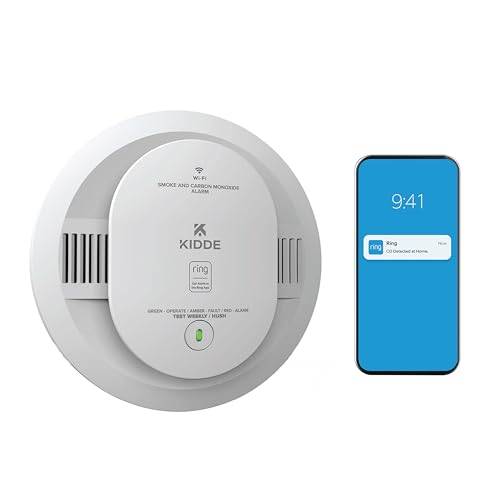
The best smart carbon monoxide detector for most households is the Kidde Smart Carbon Monoxide Detector COPDW. It plugs into a standard outlet, keeps working through a power cut on AA battery backup, and sends alerts to a phone app, which is exactly the combination that matters when CO is invisible, odourless and produced by the appliances people run every day. It suits renters and homeowners who want app notifications without rewiring anything, and it sits in the budget tier, so protecting two or three levels costs far less than most people expect.
If you want the cheapest route to a certified CO alarm and do not care about app alerts, the Kidde COP is the pick. If you are covering a whole house and want every unit to sound at once, the Heiman three-pack with gateway is the premium answer. If you are shopping because you already have a smart-home hub and want air-quality context alongside CO, the mid-range options here fill that gap. The rest of this guide compares sensor types, app behaviour, battery life, interconnectivity, alarm loudness and smart-home compatibility across seven current models, so you can match a detector to your house rather than to a marketing page.
Top 3 Picks
Best overall: Kidde Smart CO Detector COPDW
It covers the three things that actually decide whether a CO alarm helps you: a certified carbon monoxide sensor, a power source that survives an outage, and an app alert that reaches you when you are in another room or another building. Plug-in installation removes the hardest part of the job, and the budget-tier positioning means you can buy two or three instead of one.
Best budget: Kidde Carbon Monoxide Detector COP
This is the no-frills version of the same idea — a plug-in CO alarm with AA battery backup and a loud local horn, without Wi-Fi or app notifications. If your phone is never far from you and you simply want certified protection at the lowest sensible cost, it is the value pick, and it works perfectly well as a second alarm in a basement or near a garage door.
Best premium: Heiman Smart CO Detector 3-Pack with Gateway
Three interconnected detectors plus a gateway is the whole-home answer: when one sensor detects carbon monoxide, the group sounds together, so a basement alarm is audible in an upstairs bedroom. The hub-based design also slots into the wider smart-home ecosystem more cleanly than app-only Wi-Fi units, which is why it costs the most here.
Quick Comparison
| Product | Best for | Key specs | Price tier |
|---|---|---|---|
| Kidde Smart CO Detector COPDW | Most homes; plug-in simplicity with app alerts | Electrochemical CO sensor class; plug-in with AA battery backup; Wi-Fi app notifications; 85 dB alarm class | Budget |
| Kidde Smart CO Detector + Indoor Air Quality COPDLQW | Households that want air-quality readings alongside CO protection | CO sensing plus indoor air-quality data; plug-in with AA battery backup; app alerts | Mid-range |
| Smart Air Quality Monitor | Homes already living inside one voice-assistant ecosystem | Temperature, humidity, carbon monoxide, PM2.5 and VOC readings; app and voice reporting; monitor rather than a certified life-safety alarm | Mid-range |
| Heiman Smart CO Detector 3-Pack with Gateway | Whole-home coverage where every unit must sound at once | Three interconnected CO detectors plus a gateway; mesh-style group alarm; hub-based smart-home integration | Premium |
| Kidde Smart Smoke & CO Detector with Ring | One device for both smoke and carbon monoxide | Combined smoke and CO sensing; AA battery power; Ring ecosystem integration | Budget |
| GoveeLife Smart Air Quality Monitor CO2 H5140 | Ventilation and carbon dioxide tracking with a display | CO2 sensing with PM2.5, temperature and humidity; on-device display; audible alarm | Premium |
| Kidde Carbon Monoxide Detector COP | No-app, no-Wi-Fi simplicity at the lowest cost | Electrochemical CO sensor class; plug-in with AA battery backup; local horn only | Budget |
How We Chose
These seven models were selected by comparing published product specifications, manufacturer documentation and the safety standards that govern residential carbon monoxide alarms, then filtering for the criteria that change how a detector behaves in a real house. The first filter was sensor type and certification class, because a monitor that reports a number is not the same product as an alarm that is designed to wake you up. The second was the alert pathway: does the device only sound locally, does it push a phone notification, or does it trigger other units in the house?
The third criterion was power and backup, since carbon monoxide incidents cluster around power failures, storm seasons and backup-heating season. The fourth was interconnectivity and ecosystem fit, which decides whether the alarm can be heard from a bedroom and whether it appears in an app you already open. The fifth was ownership cost: sensor service life, battery type, and whether the unit is replaced or serviced at end of life. Finally, we weighted category fit and upgrade path, so each pick below answers a different buyer’s situation rather than repeating the same recommendation in a different wrapper. No product here was tested in a lab or in a home; the comparison is based on specifications, standards and stated capabilities.
1. Kidde Smart CO Detector COPDW – Best for Most Homes
As an Amazon Associate we earn from qualifying purchases at no extra cost to you.

If you want one device that turns carbon monoxide from an invisible hazard into a notification on your phone, the Kidde Smart Carbon Monoxide Detector COPDW is the most straightforward way to get there. It plugs into a wall outlet, which means no ceiling mounting, no wiring and no landlord negotiation in most rentals. A pair of AA batteries keeps the alarm live when the power fails — and a power failure is precisely when a generator, a wood stove or a blocked flue is most likely to be producing carbon monoxide in the first place.
The appeal is that it removes almost every excuse for not having protection. You do not need a hub, you do not need a ladder, and you do not need to understand the difference between a sensor and a monitor. Plug it in, connect it to the app over a 2.4 GHz Wi-Fi network, and you have a certified CO alarm with a remote notification path.
Key specs at a glance
- Sensor type: electrochemical carbon monoxide sensor, the dominant technology in residential CO alarms
- Power: plug-in with AA battery backup, so protection continues during an outage
- Alerts: local audible alarm plus Wi-Fi app notifications
- Alarm loudness: 85 dB at 3 metres (10 feet) class, the typical figure for residential life-safety alarms
- Interconnectivity: app-based alerts; check the listing for current wireless interconnect and Matter support
- Installation: standard wall outlet, no tools required
- Service life: electrochemical CO sensors in this class are typically rated for roughly five to seven years before an end-of-life signal
Why it earns the top spot
The value here is not a single spectacular feature; it is the absence of weak points. Plug-in power means the unit is always energised, and the AA backup covers the outage scenario that matters most. App notifications close the gap that has always been the biggest weakness of local-only alarms: if you are upstairs, in the garden, or at work while the dog is home, a horn in the hallway does nothing for you. The phone in your pocket does.
Kidde has been manufacturing residential safety equipment for decades, so the support infrastructure — documentation, replacement guidance, end-of-life signalling — is mature rather than experimental. That matters more than people expect, because a CO alarm is a product you interact with roughly twice a year and then forget about for seven years. When the end-of-life chirp finally starts, you want a product with clear replacement guidance rather than a mystery beep you have to decode at 2 a.m.
It also sits in the budget tier, which changes the maths of whole-home coverage. The correct number of CO alarms is not one; it is one per level plus one outside the sleeping area. A budget-tier price makes that four-alarm strategy realistic for a normal household budget, whereas a premium price per unit pushes people toward buying a single alarm and hoping for the best.
Pros
- Plug-in installation removes the most common reason people delay buying an alarm
- AA battery backup keeps protection live during power cuts
- App notifications reach you when you are not home
- Budget-tier pricing makes multi-level coverage affordable
- Electrochemical sensing is the established technology for residential CO detection
Cons
- Requires a free wall outlet, which is not always available where you want the alarm
- Wi-Fi dependency for remote alerts; the local horn still works if the network drops, but the notification does not
- No air-quality data, so it will not tell you why a room feels stuffy
- Rechargeable or premium lithium backup options are not part of this configuration
How it compares with the nearest alternative
The closest alternative in this list is the Kidde Smart CO Detector + Indoor Air Quality COPDLQW, which adds air-quality reporting on top of the same plug-in, AA-backup formula. Choose the COPDW if carbon monoxide protection is your only goal and you want to spend the difference on a second alarm for another floor. Choose the COPDLQW if you already suspect your home has a ventilation or humidity problem and you want the detector to double as a diagnostic tool. Against the non-connected Kidde COP, the COPDW buys you remote notifications for a modest step up in price, which is the single most useful upgrade in this entire category.
2. Kidde Smart CO Detector + Indoor Air Quality COPDLQW – Best for Air-Quality Tracking

Most carbon monoxide alarms tell you one thing: whether CO is present. The Kidde Smart CO Detector + Indoor Air Quality COPDLQW tells you that, and then keeps reporting on the air in the room. For households where someone has allergies, where a bedroom feels stuffy all winter, or where a new stove, a new carpet or a sealed-up house has changed how the place breathes, that extra layer of information is genuinely useful rather than decorative.
It keeps the practical advantages of the plug-in format: no wiring, no ceiling work, AA battery backup, and app notifications when something goes wrong. The difference is that you have a reason to open the app on a normal Tuesday, which means you are far more likely to notice a problem — a rising reading, a sensor warning, a battery alert — than you would be with a device that stays silent until an emergency.
Key specs at a glance
- Sensor type: electrochemical carbon monoxide sensor plus indoor air-quality sensing
- Power: plug-in with AA battery backup
- Alerts: audible local alarm plus app notifications for CO events and air-quality changes
- Air-quality reporting: app-based readings that let you track conditions over time
- Installation: wall outlet, no tools
- Service life: CO sensor service life in the five-to-seven-year class, with an end-of-life signal
Where it earns its mid-range price
The argument for paying more than the COPDW is behavioural. A carbon monoxide alarm that only ever says “nothing is wrong” trains you to ignore it, and an ignored alarm is one you stop trusting. Air-quality readings give the device a job between emergencies: you can watch what happens when you cook, when you run a humidifier, when you close the windows for the winter, or when a new piece of furniture off-gasses for the first week.
That said, it is important to be clear about what this product is not. Indoor air-quality readings are informational. They are not a medical measurement, they do not diagnose anything, and they should never be treated as a substitute for professional advice if someone in the house has breathing difficulties. Use the numbers to make better ventilation decisions, and use the CO sensor for the safety job.
Where the COPDLQW fits best is in a bedroom hallway or a living area that doubles as a home office. Those are the two places where air quality affects how the room feels hour to hour, and they are also places where a plug-in unit is easy to site. If you are covering a three-level house, one COPDLQW in the main living area and cheaper alarms elsewhere is a rational split.
Pros
- Adds air-quality context to a certified CO alarm rather than replacing it
- Plug-in with AA backup, so no installation work and no outage blind spot
- Gives you a reason to check the app regularly, which surfaces battery and sensor warnings sooner
- Useful in bedrooms, home offices and newly renovated rooms
- Same brand ecosystem as the COPDW, so the app experience is consistent
Cons
- Mid-range price for a device whose core safety function is identical to the cheaper model
- Air-quality readings are informational, not diagnostic — no medical interpretation should be read into them
- Still needs an outlet, and still needs Wi-Fi for remote notifications
- Some buyers will never open the air-quality screen after the first week
How it compares with the nearest alternative
Against the COPDW, this is a straightforward trade: you pay more and you get air-quality reporting on top of the same CO protection. If you would rather spend that money on a second alarm for the basement, buy the COPDW twice. If you want one device that earns its place on the wall by doing two jobs, this is the better single purchase. Against the Smart Air Quality Monitor, the difference is purpose: this is a life-safety CO alarm first, with air-quality data attached, whereas the air-quality monitor is a monitoring device first and should not be relied on as your only carbon monoxide alarm.
3. Smart Air Quality Monitor – Best for Existing Smart-Home Ecosystems

This device takes the opposite approach to a traditional CO alarm. Instead of hiding in a hallway and waiting for an emergency, it sits on a shelf and continuously reports on the room: temperature, humidity, carbon monoxide, fine particulate matter (PM2.5) and volatile organic compounds. The readings appear in an app and can be queried by voice, which makes it a natural fit for a household that already runs its lights, speakers and thermostat through the same assistant.
The trade-off is important and worth stating plainly. This is presented as an air-quality monitor, not as a certified residential life-safety alarm. It can tell you that carbon monoxide is present in your air, and that is genuinely valuable information — but if your goal is a device engineered and certified to wake a sleeping household, that job belongs to a dedicated CO alarm.
Key specs at a glance
- What it measures: temperature, humidity, carbon monoxide, PM2.5 particulates and volatile organic compounds
- Reporting: app dashboard plus voice queries through the assistant ecosystem
- Alerts: app notifications when readings cross thresholds
- Format: freestanding tabletop unit, no wiring required
- Role: monitoring and trend tracking; supplement to, not a replacement for, a certified CO alarm
- Ecosystem: designed to work with one specific voice-assistant platform
What it does well
The strongest argument for this device is trend data. A single CO alarm is binary: nothing, or an emergency. A monitor that logs five different measurements over weeks gives you a picture. You can see that PM2.5 spikes every time you sear a steak, that humidity climbs when the bathroom door stays shut, that VOC readings jump after a paint job, and that carbon monoxide readings rise slightly when a car idles in the driveway below an open window.
That last example is the reason this product earns a place in a serious CO strategy. Carbon monoxide problems often start small and intermittent: a furnace that backdrafts under certain wind conditions, a generator run too close to a window, a car left running in an attached garage. A monitor that trends CO over time can reveal a pattern that a single alarm, which only reacts above its threshold, would never surface.
The voice integration is a practical convenience rather than a gimmick. Asking the room what the air quality is, rather than opening an app and reading a chart, means the information actually gets used. It also means the device fits a house that has already standardised on one assistant, without adding another app to the pile.
Pros
- Five measurements in one freestanding unit, including carbon monoxide
- Trend history is genuinely useful for spotting intermittent problems
- No installation work and no wiring
- Fits naturally into an existing voice-assistant household
- Useful beyond CO: particulates, VOCs and humidity all affect how a home feels
Cons
- It is a monitor, not a certified life-safety alarm, and should not be your only CO protection
- Locked into one voice-assistant ecosystem, which limits flexibility if you change platforms
- Tabletop placement means it can be moved, covered or unplugged by accident
- No battery backup in the way a dedicated plug-in alarm has one
- Readings are informational and should not be interpreted medically
How it compares with the nearest alternative
The nearest alternative is the Kidde Smart CO Detector + Indoor Air Quality COPDLQW. Both give you CO plus air-quality context, but they come from opposite directions. The Kidde is a certified alarm that happens to report air quality; this monitor is a reporting device that happens to detect CO. If you want one device and safety is the priority, buy the Kidde. If you already own a certified CO alarm elsewhere in the house and want a richer picture of what you are breathing, this is the more informative device — and the two together cover both jobs properly.
4. Heiman Smart CO Detector 3-Pack with Gateway – Best for Whole-Home Coverage

A single CO alarm protects the room it is in. A three-pack with a gateway protects the house. That is the whole argument for this kit, and it is a stronger argument than it first appears: carbon monoxide is produced by combustion appliances, and combustion appliances live in basements, utility rooms and garages — the places furthest from where people sleep. If the alarm sounds in a basement utility room and everyone is asleep on the top floor behind a closed door, the alarm has failed at its only job.
Heiman’s kit solves that with a group alarm. Three detectors are linked through a gateway, so when one detects carbon monoxide, all three sound. That is the same principle behind interconnected smoke alarms, and it is the single biggest functional upgrade available in residential CO protection.
Key specs at a glance
- What is in the box: three carbon monoxide detectors plus a gateway that links them
- Interconnectivity: mesh-style group alarm — when one unit triggers, the group triggers
- Ecosystem: hub-based design that integrates with common smart-home platforms rather than a single proprietary app
- Coverage: suits a typical two- or three-level home with a basement or utility room
- Alerts: local audible alarm across all linked units, plus app and smart-home notifications through the gateway
- Price tier: premium, reflecting three sensors plus a hub in one purchase
Why the gateway matters more than the sensors
The individual detectors in this kit are not exotic. The value is the gateway, because it turns three independent devices into one system. That changes behaviour in three ways. First, audibility: a basement alarm is now audible upstairs. Second, notification: the gateway pushes an alert to your phone and can surface the event in a smart-home dashboard alongside your other sensors. Third, automation: a hub-based CO sensor can be used to trigger actions, such as turning on an exhaust fan, flashing lights, or announcing a warning through smart speakers in rooms where a horn might be muffled.
For anyone with a hearing impairment, that last point is not a convenience but a genuine safety improvement. A visual or spoken alert in the bedroom is far more effective than a distant horn.
The coverage maths also favours a kit. Best practice is one CO alarm per level of the home, plus one outside the sleeping area, plus consideration for an attached garage or any room containing a fuel-burning appliance. On a three-level house that is three to four devices. Buying them individually at mid-range prices costs more than this kit, and you would still be missing the interconnection.
Pros
- Group alarm means every unit sounds when any one detects CO
- Gateway enables phone notifications and smart-home integration
- Three sensors cover a typical multi-level home in one purchase
- Hub-based design is more flexible across platforms than app-only Wi-Fi units
- Supports automation and accessible alerting through the wider ecosystem
Cons
- Premium price, and you pay for three units even if you only need two
- Adds a gateway device that needs its own power and network connection
- More setup steps than a single plug-in alarm
- Overkill for a studio or a one-bedroom flat
- Battery and power details vary by configuration, so check the listing for the current version
How it compares with the nearest alternative
The nearest alternative is buying three Kidde Smart CO Detector COPDW units and linking them through the app. That approach is cheaper and simpler to set up, and each unit is independently certified. What it does not give you is a true group alarm — app notifications arrive separately, and the horns are not coordinated. If your home is compact and the alarms are within earshot of each other, three COPDW units are the smarter buy. If your home has a basement, a separate utility room or a floor between the kitchen and the bedrooms, the Heiman kit is the one that actually solves the audibility problem.
5. Kidde Smart Smoke & CO Detector with Ring – Best for Smoke and CO in One Device

Two alarms on one ceiling plate is a real advantage, and not just for tidiness. Smoke and carbon monoxide are produced by overlapping sources — a blocked chimney, a malfunctioning furnace, a kitchen fire that smoulders — and a combined unit detects both from the same position, which is usually the position that matters most: the hallway outside the bedrooms.
The Kidde Smart Smoke & CO Detector with Ring pairs that dual sensing with AA battery power and integration into the Ring ecosystem, so events appear alongside your cameras and doorbell in an app you may already have open every day. For a household that already runs Ring devices, that reduces the number of apps you need to trust.
Key specs at a glance
- Sensing: combined smoke and carbon monoxide detection in a single unit
- Power: AA battery powered, so no mains wiring required
- Alerts: local audible alarm plus notifications through the Ring ecosystem
- Installation: ceiling or wall mounting, no electrician needed
- Alarm loudness: 85 dB at 3 metres (10 feet) class, standard for residential life-safety alarms
- Best position: hallway outside sleeping areas, where both smoke and CO risk converge
What you gain and what you give up
The gain is coverage density. Most homes have smoke alarms already but no CO alarm at all, because CO is the hazard people underestimate. A combined unit means you can upgrade the alarm you already have rather than finding a second mounting position and a second outlet. In a small flat, that is the difference between doing it and not doing it.
The trade-off is sensor life. Smoke sensing elements and carbon monoxide sensors do not age at the same rate — CO sensors in this class typically carry a five-to-seven-year service life, while smoke sensing chambers are often rated for around ten years. On a combined unit, the shorter-lived component usually determines when the whole device gets replaced, so you may retire a working smoke sensor to replace an expired CO sensor. That is not a reason to avoid combined units; it is a reason to write the installation date on the back of the unit so you know what you are dealing with when the end-of-life chirp starts.
Battery power is the other consideration. AA batteries give you flexibility and a cheap annual consumable, but they require an annual check. A unit that beeps at 3 a.m. because of a tired cell is a nuisance, but a unit that has been quietly dead for two months is a hazard. Set a recurring reminder for the same date every year.
Pros
- One device covers both smoke and carbon monoxide
- AA battery power means no wiring and no electrician
- Integrates into the Ring app ecosystem, so alerts land where you already look
- Budget-tier pricing for a dual-sensor unit
- Ideal for the hallway position that protects sleeping occupants
Cons
- Combined units are replaced on the shorter sensor’s schedule, not the longer one
- Battery maintenance is an annual job, not a decade-long one
- Notifications depend on the Ring ecosystem, which limits flexibility
- No air-quality reporting or trend data
- Does not interconnect with every other alarm brand in the house
How it compares with the nearest alternative
The nearest alternative is the Kidde Smart CO Detector COPDW plus a separate smoke alarm. That split gives you independent replacement schedules, which is cleaner from an ownership standpoint: when the CO sensor expires you replace a CO alarm, not a working smoke alarm. The combined unit wins on simplicity, installation effort and app consolidation. If you already have smoke alarms you trust and only need CO coverage, buy the COPDW. If your smoke alarms are also due for replacement, this device replaces two purchases with one.
6. GoveeLife Smart Air Quality Monitor CO2 H5140 – Best for CO2 and Ventilation Monitoring
This is the one product in this roundup that requires a clear warning before anything else: carbon dioxide (CO2) and carbon monoxide (CO) are different gases with different risks. CO2 is what you exhale; it is a useful proxy for how well a room is ventilated, and high readings make a room feel stuffy and can make concentration harder. Carbon monoxide is a product of incomplete combustion; it is the gas that residential CO alarms exist to detect. A CO2 monitor is not a CO alarm and does not replace one.
With that stated, the GoveeLife H5140 is a strong device for what it actually does. It tracks CO2 alongside particulate matter, temperature and humidity, shows the numbers on an on-device display so you do not need to open an app to read them, and includes an audible alarm for when readings go outside the range you have set.
Key specs at a glance
- Primary measurement: carbon dioxide (CO2), the standard proxy for ventilation quality
- Additional measurements: PM2.5 particulates, temperature and humidity
- Display: built-in screen showing live readings without a phone
- Alerts: audible alarm plus app notifications when thresholds are crossed
- Format: freestanding tabletop unit
- Price tier: premium, reflecting the display and multi-sensor package
Where a CO2 monitor genuinely helps
Ventilation is the most under-managed variable in most homes, and CO2 is the cheapest way to measure it. A bedroom with the door and window closed overnight will climb steadily, and that is the reason some rooms feel heavy in the morning even when nothing is wrong. A home office with two people in it for eight hours will do the same. Once you can see the number, the fix is usually obvious and free: crack a window, open a door, run an extractor, or adjust the mechanical ventilation schedule.
The display is the feature that makes this work. A monitor that requires you to unlock a phone and navigate to a dashboard gets checked twice and then forgotten. A monitor that shows a number as you walk past gets read fifty times a day, and behaviour changes accordingly.
The PM2.5, temperature and humidity channels add useful context. Particulate readings rise with cooking, candles and outdoor smoke; humidity tells you whether a room is drifting toward mould-friendly conditions; temperature explains why a room feels wrong even when the air is technically fine.
Pros
- CO2 monitoring is the most practical way to assess real ventilation quality
- On-device display means readings are visible without an app
- Multi-sensor package covers particulates, temperature and humidity as well
- Audible alarm plus app notifications for out-of-range conditions
- Excellent for bedrooms, home offices and classrooms
Cons
- It measures CO2, not CO — it is not a carbon monoxide alarm and must not be used as one
- Premium price for a device that does not satisfy a life-safety requirement
- Freestanding units can be moved, blocked or unplugged
- Readings are informational and carry no medical interpretation
How it compares with the nearest alternative
The nearest alternative is the Smart Air Quality Monitor, and the distinction is the gas. That device includes a carbon monoxide channel alongside particulates and VOCs; this one focuses on CO2 and ventilation, with a display you can read from across the room. Neither is a substitute for a certified CO alarm. If your question is “is my bedroom ventilated well enough for sleep?”, this is the better tool. If your question is “is there carbon monoxide in my house?”, you need a dedicated alarm — and the right answer is to own both, because they answer different questions.
7. Kidde Carbon Monoxide Detector COP – Best for a No-App, No-Wi-Fi Backup

Not everyone wants their safety equipment on the internet, and not everyone wants another app. The Kidde Carbon Monoxide Detector COP is the baseline done properly: a plug-in CO alarm with AA battery backup and a loud local horn, with no Wi-Fi pairing, no account setup and no notification permissions to manage.
That simplicity has real advantages. There is nothing to configure, nothing to lose access to when you change broadband provider, and nothing to explain to a houseguest or a relative who is looking after the property. It also means the alarm works identically on day one and on day two thousand, with no dependency on a cloud service remaining online.
Key specs at a glance
- Sensor type: electrochemical carbon monoxide sensor, the established residential technology
- Power: plug-in with AA battery backup for outages
- Alerts: local audible alarm only — no app, no Wi-Fi
- Alarm loudness: 85 dB at 3 metres (10 feet) class
- Setup: plug in, press test, done
- Service life: five-to-seven-year sensor class with an end-of-life signal
Who should buy this instead of a smart alarm
Three groups. First, people in homes with unreliable broadband or no interest in maintaining a smart-home account. Second, people buying a second or third alarm to fill out coverage — a basement alarm does not need an app if the primary alarm upstairs has one. Third, anyone buying for an elderly relative’s home, where the priority is a device that requires zero maintenance decisions beyond an annual battery check.
The one thing you give up is remote notification. If a CO event happens while nobody is home, a local-only alarm will sound into an empty house. That is a genuine limitation, and it is the reason the smart version exists. The way to think about it is this: a local alarm protects the people who are present; a connected alarm also protects the people who are not, and the property itself. For a second or third unit in a house that already has one connected alarm, local-only is a perfectly rational choice.
The plug-in format is also worth noting for older homes. Outlet-mounted units sit at roughly knee-to-waist height, which is fine for CO, since carbon monoxide mixes with air rather than stratifying the way smoke does. You do not need a ceiling mount for CO detection, and that is why plug-in alarms have become the default form factor.
Pros
- Lowest sensible cost for certified carbon monoxide protection
- No app, no account, no Wi-Fi dependency
- Plug-in with AA battery backup
- Zero setup complexity, ideal for relatives or rental properties
- Perfect as a supplementary alarm for basements and utility areas
Cons
- No remote notification if nobody is home
- No air-quality data or history
- No smart-home integration or automation
- Requires a free outlet
How it compares with the nearest alternative
Its nearest alternative is the Kidde Smart CO Detector COPDW, which is the same concept with Wi-Fi and app alerts added. The price difference between them is modest, so if you are buying exactly one alarm for a home where people are often out, the smart version is worth the step up. The COP’s real role is as the second and third alarm in a house that already has a connected unit: it fills a basement, a utility room or a garage-adjacent hallway without adding another app, another network connection or another pairing routine. Two of these plus one smart alarm is a better-protected house than one premium device on its own.
How to Choose
Start with sensor type, because it decides service life
Almost every residential carbon monoxide alarm on the market uses an electrochemical sensor. It is the established technology: small, cheap to manufacture, accurate at the concentrations that matter, and reasonably stable over time. Its weakness is that the electrolyte dries out gradually, which is why these sensors carry a finite service life — typically five to seven years in this class, after which the unit chirps an end-of-life signal and should be replaced rather than repaired.
Biomimetic sensors, sometimes called gel-cell sensors, are the other common approach. They are generally more tolerant of temperature swings and humidity, and they have historically been used in some lower-cost and long-life units. Their trade-off is a slower response curve and less precision at low concentrations. Metal-oxide semiconductor sensors appear in some multi-gas monitors and air-quality devices. They respond quickly and can be sensitive to very low concentrations, but they are more prone to cross-sensitivity — they can react to other gases — and they draw more power, which is why you rarely see them in a battery-backed alarm.
The practical takeaway: for a life-safety alarm, buy a unit whose sensor class is stated clearly, and assume a replacement every five to seven years regardless of what you paid. For an air-quality monitor that includes a CO channel, treat the reading as information and keep a certified alarm as your safety layer.
Understand what the alarm thresholds actually mean
Carbon monoxide alarms are not designed to sound at the first molecule of CO. They are designed to sound before a healthy adult is harmed, which means the thresholds are time-weighted. A residential alarm is required to remain silent at low concentrations for a long period, and to escalate as concentration rises. The widely used standard for residential CO alarms sets out roughly the following behaviour:
| CO concentration in air | Alarm must sound within | What it represents |
|---|---|---|
| Below 30 ppm | No alarm required (must not alarm within the standard’s low-level window) | Background levels, including from cooking and traffic |
| 70 ppm | 60 to 240 minutes | Low-level exposure that becomes dangerous over hours |
| 150 ppm | 10 to 50 minutes | Noticeable symptoms possible with prolonged exposure |
| 400 ppm | 4 to 15 minutes | Acute danger; rapid evacuation required |
Two conclusions follow. First, a monitor that shows a rising CO trend in the 20 to 40 ppm band is giving you information a certified alarm is deliberately designed not to act on — which is exactly why trend data is useful but not a substitute for an alarm. Second, if your alarm ever sounds, treat it as real. Do not assume it is a false alarm, open the windows, and go back to bed. Get everyone outside, call the fire service or your gas utility’s emergency line, and do not re-enter until the source has been found and fixed. If anyone has symptoms, seek professional medical advice rather than trying to judge it yourself.
Placement and coverage: do the maths for your floor plan
The minimum sensible configuration is one alarm per level of the home, plus one in the immediate vicinity of sleeping areas. A single-storey flat with a gas hob, a boiler and a bedroom: two alarms, one near the kitchen and living area and one outside the bedroom door. A two-storey house with a basement: four — basement, ground floor, first-floor landing, and outside the bedroom doors if the landing does not already cover that.
Then add for risk. An attached garage gets an alarm in the room next to it, because idling a car or running a generator near an open connecting door is a classic CO pathway. Any room with a fuel-burning appliance — boiler, furnace, water heater, wood stove, fireplace — deserves consideration. A home with a whole-house generator gets an alarm in the room where the generator sits, if it is enclosed.
Placement rules that matter more than most people realise: keep CO alarms at least five feet (about 1.5 metres) away from fuel-burning appliances, so normal start-up puff doesn’t trigger nuisance alarms. Avoid bathrooms and other very humid rooms, which degrade sensors faster. Avoid dead-air corners, and keep units clear of curtains, furniture and anything that can block the vents. Never paint an alarm. And follow the manufacturer’s manual over general guidance, because mounting height guidance varies between models.
Battery life and backup: the real maintenance calendar
There are three battery philosophies in this category. AA battery backup on a plug-in unit is the most common: the alarm runs on mains power and the cells take over during an outage. Runtime on backup depends on the cells used, so use good-quality alkaline batteries and replace them annually rather than waiting for the low-battery chirp. Battery-only units run entirely on cells and need the same annual discipline. Sealed lithium units, common in the wider category, are rated for the life of the device — usually around ten years — and cannot be replaced, which simplifies ownership but commits you to the unit’s sensor life as well.
Whichever you choose, put the installation date on the back of the device with a marker. That single habit tells you exactly when the sensor is approaching its five-to-seven-year replacement window, and it prevents the confusion of an end-of-life chirp that sounds identical to a low-battery chirp.
Interconnectivity: the upgrade that actually saves lives
Interconnection