Our Top Picks
 Simrad GO9 XSE Chartplotter and Fishfinder with HALO2011.3 x 3.5 x 6.55 inches3 PoundsCheck on Amazon
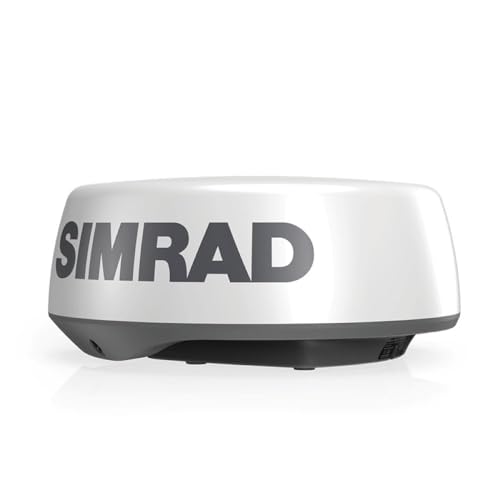
 Simrad HALO20+ 36 NM 20-inch Pulse Compression Radar20"20.47 x 20.47 x 10.24 inches22.05 poundsCheck on Amazon



For most coastal boat owners running a Garmin display, the best marine radar system overall is the Garmin GMR 18 HD3 — an 18-inch, 4 kW magnetron dome that is the cheapest way into a factory-integrated radar overlay, fits a small arch or mast bracket, and is simple enough to install on boats from roughly 20 feet upward. If your helm already has a Simrad, B&G or Lowrance multifunction display, the Simrad HALO20+ is the stronger pick: solid-state pulse compression, 36-nautical-mile class range, 60 RPM rotation and VelocityTrack Doppler make it dramatically better at separating close targets in harbours and fog. Buyers who need a whole navigation package rather than just a radar should look at the Simrad GO9 XSE bundle with HALO20, which puts a 9-inch chartplotter, a 20-inch solid-state dome and a transom transducer in a single budget purchase. And if your cruising takes you well offshore, the premium tier — the Garmin GMR Fantom 54 open array or the Furuno DRS4D-NXT dome — is where long-range detection, Doppler target tracking and serious target separation live.
Top 3 Picks
Best overall: Garmin GMR 18 HD3
The default choice for coastal boats under about 32 feet with a Garmin chartplotter at the helm. It is the least expensive way to get a real radar overlay on your chart, the 18-inch dome mounts almost anywhere, and 4 kW of magnetron power gives solid returns on buoys, breakwaters and close traffic. If you want one radar that does the everyday job without a complicated install, this is it.
Best budget: Simrad GO9 XSE with HALO20 bundle
This is the only pick here that solves three problems at once — radar, chartplotter and depth — in a single purchase. For someone building a first electronics package on a centre console or small cruiser, the 9-inch display plus 20-inch solid-state dome is a much better use of money than buying a radar alone and discovering you have nothing to view it on.
Best premium: Garmin GMR Fantom 54
A four-foot solid-state open array for offshore boats of roughly 40 feet and up. The narrow beamwidth is the whole point: it holds separate echoes on two vessels running side by side miles out, sees weather cells and shipping long before a dome will, and adds Doppler-style motion targeting. It is also the most demanding install in this list, which is the honest trade-off.
Quick Comparison
Every radar below is a current, real product. Price tiers are general market positioning only — street prices move constantly, and bundles and cable lengths change what you actually pay.
| Product | Best for | Key specs | Price tier |
|---|---|---|---|
| Garmin GMR 18 HD3 | First radar on a coastal boat | 18 in dome; 4 kW magnetron; needs a Garmin MFD; single cable run; no built-in screen | Budget |
| Simrad GO9 XSE + HALO20 bundle | Complete first navigation package | 9 in MFD; 20 in solid-state dome (24 nm class); 83/200 kHz transom transducer; C-MAP Discover chart | Budget |
| Simrad HALO20+ | Close-quarters target separation and Doppler | 20 in solid-state pulse compression dome; 36 nm class; 60 RPM; VelocityTrack Doppler; dual range | Mid-range |
| Furuno 1815 | Standalone radar with its own display | 8.4 in colour LCD radar display; 19 in 4 kW radome; no MFD required; independent power and cable | Premium |
| Simrad HALO20 | Small boats and low-power installations | 20 in solid-state dome; 24 nm class; instant-on; low current draw; needs a Simrad/Lowrance MFD | Budget |
| Lowrance Halo 20+ | Lowrance HDS owners | 20 in solid-state dome; 36 nm class; Doppler; native Lowrance MFD integration | Mid-range |
| Garmin 18/24 xHD3 | Choosing dome size to fit the boat | 18 in or 24 in dome; 4 kW magnetron; class-typical beamwidth roughly 5.2° (18 in) and 3.7° (24 in) | Mid-range |
| Raymarine T70417 Quantum 2 | Sailboats and weight-sensitive mounts | 18 in CHIRP solid-state dome; 24 nm class; Doppler; 15 m cable included | Mid-range |
| Garmin GMR Fantom 18x | Doppler awareness in a small dome | 18 in solid-state dome; motion targeting/Doppler; instant-on; Garmin MFD required | Mid-range |
| SI-TEX 4 kW 20 in digital radome | Existing SI-TEX NavPro owners | 20 in dome; 4 kW; internal WiFi module; 15 m cable; NavPro display integration | Budget |
| Garmin GMR Fantom 54 | Long-range offshore coverage | 4 ft solid-state open array; narrow beamwidth; Doppler; pedestal mount; longest range in this list | Premium |
| Furuno DRS4D-NXT | Offshore and commercial-grade work | 24 in solid-state Doppler dome; NXT target analyser; needs a Furuno MFD; dome footprint | Premium |
How We Chose
This roundup was assembled from manufacturer specification sheets, published product literature and the documented capabilities of each brand’s display ecosystem — not from time on the water with these units. Selection rested on five criteria. First, spec transparency: every pick publishes its format (dome or open array), antenna size, transmitter class and range scales, so a buyer can compare like with like. Second, category fit: we kept a deliberate spread of dome sizes from 18 to 24 inches plus one open array, because dome diameter drives beamwidth and beamwidth drives whether two close targets stay two targets. Third, integration reality: a radar is only as useful as the display it talks to, so each entry is tagged to the ecosystem it actually works with rather than presented as brand-neutral. Fourth, installation burden: mounting footprint, weight, cable runs and power draw separate a weekend job from a boatyard job. Fifth, upgrade path and price tier, spread across budget, mid-range and premium so a reader can see what the next step up actually buys.
1. Garmin GMR 18 HD3 – Best for First-Time Radar Buyers on Coastal Boats
As an Amazon Associate we earn from qualifying purchases at no extra cost to you.

The Garmin GMR 18 HD3 is the radar most people should buy first. It is an 18-inch enclosed dome using a 4 kW magnetron transmitter, which means it needs a compatible Garmin multifunction display to show anything — there is no screen in the box. That is not a flaw, it is the point: if you already run a GPSMAP or ECHOMAP unit at the helm, the radar overlay lands directly on your chart, and you get a single integrated picture instead of a second screen competing for dash space.
It suits trailerable boats, dry-stacked boats and small cruisers in roughly the 20 to 32 foot range that spend their time in coastal waters: harbour approaches after dark, fog banks on the way to the fishing grounds, and crossing shipping lanes on a clear day when you would still rather see the traffic than assume it. The 18-inch dome is light enough for a modest arch or a mast bracket, and the install is one cable run from dome to display plus a power feed. The HD3 processing is a generation newer than the older HD line, so target returns are cleaner than the badge price suggests. What you give up against solid-state domes is close-range crispness: a magnetron dome of this size has a wider horizontal beam, so two boats moored twenty feet apart can smear into one blob at short range.
- Format: 18-inch enclosed radome, no external turning unit
- Transmitter class: 4 kW magnetron
- Range class: short to mid, realistically useful out to roughly 24–36 nm depending on antenna height, target height and sea state
- Display: requires a compatible Garmin MFD; radar overlay on the chart
- Mounting: arch, mast bracket or radar platform; single cable run to the display
- Best boat size: roughly 20–32 ft
Pros
- Lowest-cost route into a properly integrated radar picture on a Garmin helm
- Overlay on the chartplotter rather than a separate screen
- Compact 18-inch footprint fits small arches and trailerable boats
- Straightforward install with a single cable run and a power feed
- Strong brand service network and a large installed base
Cons
- Magnetron warm-up and higher current draw than solid-state domes
- No Doppler-style motion targeting
- Locked into a Garmin display — it will not talk to Simrad, Raymarine or Furuno
- Wider beam on an 18-inch dome blurs very close targets together
Against the nearest alternative in this list, the Simrad HALO20, the trade is ecosystem against technology. The HALO20 is solid-state, instant-on, quieter and sharper at close range, but it only works with Simrad or Lowrance displays. If you already own a Garmin MFD, the GMR 18 HD3 is cheaper and simpler and the decision is basically made for you. If you are starting from nothing and the thing you care about most is separating close traffic in fog, the solid-state dome is worth the switch.
2. Simrad GO9 XSE with HALO20 Bundle – Best for a Complete Budget Navigation Package

This bundle exists for the buyer who has a boat but no electronics. It packages a 9-inch Simrad GO9 XSE chartplotter and fishfinder, a 20-inch HALO20 solid-state radar dome in the 24-nautical-mile class, an 83/200 kHz transom-mount transducer, and a C-MAP Discover chart card. Buying those four things separately is how first-time electronics projects go over budget; buying them together is how a small boat ends up with a genuinely usable helm in one weekend of installation.
It suits centre consoles, small walkarounds and compact cruisers in the 18 to 28 foot range, especially boats that fish and cruise in equal measure. The 9-inch touchscreen is large enough to run a radar-and-chart split without squinting, and it is small enough to fit a modest dash. The HALO20 dome is solid-state, so there is no magnetron warm-up and the current draw is modest — a real consideration on a boat with a single battery and a small outboard charging circuit. The transom transducer handles inshore and mid-depth fishing well; if you fish deep water or run an inboard, plan on a through-hull transducer as an upgrade rather than a compromise.
- Display: 9-inch GO9 XSE chartplotter and fishfinder
- Radar: 20-inch HALO20 solid-state dome, 24 nm class
- Sonar: 83/200 kHz transom-mount transducer included
- Charting: C-MAP Discover chart card included
- Networking: NMEA 2000 plus Ethernet between display and dome
- Best boat size: roughly 18–28 ft
Pros
- One purchase covers radar, chartplotter, depth and charts
- Solid-state dome means instant-on and lower power draw
- 9-inch touchscreen is big enough for a two-panel split
- Genuinely budget-tier for the amount of capability delivered
- Clear upgrade path into the wider Simrad ecosystem later
Cons
- A 9-inch screen gets cramped once you split it three or four ways
- Transom transducer is a compromise in deep water and behind inboards
- HALO20 is the 24 nm class unit — not the 36 nm class, and no VelocityTrack Doppler
- C-MAP Discover is a regional chart; long-range cruising may need chart upgrades
Compared with the standalone Simrad HALO20+ — the nearest alternative here — the bundle is the better buy for anyone without a display, because the radar alone would leave you with nothing to look at. The HALO20+ is the better radar on its own terms: 36 nm class range, 60 RPM rotation and Doppler. If you already own a compatible Simrad, B&G or Lowrance display, skip the bundle and put the money into the plus model.
3. Simrad HALO20+ – Best for Close-Quarters Target Separation

The HALO20+ is the radar for boaters who spend their time in crowded water. It is a 20-inch solid-state pulse compression dome rated to 36 nautical miles, rotating at 60 RPM, with VelocityTrack Doppler and dual-range operation. Pulse compression is the technical reason it matters: instead of one big transmit pulse, the dome sends a coded signal and processes the returns, which produces much finer range resolution than a conventional magnetron dome of the same physical size.
That translates into the thing you actually notice — two vessels running side by side a quarter mile ahead stay two distinct echoes instead of merging into a single smear. Add Doppler, which colour-codes targets moving toward you versus away, and you get an instant read on which contacts are closing and which are opening, without doing the mental arithmetic on every trail. The 60 RPM rotation matters at speed: a faster sweep means the picture refreshes quickly enough to trust when you are running at 25 knots through a channel. Dual range lets you watch a tight two-mile window and a wide twelve-mile window at the same time, which is exactly the split you want in a harbour approach with offshore traffic behind it.
- Format: 20-inch solid-state pulse compression dome
- Range class: 36 nm
- Rotation: 60 RPM
- Features: VelocityTrack Doppler, dual-range operation
- Warm-up: none — solid-state, instant-on
- Display: requires a compatible Simrad, B&G or Lowrance MFD
Pros
- Pulse compression delivers sharp close-range target separation
- VelocityTrack Doppler shows closing versus opening targets at a glance
- 60 RPM sweep keeps the picture current at planing speeds
- Dual range covers near and far simultaneously
- Instant-on solid state with no magnetron warm-up and modest current draw
Cons
- Requires a compatible multifunction display — nothing standalone here
- A 20-inch dome still has a wider beam than a 24-inch dome or an open array
- Mid-range money, and the display can cost as much again
- Doppler works best with heading data from a heading sensor on the network
Against the Garmin GMR Fantom 18x, the nearest equivalent in this list, both are solid-state Doppler domes. The HALO20+ is the physically larger unit with 60 RPM rotation and dual range, which gives it an edge in fast, busy water. The Fantom 18x is smaller, lighter and native to Garmin. In practice the deciding question is not which radar is better but which display you already own — moving brands means buying a new chartplotter too.
4. Furuno 1815 – Best for Standalone, Display-Included Offshore Radar

The Furuno 1815 is the odd one out in this list, and deliberately so. It ships with its own dedicated 8.4-inch colour LCD radar display and a 19-inch 4 kW radome, which means it needs no chartplotter at all. You run a cable, feed it power, and you have a working radar. That makes it the pick for skippers who want radar to be independent of the navigation system rather than a panel inside it.
It suits two kinds of buyer. The first is the sailor or workboat-style operator who believes radar should keep working if the chartplotter reboots, browns out or dies — a redundancy argument that is hard to beat once you have been offshore in weather. The second is the owner of an older boat with no modern multifunction display and no intention of installing one, who simply wants a radar that shows traffic, squalls and coastline without a wiring project through the whole helm. Furuno’s reputation for target detection is the other reason people pay premium money for a modestly sized dome: this is a brand whose radar processing is respected well beyond the recreational market.
- Display: dedicated 8.4-inch colour LCD radar display, included
- Radar: 19-inch 4 kW radome
- Range class: out to roughly the 36 nm class depending on target and antenna height
- Integration: standalone — no multifunction display required
- Power: independent feed, separate from the nav system
- Best for: redundancy-focused skippers and boats without an MFD
Pros
- Radar keeps working even if the chartplotter fails or reboots
- No dependence on any brand’s display ecosystem
- Furuno’s target detection reputation in a compact radome
- Simple, dedicated controls that do not require menu diving
- Straightforward retrofit on boats with older or no electronics
Cons
- Premium price tier for a dome of this size, because you are buying a display too
- 8.4-inch screen is small by modern standards
- No chart overlay — radar and chart are two separate pictures
- One more screen competing for helm space
Compared with the Garmin GMR 18 HD3, the two are in a similar dome class, but they answer different questions. The GMR 18 HD3 is cheaper and overlays on your chart, which is the modern way to navigate. The 1815 gives you a self-contained radar that owes nothing to the rest of the boat. If redundancy and independence are what keep you up at night, the Furuno earns its premium tier; if you want one integrated picture, it does not.
5. Simrad HALO20 – Best for Small-Boat, Low-Power Installations
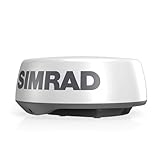
The HALO20 is the plain sibling of the HALO20+, and for a lot of small boats it is the smarter purchase. It is a 20-inch solid-state dome in the 24-nautical-mile class, which means it is instant-on, has no magnetron to warm up, and draws a fraction of what a comparable magnetron dome pulls while transmitting. On a boat with a single house battery and a small outboard alternator, that difference is not academic — it is the difference between running radar all evening and watching your voltage alarm.
It suits sailboats, small cruisers and fishing boats in roughly the 18 to 30 foot range whose realistic radar needs sit inside a few miles: seeing a breakwater at night, spotting a buoy in fog, watching traffic in a channel. If your honest answer to “how far out do you actually need to see?” is two to six miles, a 24 nm class dome is already generous. The solid-state design also means it is quiet and vibration-free compared with a spinning magnetron dome, which matters if the dome is mounted anywhere near where people sit.
- Format: 20-inch solid-state dome
- Range class: 24 nm
- Warm-up: none, instant-on
- Power: low current draw, well suited to small battery banks
- Display: requires a compatible Simrad, B&G or Lowrance MFD
- Best boat size: roughly 18–30 ft
Pros
- Lowest power draw among the solid-state domes in this roundup
- Instant-on with no warm-up delay
- Quiet, low-vibration operation
- Compact 20-inch dome fits modest arches
- Budget price tier for solid-state technology
Cons
- 24 nm class rather than the 36 nm class of the plus model
- No VelocityTrack Doppler
- Needs a compatible multifunction display
- 20-inch beamwidth still limits extreme close-range separation
Against the Simrad HALO20+ — its obvious nearest alternative — the choice is almost purely about range and Doppler. Same dome diameter, same solid-state architecture, same ecosystem. The plus model roughly adds a third more headline range, faster rotation and Doppler target colouring for mid-range money. If you rarely venture beyond a few miles and never run fast in traffic, the plain HALO20 is the value pick and you will not miss what you never had.
6. Lowrance Halo 20+ – Best for Lowrance MFD Owners

The Lowrance Halo 20+ is the same radar platform as the Simrad HALO20+ wearing a different badge, which is unsurprising given both brands sit under the same parent company. It is a 20-inch solid-state pulse compression dome in the 36-nautical-mile class with Doppler target tracking, and it exists because Lowrance HDS owners want a radar that appears natively in their own menu structure rather than as a guest device.
It suits fishing-focused boats running Lowrance HDS displays, typically 22 to 38 feet, that want a single integrated picture of chart, sonar and radar on one screen. The practical advantage over buying the Simrad version is not performance — it is that the software integration, menus, and update path are native to the display you already own. That matters more than people expect: a radar that is technically compatible but awkward to configure is a radar you stop using. Doppler here colour-codes targets by whether they are closing or receding, which turns a screen full of echoes into a quick read on which contacts deserve attention.
- Format: 20-inch solid-state pulse compression dome
- Range class: 36 nm
- Features: Doppler target tracking
- Warm-up: none, instant-on
- Display: native integration with Lowrance HDS multifunction displays
- Best boat size: roughly 22–38 ft
Pros
- Native Lowrance integration means simpler setup and menus
- 36 nm class range with pulse compression resolution
- Doppler colouring separates closing from opening traffic
- Instant-on solid state with modest current draw
- Shares a proven platform with the Simrad equivalent
Cons
- No advantage over the Simrad HALO20+ if you run Simrad hardware
- Doppler performs best with heading data on the network
- 20-inch beamwidth is still wider than a 24-inch dome
- Not standalone — a display is mandatory
Compared with the Simrad HALO20+, this is genuinely a coin toss on hardware and a clear decision on software: buy the one that matches your display brand. Compared with the budget Simrad HALO20, the plus model is the better radar and costs more, which is the usual trade. If you are a Lowrance owner who has been putting off radar, this is the unit that will feel like it was designed for your boat.
7. Garmin 18/24 xHD3 – Best for Choosing Your Own Dome Size
The Garmin xHD3 line is listed as an 18-inch or 24-inch dome, and that choice is the whole reason to consider it. Dome diameter is the single most underrated radar specification: a bigger antenna produces a narrower horizontal beam, and a narrower beam is what keeps two close targets as two echoes. Class-typical beamwidth for domes of this type runs around 5.2 degrees at 18 inches and about 3.7 degrees at 24 inches — which does not sound like much until you are trying to pick out a channel marker against a seawall.
It suits buyers who know their boat. An 18-inch dome fits a small arch, a trailerable boat or a mast bracket where a larger unit simply will not go. A 24-inch dome needs more real estate and more mounting structure, but it pays that back in target separation and in slightly better performance at range, because the narrower beam concentrates the transmit energy. Both versions use a 4 kW magnetron transmitter and both require a Garmin multifunction display, where the radar overlays directly on the chart. The xHD3 generation adds improved target processing over the older HD domes, so returns come through cleaner than the price tier might suggest.
- Format: 18-inch or 24-inch enclosed dome
- Transmitter class: 4 kW magnetron
- Beamwidth class: roughly 5.2° horizontal at 18 in; roughly 3.7° at 24 in
- Display: requires a compatible Garmin MFD with chart overlay
- Mounting: 18 in suits small arches; 24 in needs a larger, sturdier platform
- Best boat size: roughly 22–40 ft depending on dome chosen
Pros
- Two dome sizes so you can match the radar to the mounting space you actually have
- 24-inch option meaningfully improves close-target separation
- 4 kW magnetron gives strong returns on buoys, walls and small craft
- Full chart overlay on Garmin displays
- Mid-range price tier with a wide dealer and service footprint
Cons
- Magnetron design means warm-up time and higher current draw
- No Doppler or motion targeting
- Requires a Garmin display
- The 18-inch version shares the close-range limitations of any 18-inch dome
Against the Garmin GMR Fantom 18x, the choice comes down to technology versus size. The Fantom 18x is solid-state with Doppler, which is a real advantage for traffic awareness, but it is only available in the 18-inch footprint. The xHD3 lets you step up to 24 inches for better separation at the cost of losing Doppler and accepting magnetron warm-up. If your mounting space is tight, take the Fantom; if you have room for a 24-inch dome and want the sharpest picture, take the xHD3.
8. Raymarine T70417 Quantum 2 – Best for Lightweight Sailboat Mounting

The Raymarine Quantum 2 is an 18-inch CHIRP solid-state dome with Doppler, supplied with a 15-metre cable. It is the radar to look at when weight and mounting simplicity matter more than raw range — which describes most sailboats, and any boat where the dome has to sit on a mast or a lightweight arch that was never designed to carry a spinning magnetron.
It suits Raymarine Axiom owners first, since that is the display family it integrates with natively, and it suits cruising sailors generally. CHIRP pulse compression gives it far better close-range resolution than its compact size would suggest, and solid-state construction means it is instant-on with no warm-up and modest current draw — a meaningful benefit on a boat where electrical budget is carefully managed. Doppler target tracking adds the same closing-versus-receding colour coding you get on the larger domes. The included 15-metre cable covers a long run from a mast-mounted dome down to a helm display on a moderately sized boat, which is often the hidden cost in a radar install.
- Format: 18-inch solid-state CHIRP dome
- Range class: 24 nm
- Features: Doppler target tracking
- Cable: 15 m supplied
- Warm-up: none, instant-on; low current draw
- Display: Raymarine multifunction displays
Pros
- Compact and light — well suited to mast and arch mounting
- CHIRP pulse compression gives sharp close-range detail
- Doppler target colouring
- 15 m cable included, which often saves a separate purchase
- Instant-on with modest power draw
Cons
- 24 nm class rather than the 36 nm class
- 18-inch beamwidth is the widest in this roundup
- Raymarine ecosystem only
- Doppler is at its best with heading data available on the network
Against the Simrad HALO20 — the closest match on range class and price tier — the two are broadly similar: both 24 nm class solid-state domes. The Quantum 2 adds Doppler and is the natural choice for a Raymarine helm, while the HALO20 draws slightly less and fits the Simrad and Lowrance families. For a sailboat specifically, the Quantum 2’s compact weight and included long cable give it the edge on install practicality.
9. Garmin GMR Fantom 18x – Best for Doppler Awareness in a Small Dome

The Garmin GMR Fantom 18x is what you buy when you want solid-state technology and Doppler motion targeting but only have room for an 18-inch dome. It is part of Garmin’s Fantom family, which is the solid-state line — as opposed to the magnetron HD and xHD domes — and it pairs with a Garmin multifunction display for a full radar overlay on the chart.
It suits coastal boats in roughly the 20 to 32 foot range running Garmin electronics, particularly owners who run at speed in traffic and want a fast read on which contacts are closing. Motion targeting colour-codes moving targets, so a screen full of echoes resolves into a smaller number of things that actually require attention. Solid-state construction means no warm-up delay, lower current draw than a magnetron dome of the same size, and a quieter installation. The honest limitation is physical: an 18-inch dome has the widest beam in this roundup, so very close targets still run together, and the range class is a step below the larger domes. If you want Doppler and you want Garmin, but a 24-inch dome will not fit your arch, this is the answer.
- Format: 18-inch solid-state dome
- Features: Doppler motion targeting
- Warm-up: none, instant-on
- Power: lower draw than an equivalent magnetron dome
- Display: Garmin multifunction displays with chart overlay
- Best boat size: roughly 20–32 ft
Pros
- Doppler motion targeting in a compact 18-inch footprint
- Solid-state instant-on with no warm-up
- Lower current draw than a magnetron dome
- Full Garmin chart overlay and ecosystem integration
- Fits small arches and trailerable boats
Cons
- 18-inch beamwidth limits close-target separation
- Range class is below the larger domes in this list
- Requires a Garmin display
- Costs more than the magnetron GMR 18 HD3 without the option of a bigger dome
Compared with the Garmin GMR 18 HD3, the Fantom 18x costs more and gives you Doppler plus solid-state behaviour in return. That is a fair trade for anyone running in traffic; it is wasted money for someone who uses radar mainly to find a breakwater in fog. Compared with the Simrad HALO20+, the Fantom is smaller and lighter but gives up the 60 RPM rotation and dual-range display that make the bigger dome better at speed.
10. SI-TEX 4 kW 20″ Digital Radome – Best for SI-TEX NavPro Owners on a Budget

The SI-TEX 4 kW 20-inch digital radome is a budget magnetron dome with an internal WiFi module and a 15-metre cable, designed to work with SI-TEX NavPro displays. It is