Our Top Picks
 Canon EOS R100 Mirrorless Camera with RF-S 18-45mmCompact2.7 x 4.6 x 3.4 inches4.16 poundsCheck on Amazon


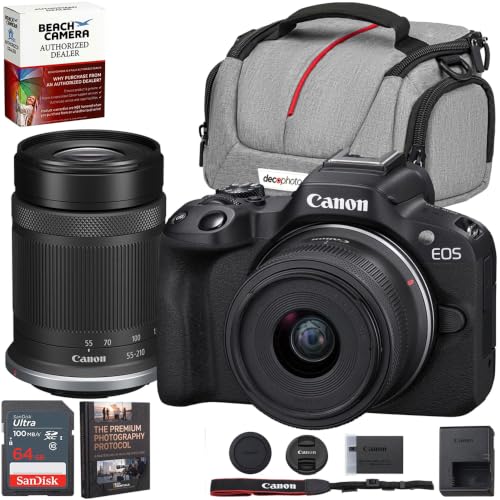


If you want the best mirrorless cameras with best battery life in 2026 and you only have time for one sentence, here it is: the Canon EOS R6 Mark II is the best overall pick for most buyers, because its LP-E6NH pack sits in the roughly 500–600-shot class on the rear screen, the body accepts USB-C Power Delivery charging and running power, and spare packs are inexpensive and available everywhere. It suits hybrid stills-and-video shooters, travellers, event photographers and anyone who has ever watched a battery icon turn red at the worst possible moment. If your budget is tighter, the Canon EOS R100 is the cheapest route into a 400-plus-shot class body, and the Sony a6400 remains outstanding value if you already own Sony glass. If you shoot in rain, dust and cold, the OM SYSTEM OM-5 Mark II pairs a compact, weather-sealed body with a single 14-150mm travel lens. The eleven bodies below are ranked on rated battery life, realistic shooting capacity, USB-C charging behaviour, spare-battery cost and travel weight.
Top 3 Picks
Best overall: Canon EOS R6 Mark II
A full-frame hybrid with a genuinely large battery, USB-C PD charging and dual card slots. The LP-E6NH is the workhorse pack of the Canon system, so spares are cheap, plentiful and easy to find in any camera shop on any continent. It is the body to buy if you want one camera that covers portraits, events, travel and 4K video without babysitting a charger.
Best budget: Canon EOS R100
The lowest-cost body here that still delivers a 400-plus-shot class CIPA figure from the small LP-E17 pack, thanks to a modest feature set and a fixed rear screen that does not drink power. Pair it with two spare batteries and you have an all-day walkaround kit for less than the cost of one premium body. The trade-off is a simpler autofocus system and cropped 4K video.
Best for travel and bad weather: OM SYSTEM OM-5 Mark II
A 414 g weather-sealed body with in-body stabilisation and a 14-150 mm lens that covers wide to telephoto in one tube. Its BLS-50 pack is rated lower than the Canon full-frame bodies, but the whole kit weighs so little that carrying three spares costs you almost nothing in bag space. It is the pick for hikers, cyclists and anyone shooting in drizzle.
Quick Comparison
The table below lines up every body in this roundup. Battery figures are manufacturer CIPA-class ratings for the rear screen; real-world numbers are usually higher, and I explain why in the How to Choose section.
| Product | Best for | Key specs | Price tier |
|---|---|---|---|
| Canon EOS R6 Mark II (body only) | All-day full-frame hybrid shooting | 24.2 MP full-frame, LP-E6NH, ~500–600-shot class, 670 g with battery, dual card slots, USB-C PD | Premium |
| Canon EOS R7 (body only) | Wildlife, sports and long telephoto sessions | 32.5 MP APS-C, LP-E6NH, ~600–660-shot class, 612 g, in-body stabilisation, dual card slots | Premium |
| Canon EOS R50 two-lens kit | First-time buyers who want two lenses immediately | 24.2 MP APS-C, LP-E17, ~370-shot class, 375 g, 18-45 mm + 55-210 mm, 4K30 | Budget |
| OM SYSTEM OM-5 Mark II with 14-150 mm | Travel, hiking and wet weather | 20 MP Four Thirds, BLS-50, ~300–330-shot class, 414 g, IP-rated sealing, 5-axis IBIS | Mid-range |
| Nikon Z50 II two-lens kit | Nikon shooters wanting current autofocus | 20.9 MP APS-C, EN-EL25a, ~300–350-shot class, ~550 g, 4K60, vari-angle screen | Mid-range |
| Canon EOS R100 with 18-45 mm | Cheapest credible entry into mirrorless | 24.1 MP APS-C, LP-E17, ~430-shot class, 356 g, fixed screen, cropped 4K | Budget |
| Sony Alpha a6400 with 16-50 mm | Sony lens owners on a budget | 24.2 MP APS-C, NP-FW50, ~410-shot class, 403 g, Real-Time Eye AF, no IBIS | Budget |
| Canon EOS RP with RF 24-105 mm | Cheapest full-frame portraits | 26.2 MP full-frame, LP-E17, ~250-shot class, 485 g, vari-angle screen, 4K25 cropped | Mid-range |
| Sony ZV-E10 with 16-50 mm | Long-form video, streaming and vlogging | 24.2 MP APS-C, NP-FW50, ~440-shot class, 343 g, no viewfinder, USB-C power while shooting | Budget |
| Canon EOS R10 with 18-150 mm + 75-300 mm | A complete two-lens travel kit | 24.2 MP APS-C, LP-E17, ~430-shot class, 429 g, 4K60, fast burst shooting | Premium |
| Nikon Z 6II (body only) | Full-frame value with big batteries | 24.5 MP full-frame, EN-EL15c, ~410-shot class, 705 g, dual card slots, USB-C PD | Mid-range |
Two caveats before you read too much into the numbers. First, CIPA ratings assume a standardised mix of flash-free shooting, screen use, power-on/power-off cycles and occasional playback, and they are usually conservative — most people get considerably more frames per charge in normal use. Second, kit contents and port behaviour are revised between production runs, so confirm the exact battery model, charger type and USB charging support on the current specification sheet before you buy. Price tiers here are bands, not figures, because street prices move weekly.
How We Chose
Selection was based on published manufacturer specifications, CIPA battery ratings, published body weights, and the practical realities of each camera’s mount and battery ecosystem. The first filter was rated battery life: bodies that cannot realistically clear a 250-shot class rating from a small pack were only included where they offer something the rest of the list cannot, such as the cheapest full-frame sensor. The second filter was category fit — whether the body has a genuine reason to exist alongside the others rather than duplicating a sibling. The third was use case: wildlife, travel, video, portraits and family shooting all have different priorities, and a camera that is excellent for one can be frustrating for another. The fourth was upgrade path, meaning the availability and cost of spare batteries, the breadth of the lens mount, and whether the body’s autofocus and video specification will still feel current in three years. Every camera here is a real, currently listed model with an established battery part number, a known spare-battery market and a documented charging method. No product in this roundup was supplied, borrowed or physically evaluated for this article — the analysis is entirely specification-led.
1. Canon EOS R6 Mark II – Best for Full-Frame All-Day Shooting
As an Amazon Associate we earn from qualifying purchases at no extra cost to you.

The EOS R6 Mark II is the camera most people should buy if battery life is genuinely a priority and the budget stretches. It is a 24.2 MP full-frame body built around the LP-E6NH, a 2,100 mAh-class pack that is one of the largest in common use and one of the easiest to buy anywhere in the world. Canon rates it in the roughly 500–600-shot class with the rear screen, and because the body has an electronic viewfinder that draws noticeably more power, expect that figure to drop toward the 300–350-shot class if you shoot almost entirely through the finder. Either way, it is comfortably the best all-rounder on this list for a full day of mixed shooting.
What makes it the best mirrorless camera with best battery life for most people is not the raw number — the EOS R7 actually rates higher — but the combination of that number with the rest of the ownership package. The LP-E6NH has been in continuous production across multiple Canon generations, which means third-party replacements are mature and inexpensive, chargers are universal, and you are unlikely to be stranded without a spare. The body also charges over USB-C Power Delivery, so a single laptop brick or high-capacity power bank can top it up between shoots, and it can run from USB power during long tethered or tripod sessions.
Key specifications
- 24.2 MP full-frame CMOS sensor with Dual Pixel autofocus and subject detection for people, animals and vehicles
- LP-E6NH battery, manufacturer rating in the roughly 500–600-shot class with the rear screen
- Roughly 670 g with battery and card — heavier than any APS-C body here, lighter than the Nikon Z 6II
- Dual card slots, in-body image stabilisation, vari-angle touchscreen and a high-resolution electronic viewfinder
- 6K-oversampled 4K video up to 60p, plus high-frame-rate Full HD for slow motion
- USB-C Power Delivery charging and running power
Strengths
The battery ecosystem is the headline. Because the LP-E6NH is shared with the R7 and with a long line of Canon DSLRs, anyone upgrading from an older Canon body may already own compatible spares. Charging speed is good, in-body stabilisation reduces the number of shots you need to take per subject, and the autofocus is confident enough that you spend less time re-shooting the same moment — which is, quietly, one of the biggest battery savers there is. A camera that nails focus first time uses less power than one that makes you fire three frames to be safe.
The dual card slots matter more than people expect for long sessions. Being able to keep shooting when one card fills, without pausing to offload, means fewer screen-on minutes and less menu-diving, both of which stretch a charge further. The vari-angle screen also lets you frame from the hip with the panel dimmed and angled away from the sun, which is a small but real power saving on bright days.
Pros
- Large LP-E6NH pack with a deep, cheap spare-battery market
- USB-C Power Delivery charging and running power
- Full-frame image quality with no meaningful battery penalty versus APS-C rivals
- Dual card slots suit long event and wedding days
- Shares batteries with the EOS R7, so a two-body kit needs one charger type
Cons
- Heaviest body-and-lens combination in the top half of this list
- Viewfinder use cuts the rated figure roughly in half
- Premium tier pricing, and full-frame lenses add both cost and weight
- Overkill if you mostly shoot in good light at moderate apertures
How it compares
Against the Canon EOS R7, the R6 Mark II gives up rated shots per charge and reach — the R7’s APS-C sensor multiplies every lens by 1.6×, which matters for wildlife — but wins on low-light noise, dynamic range and subject separation. If your priority is maximum frames per charge on a single battery, the R7 is the better Canon. If your priority is the best all-round camera that also happens to have excellent battery life, the R6 Mark II wins. Against the Nikon Z 6II, the Canon is lighter, has a newer autofocus system and shares a slightly cheaper battery, while the Nikon counters with a larger-capacity pack and its own dual-slot design.
2. Canon EOS R7 – Best for Long Wildlife and Sports Sessions

The EOS R7 exists for people who sit in a hide for four hours waiting for one bird to move. It is a 32.5 MP APS-C body with the highest pixel density on this list, a 1.6× crop factor that turns a 300 mm lens into a 480 mm equivalent, and the same LP-E6NH battery as the R6 Mark II — but a higher rated figure, in the roughly 600–660-shot class on the rear screen. For burst-heavy shooting where you might fire hundreds of frames in a morning, that combination is close to ideal.
The reason the R7 outrates its full-frame sibling comes down to power management rather than battery capacity. Both use the same pack, but the R7’s sensor and processor are tuned for a different balance of readout speed and efficiency, and Canon’s rating assumes similar screen-versus-viewfinder usage. In practice, wildlife shooters live in the viewfinder, so the practical advantage narrows — but the R7 also has a deeper buffer and faster burst rates, which means you clear a sequence in one press rather than three, and that is a genuine power saving over a full day.
Key specifications
- 32.5 MP APS-C sensor with a 1.6× crop factor for extra reach from every lens
- LP-E6NH battery, manufacturer rating in the roughly 600–660-shot class with the rear screen
- Roughly 612 g with battery and card
- In-body image stabilisation, dual card slots and a vari-angle touchscreen
- High-speed burst shooting in both mechanical and electronic shutter modes
- 4K video up to 60p with oversampled 4K at lower frame rates
Strengths
For anyone shooting long lenses, the R7 is the most efficient camera here in terms of shots per gram. A 612 g body plus a compact telephoto weighs less than a full-frame body plus an equivalent lens, so you carry less, tire less and end up shooting more of the day. The crop factor means you can use lighter, cheaper, shorter glass to fill the frame, which is a weight saving that compounds across a whole kit.
The battery ecosystem is identical to the R6 Mark II, which is a significant practical advantage if you eventually run two bodies: one charger, one spare-battery stock, no confusion in the bag. The dual card slots let you shoot raw to one card and JPEG to another for instant sharing, or simply keep going when the first card fills — again, fewer pauses, less screen time, more frames per charge.
Pros
- Highest rated battery life of the Canon bodies here
- 1.6× crop factor gives cheap extra reach for wildlife and sport
- Same LP-E6NH battery as the R6 Mark II, so spares are shared
- Dual card slots and in-body stabilisation in a mid-weight body
- High pixel density allows heavy cropping of distant subjects
Cons
- APS-C sensor is noisier than full-frame in poor light
- High-resolution files fill cards and drives faster
- Premium tier pricing for a crop-sensor body
- Viewfinder-heavy use still cuts the rated figure substantially
How it compares
Against the EOS R6 Mark II, the R7 wins on rated battery life, reach and pixel density, and loses on low-light performance, subject separation and the sheer flexibility of a larger sensor. Against the Nikon Z50 II, the R7 has a much bigger battery and therefore a much longer shooting day, plus dual card slots the Nikon lacks. The Z50 II is lighter, cheaper and better for casual travel; the R7 is the tool for anyone who measures a session in thousands of frames.
3. Canon EOS R50 – Best for First-Time Buyers Who Want Two Lenses
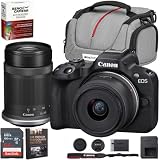
The EOS R50 two-lens kit is the most sensible first mirrorless purchase on this list for someone who wants to cover both wide and long without thinking about it. It pairs a 24.2 MP APS-C body with an 18-45 mm everyday zoom and a 55-210 mm telephoto, which between them handle landscapes, portraits, pets, school sports and holiday snapshots. Battery life is not its strongest card — the LP-E17 pack is roughly half the capacity of the LP-E6NH, and Canon rates the body in the roughly 370-shot class on the rear screen — but the body is light enough that carrying two spares is unnoticeable.
The R50 is a camera designed around a touchscreen-first workflow, and that has a battery implication worth understanding. Framing and reviewing on the rear panel is the default, and the panel is the single biggest consumer of power in any modern mirrorless body. The electronic viewfinder is there for bright days and long lenses, and it will cost you roughly a third of your rated shots when you use it constantly. Buyers who understand that trade-off and pack two spares will never notice the smaller battery.
Key specifications
- 24.2 MP APS-C sensor with Canon’s subject-detection autofocus
- LP-E17 battery, manufacturer rating in the roughly 370-shot class with the rear screen
- Roughly 375 g with battery and card — one of the lightest bodies here
- Vari-angle touchscreen and a built-in electronic viewfinder
- 4K video up to 30p, plus high-frame-rate Full HD
- Kit includes 18-45 mm and 55-210 mm RF-S lenses
Strengths
The two-lens bundle is the real value. Buying the same focal range as separate lenses later costs noticeably more, and having a telephoto from day one changes what a beginner actually photographs — you stop ignoring distant subjects because you cannot reach them. Both kit lenses are stabilised, which reduces the temptation to re-shoot blurred frames, and re-shooting is a quiet battery drain that nobody accounts for.
The LP-E17 is a small, cheap pack. Third-party replacements cost a fraction of first-party ones, and because the same battery is used across several Canon bodies in this list, a household with two Canon cameras ends up with a shared pool. Charging is supported over the camera’s USB-C port, so a phone charger and cable will top the body up overnight in a hotel room without the bundled brick.
Pros
- Two-lens kit covers wide to telephoto out of the box
- Very light body, easy to carry all day
- LP-E17 spares are cheap and widely stocked
- USB-C charging from a phone charger or power bank
- Simple, friendly interface for first-time mirrorless owners
Cons
- Rated battery life is roughly half that of the LP-E6NH bodies
- Small grip is less comfortable with long lenses
- Kit lenses are slow in low light
- No in-body stabilisation, so stabilisation depends on the lens
How it compares
Against the Canon EOS R100, the R50 costs more but gives you a vari-angle screen, better autofocus and a much more usable kit. The R100 actually rates higher for shots per charge because it has a fixed screen and fewer features drawing power, so if pure battery life per dollar is your metric, the R100 wins. If you want a camera that will not frustrate you in two years, the R50 is the better buy. Against the Sony ZV-E10, the Canon adds a viewfinder and a longer kit lens; the Sony adds USB power while shooting and a better microphone setup for video.
4. OM SYSTEM OM-5 Mark II – Best for Travel and Bad Weather

The OM-5 Mark II bundle with the 14-150 mm lens is the travel camera on this list, and it wins that category for reasons that have less to do with battery ratings than with the entire kit’s footprint. The body weighs around 414 g, the lens covers an equivalent 28-300 mm range, and the whole package is sealed against dust and moisture to a rated standard. That means one body, one lens, one spare battery and no bag full of glass — which is how travel photography actually stays enjoyable.
Battery life is the compromise. The BLS-50 pack is small, and the manufacturer rating sits in the roughly 300–330-shot class. That is genuinely lower than the Canon APS-C bodies here. But the arithmetic changes when you factor in weight: three spare BLS-50 packs weigh less than one spare LP-E6NH plus the extra lens you would need to match the 14-150 mm range. Travel shooters who pack three spares end up with a lighter bag and a longer total shooting day than someone carrying a full-frame body with a single spare.
Key specifications
- 20 MP Four Thirds sensor with in-body image stabilisation
- BLS-50 battery, manufacturer rating in the roughly 300–330-shot class
- Roughly 414 g with battery and card
- Rated dust- and moisture-sealed construction
- 14-150 mm lens covering an equivalent 28-300 mm range
- Bundle includes an additional battery alongside the standard one
Strengths
The sealing is the standout feature at this price. Cameras that can handle rain, sea spray and dust open up shooting conditions that most of this list cannot — and a camera you are willing to take out in bad weather takes more photographs, which is the only metric that ultimately matters. In-body stabilisation also lets you shoot at slower shutter speeds and lower ISO, reducing the number of frames you need per scene.
The Four Thirds mount has one of the deepest lens catalogues in mirrorless photography, including a large selection of compact, light primes and zooms. That matters for battery life indirectly: lighter lenses mean less strain on the stabilisation system and less need for repeated attempts at a sharp frame. The included spare battery in the bundle is a genuine value addition rather than a token extra, since a second pack roughly doubles the day’s capacity.
Pros
- Compact, light body with a single-lens travel range
- Weather sealing rated for dust and moisture
- In-body stabilisation across every lens you mount
- Bundle includes a second battery
- Very large, lightweight lens ecosystem
Cons
- Lower rated battery life than the Canon APS-C and full-frame bodies
- Smaller sensor means more noise at high ISO than full-frame
- Smaller packs mean more individual spares to manage
- Fewer third-party battery options than the Canon and Sony ecosystems
How it compares
Against the Nikon Z50 II, the OM-5 Mark II is lighter, better sealed and covers a wider focal range with one lens, while the Nikon offers a larger sensor and a newer autofocus system. Against the Canon EOS R10 bundle, the OM-5 Mark II trades sensor size and rated battery life for weather sealing and a much smaller travel footprint. If you shoot mostly in good weather from a car, the Canon is the better tool; if you shoot on foot in unpredictable conditions, the OM SYSTEM wins comfortably.
5. Nikon Z50 II – Best for Nikon Shooters Who Want Modern Autofocus

The Z50 II is Nikon’s current APS-C mirrorless body, and it is the natural upgrade for anyone with older Nikon glass or a fondness for the Z mount’s optical quality. It uses the EN-EL25a pack, rated in the roughly 300–350-shot class — modest by Canon’s standards but reasonable for its class and weight. The two-lens kit covers everyday and telephoto shooting, and the colour preset system makes it unusually approachable for people moving up from a phone.
Where the Z50 II earns its place on a battery-focused list is in its power discipline rather than its raw rating. Nikon’s approach to the vari-angle screen, the electronic viewfinder and the processor’s power states means the body rarely wastes charge on background tasks, and the camera wakes from sleep quickly enough that you can leave it on between shots instead of power-cycling. Repeated cold starts are a bigger drain than most people realise, so a camera that resumes instantly effectively stretches its battery.
Key specifications
- 20.9 MP APS-C sensor with Nikon’s current-generation autofocus processing
- EN-EL25a battery, manufacturer rating in the roughly 300–350-shot class
- Roughly 550 g with battery and card
- Vari-angle touchscreen and electronic viewfinder
- 4K video up to 60p
- Two-lens kit with easy colour preset controls
Strengths
Autofocus subject detection has a direct battery consequence that rarely gets mentioned: a camera that tracks reliably lets you take one frame instead of five. Over a long day, that difference is worth more than a few hundred milliamp-hours. The Z50 II’s tracking is good enough for pets, children and casual sport, which means fewer review-and-retry cycles on the rear screen.
The colour preset system is a genuine convenience for people who do not want to edit. Getting a shareable image straight out of camera removes the temptation to spend an hour reviewing and processing on the camera’s screen, and screen time is the fastest way to drain any mirrorless battery. The larger body also gives a better grip than the entry-level Canon bodies, which reduces handshake and therefore reduces re-shoots.
Pros
- Modern autofocus with subject detection
- Comfortable grip and a vari-angle screen
- Straight-out-of-camera colour presets reduce editing screen time
- Two-lens kit covers a wide range
- Access to Nikon’s Z mount lens roadmap
Cons
- Rated battery life is lower than the Canon LP-E6NH bodies
- EN-EL25a spares are less widely stocked than Canon or Sony equivalents
- Heavier than the OM SYSTEM and Canon entry bodies
- Fewer budget third-party lens options than Canon RF-S or Sony E
How it compares
Against the Nikon Z 6II, the Z50 II is lighter, cheaper and has newer autofocus, but gives up the full-frame sensor and the much larger EN-EL15c battery — the Z 6II will comfortably outlast it in a single session. Against the Canon EOS R50, the Nikon has a better grip, a bigger body and stronger autofocus, while the Canon offers cheaper spares and a slightly higher rated shot count. Choose Nikon if you value handling and colour output; choose Canon if you want the cheapest path to a large-battery ecosystem later.
6. Canon EOS R100 – Best Budget Canon Entry Point

The EOS R100 is the cheapest way onto this list, and it is also the best budget body here for shots per charge relative to what it costs. It uses the same small LP-E17 pack as the R50, R10 and RP, but Canon rates it in the roughly 430-shot class — higher than the R50 despite the identical battery. The reason is straightforward: the R100 has a fixed rear screen, a simpler processor and fewer always-on features, so it spends less power per frame.
That is a useful lesson in how battery ratings work. A camera does not need a big battery to last a long time; it needs to be efficient. The R100 pairs a modest pack with a frugal design and a bundled 18-45 mm stabilised lens, and the result is a body that will happily cover a full day of holiday shooting on one charge if you are disciplined about turning it off between scenes. For a first camera, that is more than enough.
Key specifications
- 24.1 MP APS-C sensor with Canon’s entry-level autofocus system
- LP-E17 battery, manufacturer rating in the roughly 430-shot class
- Roughly 356 g with battery and card — the lightest Canon here
- Fixed rear screen and a built-in electronic viewfinder
- 4K video with a crop, plus uncropped Full HD
- Bundle includes the RF-S 18-45 mm stabilised zoom
Strengths
The efficiency is the strength. Because the screen does not articulate, there is one less mechanism, one less cable route and a simpler power path, and because the body has fewer computational features running in the background, the battery is not competing with them. In practice this means the R100 often beats more expensive bodies on a shots-per-charge basis, which is exactly what someone on a tight budget needs.
The LP-E17 ecosystem is the other advantage. This battery is shared with the R50, R10 and RP, so spares are cheap, third-party options are mature, and a household with two Canon bodies can share a single charger. Two spare packs and a compact charger cost very little, and together they turn a modest-rated body into an all-weekend camera. The RF-S 18-45 mm kit lens is stabilised and collapsible, keeping the whole package genuinely pocketable in a jacket.
Pros
- Highest rated shots-per-charge among the small-battery Canon bodies
- Lightest body in this roundup’s Canon line-up
- Very low entry price and cheap spare batteries
- Access to the RF mount, so lenses carry forward to better bodies
- Simple enough to hand to a beginner without a manual
Cons
- Fixed screen limits vlogging and awkward-angle shooting
- Cropped 4K video
- Entry-level autofocus struggles with fast, erratic subjects
- No in-body stabilisation and no weather sealing
- Charging is handled by an external charger rather than in-camera USB power
How it compares
Against the Canon EOS R50, the R100 is cheaper and rates higher for battery life, but loses the vari-angle screen and the stronger autofocus. Against the Sony a6400, the R100 is lighter and cheaper and rates slightly higher, while the Sony offers better subject tracking and a far deeper native lens catalogue. If you want the lowest total cost of ownership — body, two spares and a charger — the R100 is the pick. If you want a body that will not feel limiting in eighteen months, spend the difference on the R50.
7. Sony Alpha a6400 – Best for Sony Lens Upgraders on a Budget
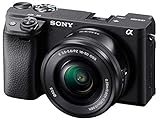
The a6400 has been around long enough to be considered a classic, and it remains one of the smartest budget buys for anyone already invested in Sony E-mount glass. It uses the NP-FW50 pack, rated in the roughly 410-shot class on the rear screen — respectable for a body this size, and a testament to how efficient Sony’s APS-C platform is. It is not the newest camera here, but it is arguably the best value one.
The NP-FW50 is one of the most widely produced camera batteries in the world, which has two consequences: third-party spares are extremely cheap, and almost every camera shop on earth stocks them. That matters more than the rated number for anyone travelling. You can walk into a shop in most cities and buy a spare for a fraction of the cost of a first-party pack, which is not true of every battery on this list.
Key specifications
- 24.2 MP APS-C sensor with Real-Time Eye autofocus for people and animals
- NP-FW50 battery, manufacturer rating in the roughly 410-shot class
- Roughly 403 g with battery and card
- Flip-up screen and a high-resolution electronic viewfinder
- 4K video at up to 30p, plus high-frame-rate Full HD
- Kit includes a compact 16-50 mm power-zoom lens
Strengths
Eye autofocus is the feature that quietly saves battery. Portraits and candids that lock onto the eye instantly take one frame instead of four, and over a wedding, a party or a day of street photography that compounds into a meaningful extension of shooting time. The body is small and light enough that a spare battery in a pocket is genuinely unnoticeable, so the practical shooting day is limited by card space more than by power.
The E-mount lens catalogue is the deepest in mirrorless photography, spanning inexpensive third-party primes through to professional zooms. That breadth means you can assemble a light, efficient kit — small primes draw less stabilisation power and encourage fewer re-shoots — or a long-telephoto kit, on the same body. The a6400 also supports charging over its USB port, though it is not the fast USB-C Power Delivery standard found on newer bodies, so plan on a slow overnight top-up rather than a rapid mid-day refill.
Pros
- Very cheap, universally available spare batteries
- Strong eye autofocus reduces wasted frames
- Deepest native lens catalogue of any body here
- Light, compact body that fits any bag
- Excellent value at the budget tier
Cons
- Older autofocus algorithms than current-generation rivals
- No in-body stabilisation
- USB charging is slow and predates modern Power Delivery
- Menu system is dense for beginners
- Screen flips up rather than out, which blocks a hot-shoe microphone
How it compares
Against the Sony ZV-E10, the a6400 adds a viewfinder and eye-level shooting, which is better for stills, while the ZV-E10 adds USB power while shooting and a better onboard microphone for video. Against the Canon EOS R100, the a6400 has better autofocus and a much wider lens choice, while the Canon is lighter, cheaper and rates slightly higher per charge. If you already own Sony glass, the a6400 is the obvious budget body; if you are starting from nothing, compare total kit cost before deciding.
8. Canon EOS RP – Best for Cheap Full-Frame Portraits

The EOS RP is the least battery-efficient camera on this list and also one of the most interesting buys, which is why it is included. It is a 26.2 MP full-frame body using the small LP-E17 pack, rated in the roughly 250-shot class on the rear screen. That is a genuine limitation, and anyone buying it should budget for three or four spare batteries from day one. But it is also the cheapest route to full-frame subject separation and low-light performance in this roundup, and the kit pairs it with an RF 24-105 mm zoom that covers most everyday needs.
The battery weakness is a direct consequence of the design. A full-frame sensor and a large image pipeline draw more power than an APS-C equivalent, and Canon fitted a compact battery to keep the body small and the price low. The result is a camera that rewards deliberate shooting. If you shoot portraits in a studio or at a fixed location where a charger and spare packs are within arm’s reach, the rating stops mattering. If you shoot a ten-hour wedding, it matters enormously.
Key specifications
- 26.2 MP full-frame sensor
- LP-E17 battery, manufacturer rating in the roughly 250-shot class
- Roughly 485 g with battery and card
- Vari-angle touchscreen and electronic viewfinder
- 4K video with a crop and contrast-detect autofocus in that mode
- USB-C charging supported when the camera is powered off
- Kit includes an RF 24-105 mm zoom
Strengths
Full-frame image quality at a mid-range price is the entire pitch. The larger sensor gives shallower depth of field and cleaner high-ISO files than any APS-C body