Key takeaways
- Best Overall: Molten BG4500 Composite (size 7) – FIBA approved game feel without leather pricing.
- Best Premium: Molten BG5000 Leather (size 7) – Molten’s top leather ball for indoor competition.
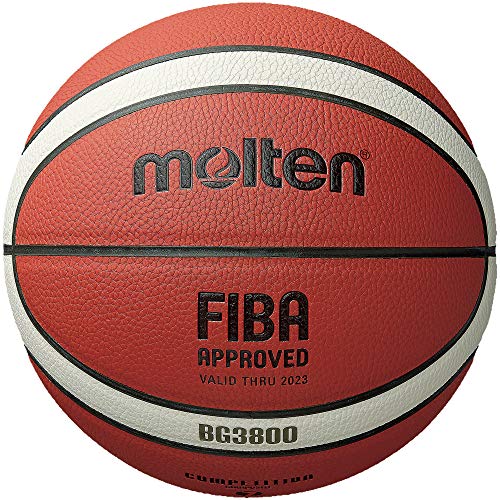
- Best Value: Molten BG3800 (size 7) – FIBA approved and rated for indoor and outdoor use.
- Best for 3×3: Wilson FIBA 3×3 Official Game Basketball (size 6) – the official 3×3 format ball.
- Best Alternative Brand (check the label): Spalding Precision TF-1000 – an indoor composite game ball whose FIBA marking you should confirm on the ball itself.
The best FIBA approved basketballs for most players are the Molten BG4500 for indoor games and the Molten BG3800 when the ball also has to live on outdoor courts. The BG4500 gives you a composite game cover that Molten positions just under its leather flagship, and the BG3800 gives you the same FIBA approval at a lower tier with indoor and outdoor use. If you play 3×3, the Wilson FIBA 3×3 Official Game Basketball is the one built for that format. This guide compares five balls by level of play, explains what “FIBA approved” does and does not guarantee, and shows how to match cover material, size and surface to what you actually do on court. Everything here is research-based: we did not personally use these products, and we rely on manufacturer pages and published specifications.
Our top picks


As an Amazon Associate we earn from qualifying purchases at no extra cost to you.
Top Picks at a Glance
- Best Overall: Molten BG4500 Composite (size 7) – FIBA approved game feel without leather pricing.
- Best Premium: Molten BG5000 Leather (size 7) – Molten’s top leather ball for indoor competition.
- Best Value: Molten BG3800 (size 7) – FIBA approved and rated for indoor and outdoor use.
- Best for 3×3: Wilson FIBA 3×3 Official Game Basketball (size 6) – the official 3×3 format ball.
- Best Alternative Brand (check the label): Spalding Precision TF-1000 – an indoor composite game ball whose FIBA marking you should confirm on the ball itself.
Comparison Table
| Ball | Best for | Key specs | Watch for | Price tier |
|---|---|---|---|---|
| Molten BG4500 | League and club games indoors | FIBA approved; composite cover; 12-panel 2-tone design; size 7 and size 6 versions | Indoor oriented, so outdoor concrete wears the cover faster | Mid-range |
| Molten BG5000 | Serious indoor competition | FIBA approved; genuine leather cover per Molten; size 7 | Leather needs a break-in and should stay off rough pavement | Premium |
| Molten BG3800 | Practice, school and mixed surfaces | FIBA approved; indoor/outdoor; sold in sizes 5, 6 and 7 | Composite is a step below the BG4500 in feel | Budget to mid-range |
| Wilson FIBA 3×3 Official Game Basketball | 3×3 and street-style half-court play | Size 6 circumference with size 7 weight; indoor and outdoor; Wave Triple Threat cover | Heavier than a normal size 6, which surprises first-time users | Mid-range |
| Spalding Precision TF-1000 | Indoor play where a Spalding ball is preferred | Size 7 (29.5 inches); TF-1000 indoor game ball line | Store listing does not state FIBA approval; verify on the ball | Mid-range |
What “FIBA Approved” Actually Means
FIBA, the international basketball federation, sets standards for the balls used in its competitions, and manufacturers submit models for approval. A ball printed with the FIBA approval mark has met those requirements for size, weight, bounce and construction. That matters if your league, school, tournament or federation specifically requires a FIBA ball. It does not mean the ball is the best choice for every court or every player, and it does not make a FIBA ball indestructible outdoors. A leather FIBA ball is still leather, and a composite FIBA ball still wears down faster on rough asphalt than a rubber one.
Another thing worth knowing is that FIBA approval attaches to a specific model and size. A Molten ball may carry the mark in size 7 while a similar-looking ball in a different line does not. When a listing says “FIBA approved” in the title, as the Molten BG-series listings do, you can be reasonably sure. When it does not, look for the mark printed on the ball or ask the seller. We flag that clearly for the Spalding pick below.
1. Molten BG4500: Best Overall for Indoor Games
- FIBA approved, size 7 (29.5 inches) and also sold in size 6
- Composite leather cover with foamed rubber layer, according to Molten’s description
- 12-panel, 2-tone design
- Nylon-wound butyl bladder, which is the standard choice for air retention
- Intended mainly for indoor courts
Best for: Club players, school teams and league players who want a true game ball without paying for full leather. Skip if: your only court is an outdoor slab of concrete, where a rubber or lower composite ball will last longer.
The BG4500 is the practical center of Molten’s lineup. Molten positions it as the composite option under the leather BG5000, and the idea behind composite is simple: the cover is a layered synthetic material that offers more consistent grip than a plain rubber ball and needs far less breaking in than leather. For a player, that means a ball that feels close to game conditions on day one. The 12-panel design with two colors also makes the ball easy to read in the air, which helps when you are working on ball rotation or shooting form.
In practice the difference between a composite game ball and a rubber street ball shows up in the fingertips. Composite covers keep a more even surface tack, so your release feels the same on shot number 10 and shot number 100. That consistency is why many organizers choose a composite model for training that mirrors match conditions. The trade-off is durability on rough floors: composite is not meant to be dragged across gritty pavement, and heavy outdoor use will polish the pebbling smooth.
Size choice is straightforward. Size 7 is for men’s competition and older teenagers, and size 6 is for women’s competition and many younger players. Molten sells the BG4500 in both. If you coach a mixed program, buying one of each size lets everyone practice with a ball that matches their tournament ball.
Pros: FIBA approved; consistent grip; little break-in; comes in size 7 and size 6; strong match-day feel. Cons: not designed for rough outdoor courts; costs more than a basic rubber ball.
2. Molten BG5000: Best Premium Leather Pick
- FIBA approved, size 7
- Premium leather cover with a foam backing layer, per Molten’s product page
- Designed for indoor use only
- Top of the Molten BG range
- 2-tone design in the store listing
Best for: competitive indoor play, serious shooters and programs that want the same ball family used at high-level events. Skip if: you play on mixed surfaces, buy for kids who leave balls outside, or simply do not need to pay for leather.
Leather basketballs reward careful owners. A new leather ball is slick for the first few sessions, and it improves as the surface softens and takes your hand’s oils. Players who prefer leather usually say they want the touch it develops, a tackiness that composite tries to match from the first day. Molten’s top model is built to that expectation, with a leather cover over foam so the ball feels soft but still rebounds predictably.
The cost of that feel is care. Leather should stay on clean indoor floors, away from damp surfaces, and away from rough pavement. Wipe it down after sessions, avoid leaving it in a hot car, and keep it inflated within the maker’s recommended range printed near the valve. If you treat it as an indoor-only game ball, it can last a long time. If you rotate it into driveway games, you give up the main reason for choosing it.
For most readers the BG5000 is a luxury rather than a necessity. If your league does not specify leather, the BG4500 gives you much of the same practical benefit for less. The BG5000 earns its place for players who feel the difference and for clubs that want to match the ball used in official competition.
Pros: leather feel; FIBA approved; top of the Molten range; excellent for shooting practice. Cons: indoor only; needs break-in and care; highest price among the Molten options.
3. Molten BG3800: Best Value for Practice and Mixed Surfaces
- FIBA approved, available in sizes 5, 6 and 7
- Listed as an indoor/outdoor basketball
- Composite cover, a tier below the BG4500
- 2-tone design
- Model numbers such as B7G3800 for size 7
Best for: school programs, community leagues, practice sessions and players who move between a gym and a park. Skip if: you want the most refined feel and only play indoors.
The BG3800 is the entry point for FIBA approval, which makes it unusually useful. A coach who needs to equip a team with approved balls on a limited budget can fill a bag with BG3800s and know every ball is the same model. Because the listing states indoor/outdoor use, it also works for the common real-life situation where the gym is booked and practice moves outside.
It is worth being honest about the difference between this and the BG4500. The BG3800 uses a plain composite cover, while the BG4500 is described as premium composite. In your hands that translates to a slightly less refined grip and a touch less cushion. For drills, conditioning and most recreational games, nobody on the court will care. For a final or a showcase game, some players will.
The range of sizes is a real advantage. Size 5 covers younger players, size 6 suits women and many teenagers, and size 7 is the full men’s ball. Getting the same model across three sizes means a club can move players up as they grow without relearning the feel of a different ball.
Pros: FIBA approved at a lower tier; indoor and outdoor; three sizes; simple to buy in bulk. Cons: less refined than the BG4500; one source describes the cover differently from Molten, so rely on the maker’s wording of composite leather.
4. Wilson FIBA 3×3 Official Game Basketball: Best for 3×3
- Approved to FIBA 3×3 specifications, official game ball of FIBA 3×3
- Size 6 circumference (28.5 inches) with the weight of a size 7 ball
- Made for indoor and outdoor play
- Wave Triple Threat cover technology per Wilson
- Pebbled channels and a cushion core, model number WZ10018 on Wilson’s page
Best for: 3×3 players, half-court regulars and anyone training for the format. Skip if: you play full-court five-on-five, where a standard size 7 or size 6 is the right call.
3×3 is its own format with its own ball. FIBA’s 3×3 ball is smaller in circumference than a men’s ball but carries the heavier weight, a combination designed to make the ball easier to handle without making it float on shots. If you buy a regular size 6 for 3×3 practice, you miss that weight, and when you switch to the real thing your shooting touch will feel off. Practicing with the proper ball removes that adjustment.
The Wilson ball is made to be used on both concrete and hardwood, since 3×3 is played on outdoor courts around the world. That matches how most 3×3 players actually train, so it is one of the few FIBA approved options where outdoor use is the stated intention rather than an afterthought. Wilson describes the wave pattern on the cover as adding grip points, which helps on a ball that will see sweaty hands and warm pavement.
One caution: listings give different weights, with one showing 0.45 kg and another showing 0.6 kg for a different edition. We cannot reconcile them from here, so check the maker’s page or the label before buying if exact weight matters to you.
Pros: the actual 3×3 format ball; usable indoors and outdoors; strong grip pattern. Cons: size 6 feel with a heavier weight can surprise newcomers; not the right choice for full-court games.
5. Spalding Precision TF-1000: Best Alternative Brand (Verify the Label)
- Size 7 (29.5 inches) indoor game ball in the TF-1000 line
- Composite construction in the TF-1000 family, according to Spalding’s pages for related Legacy models
- Listed for indoor play; Spalding recommends an inflation level printed on the ball
- Store listing does not state FIBA approval
Best for: players whose gym already uses Spalding balls and who want similar feel for practice. Skip if: your event strictly requires FIBA approval and you cannot confirm the mark.
We include this ball because many readers searching for FIBA balls end up comparing brands. Spalding’s TF-1000 line is a long-running indoor game ball family. A European retailer sells a model named Precision TF-1000 as FIBA approved, but the U.S. listing we checked does not say so, and Spalding’s own pages for the Legacy version mention other approvals rather than FIBA. Because we could not verify FIBA approval for this exact listing, treat it as a good indoor ball that may or may not carry the mark.
That honesty matters more than it sounds. If a tournament organizer checks the ball and it lacks the FIBA mark, “it was in the FIBA search results” is not an argument that helps. When you buy this one, look at the printed markings on the ball itself, or choose a Molten model that states approval in the product name.
Pros: familiar brand; indoor composite feel; good for practice. Cons: FIBA status not confirmed from the listing; indoor only.
Also Consider
- Molten BG3800 Size 6: the same FIBA approved indoor/outdoor model in the size used for women’s and many youth games.
- Molten 3X3 Basketball (FIBA approved): Molten’s own 3×3 format ball, a good pick if you want to compare against the Wilson.
- Wilson Evolution Indoor Game Basketball: a leading school-gym ball with a microfiber cover, but it is not a FIBA approved model, so it fits school play rather than FIBA events.
- Molten BGMX7-C: a budget composite size 7 ball for practice that does not state FIBA approval.
How We Chose
This is a research-based guide. We did not personally use these products. We started with the store’s catalog of purchasable basketballs and filtered for balls whose listings or manufacturer pages state FIBA approval, then added one alternate brand worth comparing and clearly marked it as unconfirmed. We read the manufacturer pages for Molten and Wilson, compared cover materials and sizes, and cross-checked descriptions against retailer pages that quote the maker. When sources disagreed, such as on the weight of the Wilson 3×3 ball or the cover description for the BG3800, we say so rather than guess. We use price tiers rather than numbers because prices move daily, and any spec we could not verify is marked as not listed.
Our priorities were: confirmed FIBA approval, match with the level of play, cover durability for the stated surface, and availability in the sizes players really need. That is why four of the five picks come from Molten and Wilson, the brands whose FIBA models are clearest in the catalog.
Buying Guide: How to Pick the Best FIBA Approved Basketballs
Match the Size to the Competition
Size 7, about 29.5 inches around, is the standard for men’s and older teenage play. Size 6, about 28.5 inches, is used for women’s competition and many younger players. Size 5 is for younger children. FIBA 3×3 is the odd one out: it uses a size 6 circumference with a heavier, size 7 weight. Buy for the competition you will actually play, not for the age bracket you think you belong to.
Choose the Cover for the Court
Leather is for clean indoor floors and players who value the feel it develops. Composite is the practical middle: strong grip, less break-in, easier care. Rubber is for rough outdoor courts but does not show up in the FIBA approved list. If you rotate between indoor and outdoor, choose a model stated for both, such as the BG3800 or the Wilson 3×3 ball. A rule of thumb many coaches follow: if a ball will touch outdoor concrete more than a quarter of the time, do not spend leather money on it.
Set a Realistic Budget
The cost ladder is clear. Leather is at the top, premium composite sits in the middle, standard composite is at the entry point for approved balls. Price rarely correlates with a better shooting percentage; it correlates with consistency and feel. For a team, buying six BG3800s will often serve better than buying two leather balls that end up locked in a cabinet.
Inflate and Store Properly
Every game ball has a recommended inflation range printed near the valve. Stay inside it. Over-inflating makes the ball bounce too high and stresses seams, while under-inflating kills the rebound. Use a needle moistened with a little water or glycerin before inserting it, store the ball at room temperature, and avoid leaving it in a hot car or on cold concrete for hours.
Check the Marking Before You Buy
For events that require FIBA approval, look for the official mark on the ball itself. A listing title that says “FIBA Approved” is a strong sign; a vague “game ball” description is not. If you are buying for a club or school, ask the organizer which exact model they accept before you place an order.
Common Mistakes to Avoid
- Buying leather for outdoor use. It scuffs and loses its grip on rough pavement.
- Assuming every size 6 is the same. A 3×3 ball has a size 6 shape with size 7 weight.
- Ignoring the approval mark. Some good balls are not FIBA approved, and some listings do not say.
- Over-inflating. A hard, bouncy ball is harder to control and wears the cover faster.
- Using the match ball for every drill. Keep a cheaper practice ball for dribbling and contact work and save the game ball for shooting and scrimmages.
Frequently Asked Questions
What does FIBA approved mean on a basketball?
It means the model has been approved by the international federation for use in its competitions, based on standards for size, weight, bounce and construction. It is printed on the ball and often in the product title.
Are FIBA approved basketballs different from NBA balls?
Yes, they are made to different specifications and are marketed for different competitions. NBA game balls are leather and sized for the NBA’s rules, while FIBA balls follow FIBA’s standards, so a league that requires one will not necessarily accept the other.
Can I use a FIBA approved ball outside?
It depends on the model. The Molten BG3800 and the Wilson FIBA 3×3 ball are stated for indoor and outdoor use, while the BG5000 leather ball is intended for indoor play only. Outdoor use will wear any cover faster.
What size FIBA basketball should women use?
Women’s FIBA competition uses size 6, about 28.5 inches around. Molten makes both the BG4500 and the BG3800 in size 6.
Is the BG4500 worth more than the BG3800?
If you play a lot of organized indoor games, many players find the premium composite on the BG4500 more refined. For practice and casual play, the BG3800 gives you FIBA approval at a lower tier, and most people will not notice the difference.
What is the best FIBA approved basketball for 3×3?
The Wilson FIBA 3×3 Official Game Basketball, because it is the official format ball with a size 6 circumference and heavier weight. Molten also lists a FIBA approved 3×3 ball if you want a second option.
How do I know if my basketball is FIBA approved?
Look for the FIBA approval marking printed on the ball, and check the model name against the manufacturer’s page. When a store listing does not state approval, assume it is not confirmed until you can verify it.
Which One Should You Buy?
If you want one ball for league games and serious practice, buy the Molten BG4500. If you need approved balls for a team on a sensible budget, or you move between a gym and a park, buy the Molten BG3800 in the right size. If you are the kind of player who wants a leather ball and plays only indoors, the Molten BG5000 is the model to choose. If you play 3×3, get the Wilson FIBA 3×3 Official Game Basketball so your practice matches the real format. Only choose the Spalding Precision TF-1000 if you confirm the markings on the ball you receive or your event does not strictly require FIBA approval.
Whatever you pick, match the size to your competition, keep leather indoors and inflate within the printed range. Those habits matter more than brand names, and they will keep a good ball playing like a good ball for years.
Sources
- Molten official basketball product pages (BG5000, BG4500, BG3800 series)
- Wilson FIBA 3×3 Official Game Basketball product page
- Spalding TF-1000 Legacy and Precision product pages
- Marchants Molten basketball comparison chart
- FIBA equipment and ball approval information
Last updated: October 2026